01 / The detail
Select the blind inside the frame
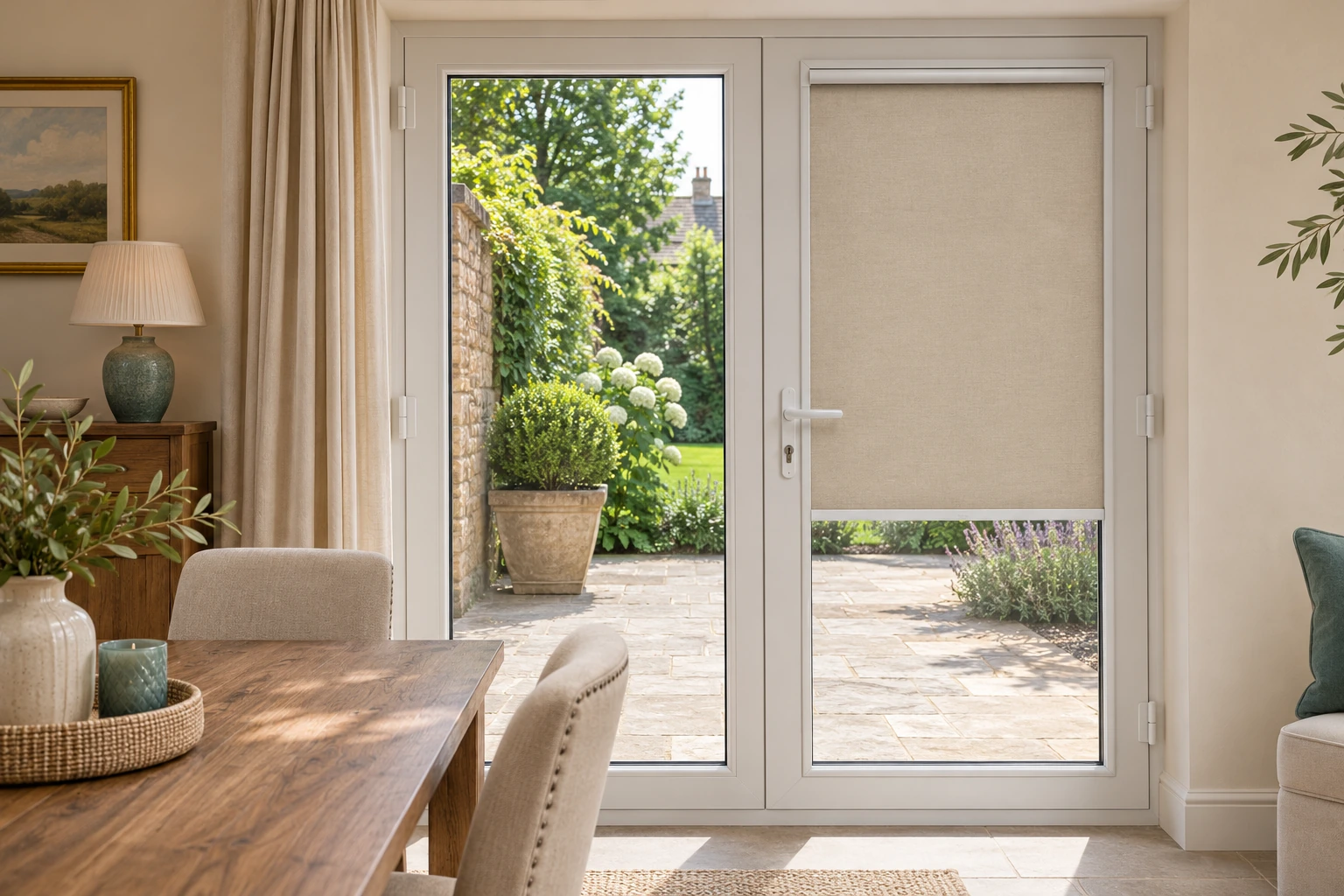
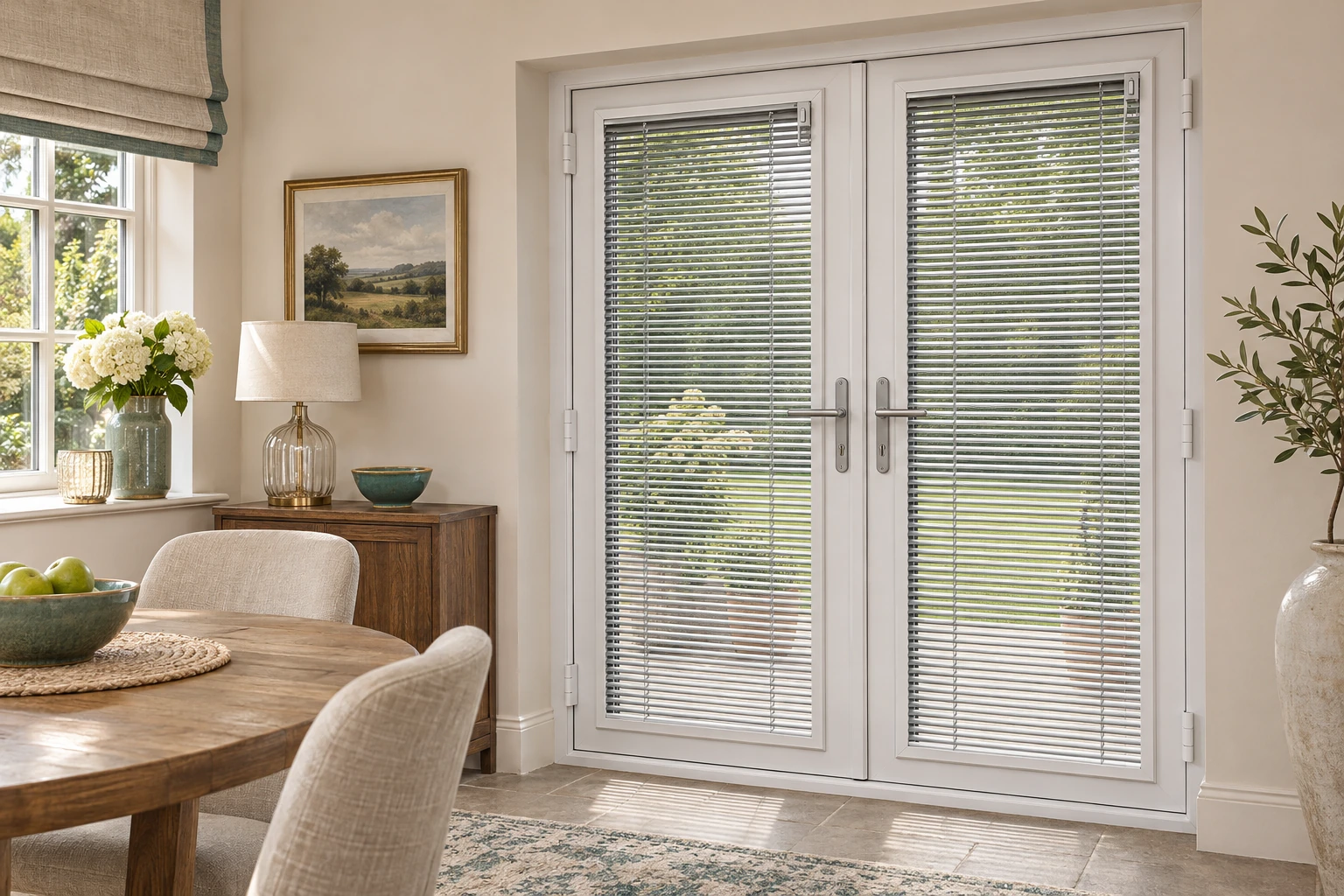
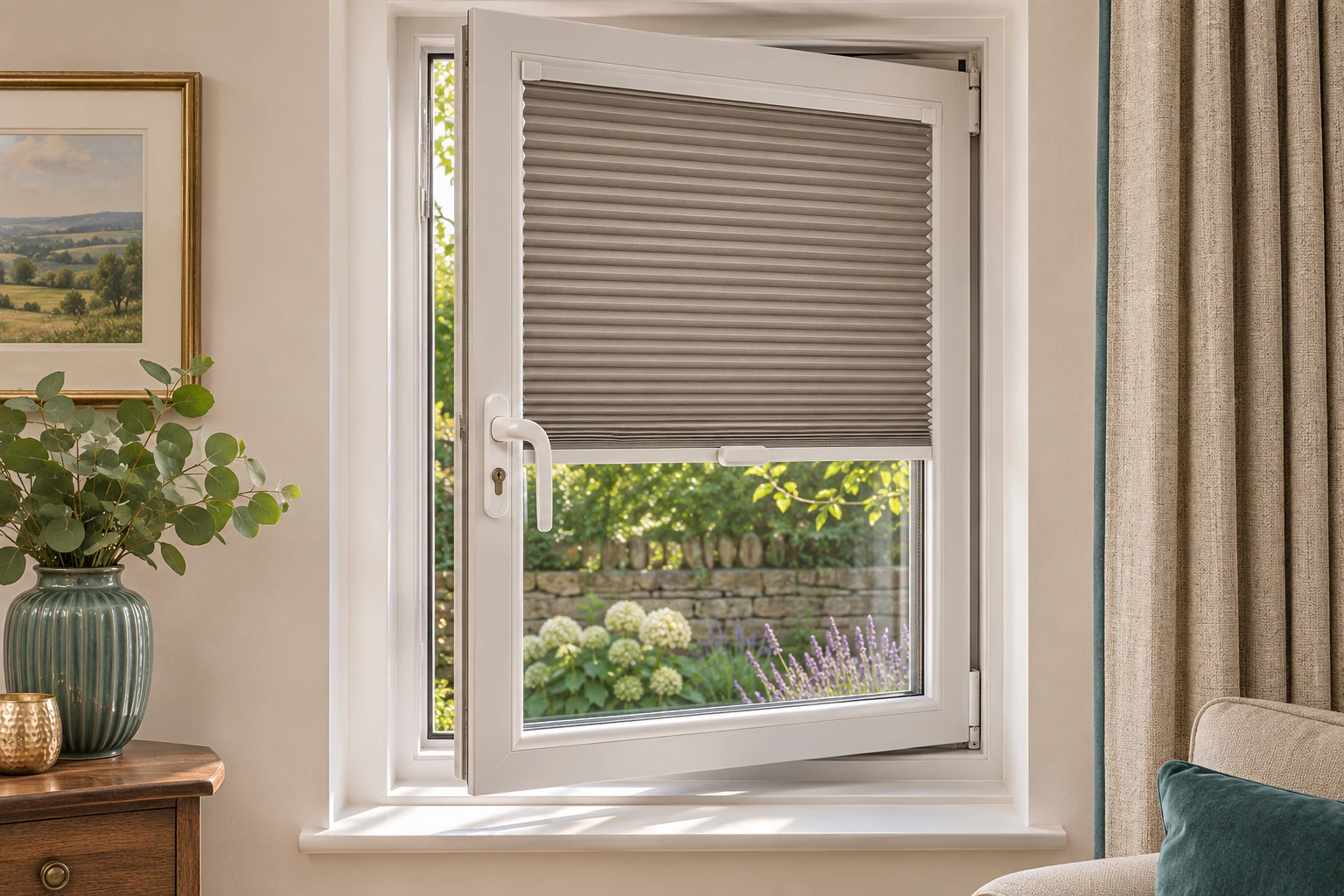
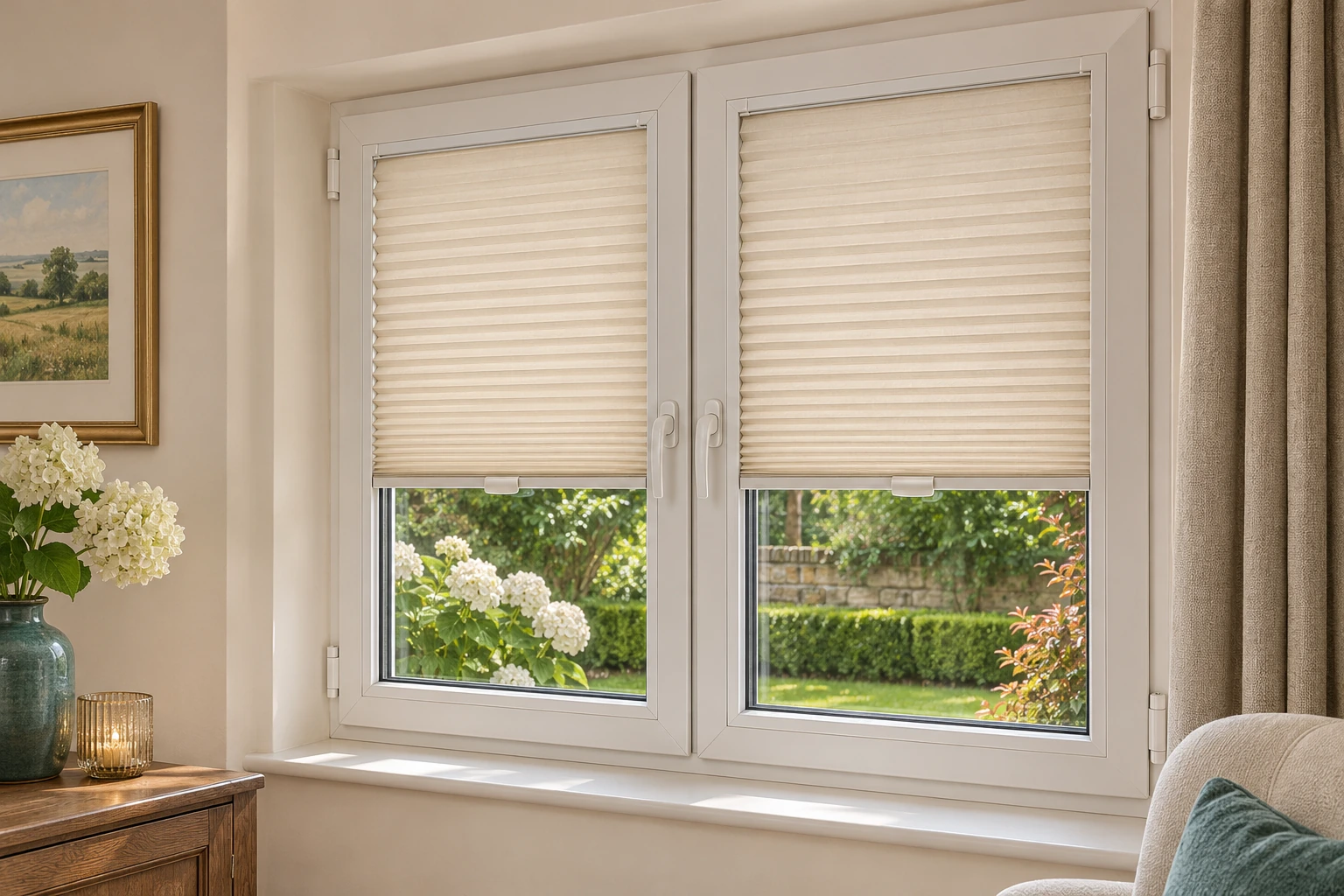
A roller creates a continuous fabric surface. A Venetian lets you tilt individual slats. Pleated and cellular options offer a compact gathered cloth, with suitable systems providing useful control over the position of the covered area.
Choose according to how you want to use the glass. Frequent small privacy adjustments may favour slats or moving pleated rails; a uniform fabric face may favour a roller. We can discuss different interiors across the same project where the window uses differ.
02 / The detail
Compatibility comes before the frame colour
For the familiar clip-in arrangement, the glazing beads and seals must accommodate the correct brackets. We also assess available depth and the surrounding frame. A label such as uPVC, aluminium or timber does not by itself confirm suitability.
Handles, hinges and neighbouring panels can interfere with the added frame when a window turns or a door folds back. Send close-up photographs as well as a full view. The final check is made against the actual frame and movement before the order is approved.
03 / The detail
Agree the appearance and operating system
The frame becomes an additional border around the glass. We discuss its finish, any visible brackets and how several panes will read together. Existing glazing divisions, rather than an arbitrary repeated blind size, should guide the arrangement.
Perfect Fit versions do not all use identical controls. We identify the specific roller, slatted or pleated operating method and any available motor option. At installation, we check window movement and explain normal use and the appropriate approach to cleaning access.