01 / The detail
Map the room by how it is used
Tell us where you sit, eat or work and which parts of the room become difficult to use. The time of day matters: low morning sunlight through a side window calls for a different arrangement from strong light through the roof at midday.
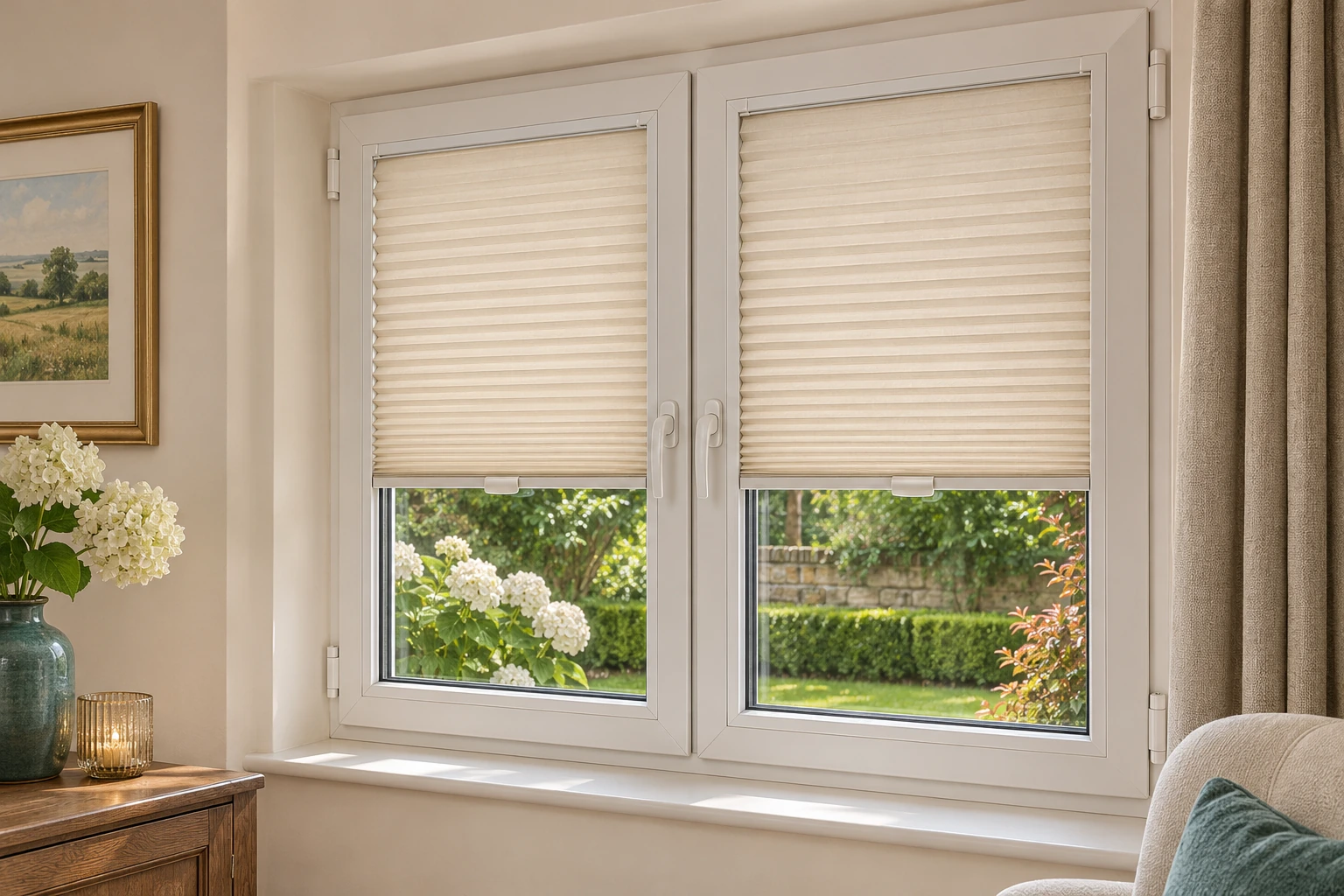
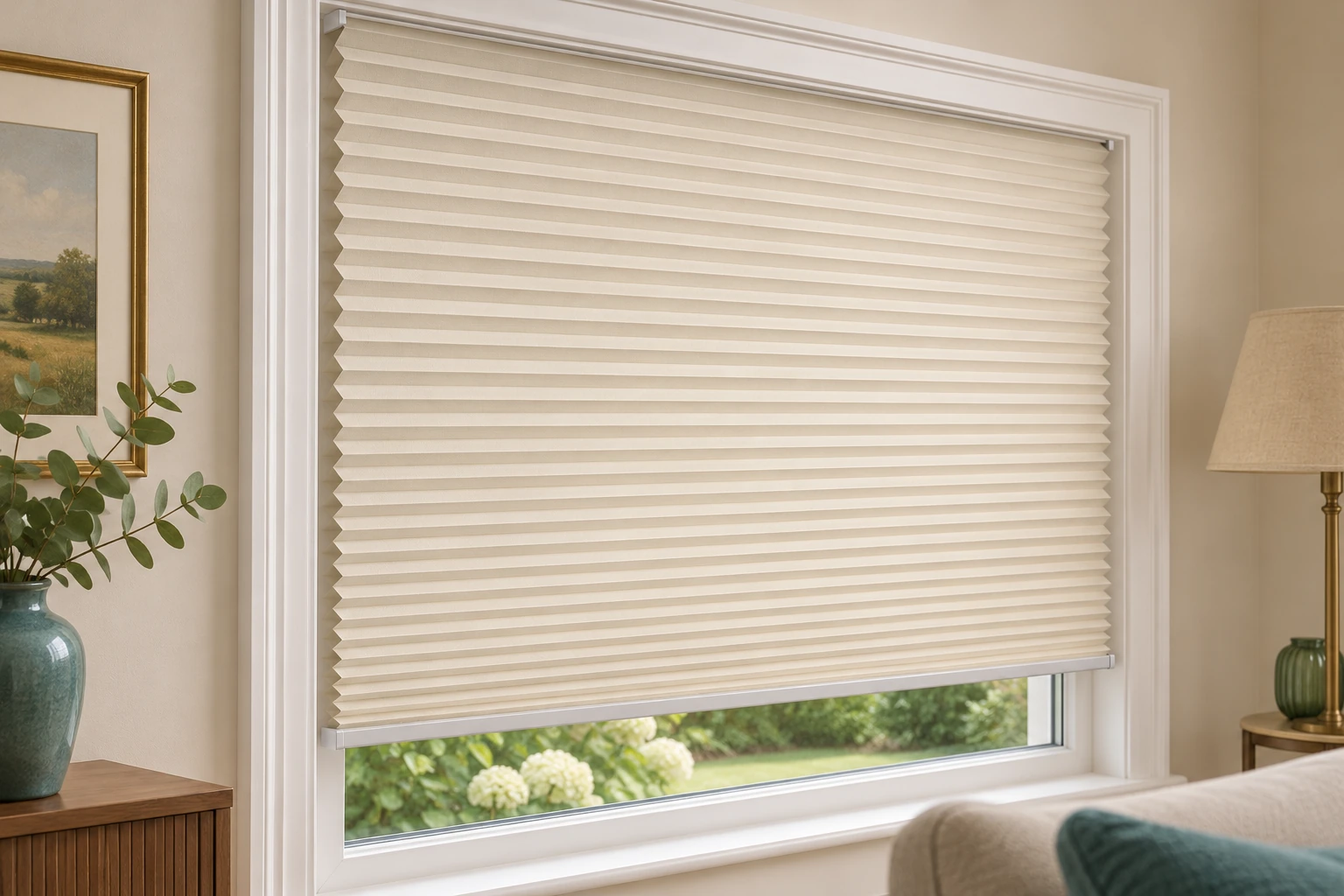
We also discuss privacy and door access. Some panes may benefit from a close-fitting framed blind, while others suit a conventional roller, pleated or Venetian system. A coordinated scheme can use different products without forcing every opening into the same specification.
02 / The detail
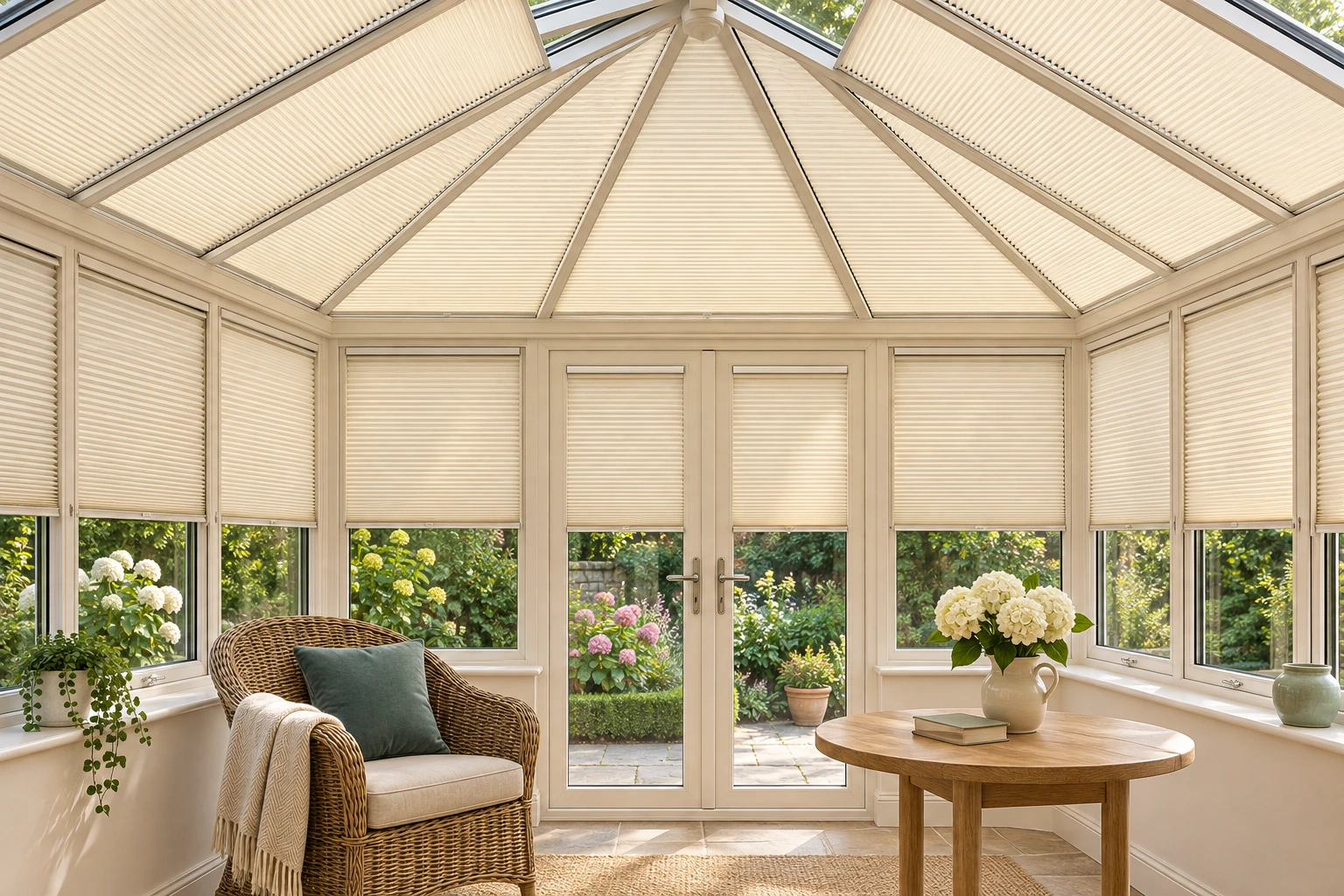
Separate roof systems from side-window blinds
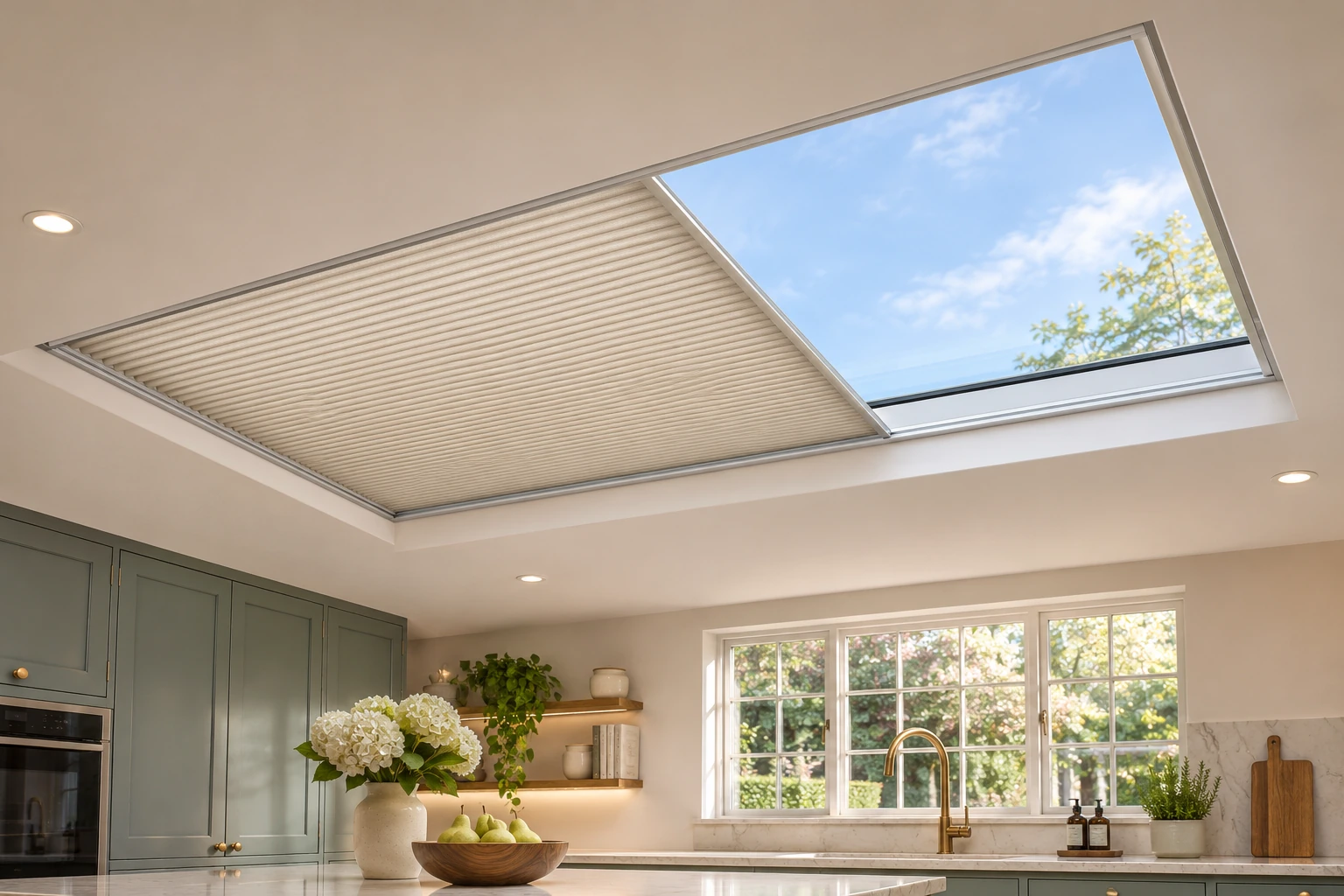
Roof glazing requires the right support or tensioning arrangement, particularly where panes are sloped or shaped. Fixing surfaces, ventilation components and access for installation all need attention. We explain visible wires, rails or fixed sections where the proposed system requires them.
On the sides, compatible framed blinds may move with opening windows and doors. Other frames need different fixings. We assess the actual construction and do not promise drill-free installation solely because the room is called a conservatory.
03 / The detail
Make a larger set manageable to operate
Several small blinds can become inconvenient if each control is difficult to reach. We consider the grouping of openings, manual rail access and suitable motorisation. Any charging or wiring arrangement should remain accessible once furniture and finishes are in place.
Fabric can help manage light and contribute to comfort, but blinds alone do not guarantee a cool summer room or a warm winter one. Glazing, ventilation and heating remain relevant. We set realistic expectations and confirm the chosen fabric, layout and installation scope in the quotation.