01 / The detail
Check the privacy effect under different lighting
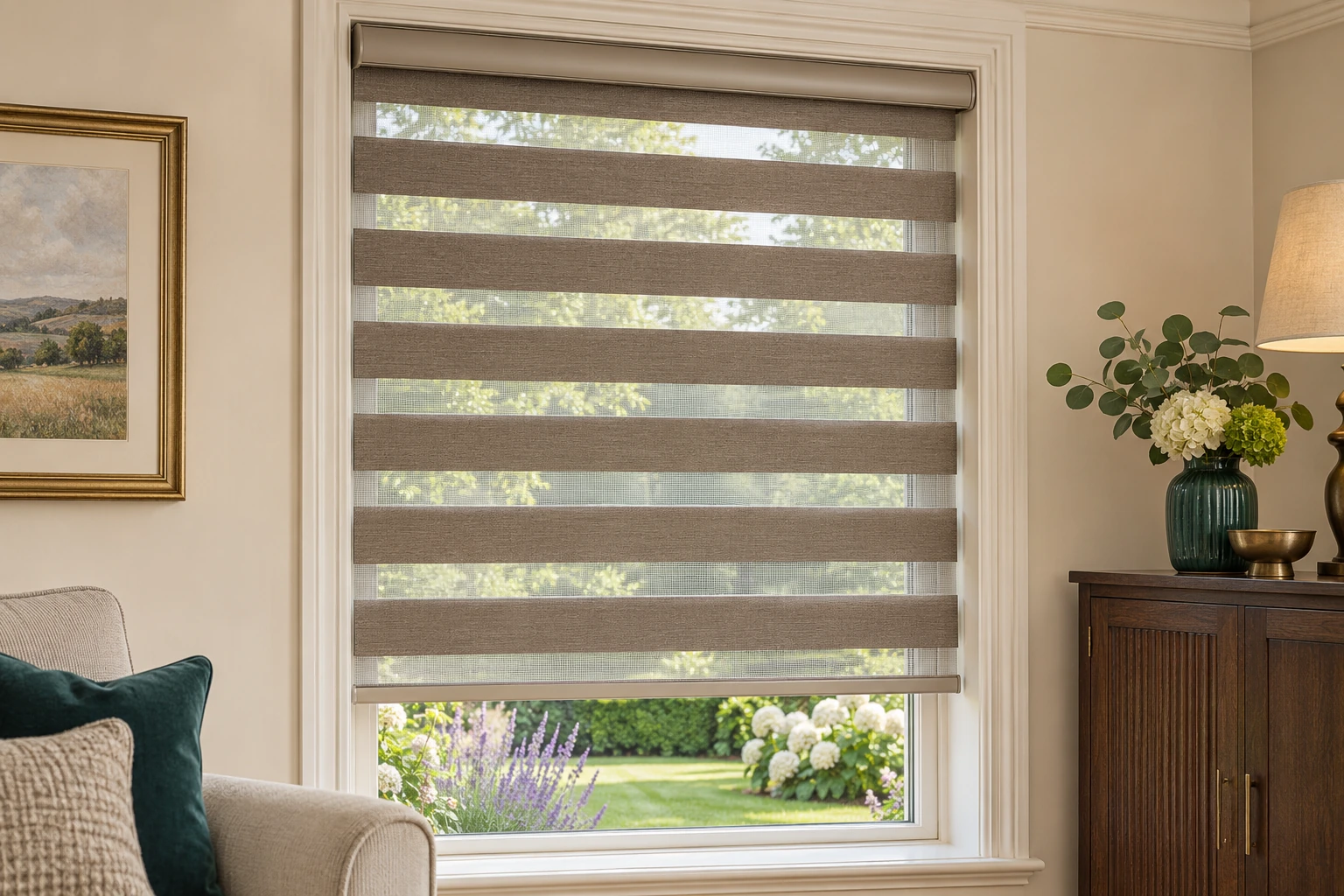
The name day and night describes the layered design; it does not mean every fabric delivers blackout or absolute night-time privacy. The denser bands, sheer sections and room lighting all affect what can be seen through the blind.
If the room faces a pavement or neighbouring property, make that clear when enquiring. We can explain the chosen fabric’s opacity and compare it with an ordinary opaque roller where a simple, fully covered surface would better meet your needs.
02 / The detail
Treat adjoining windows as one visual arrangement
Striped fabric makes differences between neighbouring blinds more noticeable. Window heights, fixing levels and the selected fabric repeat can affect how the bands appear to align. We discuss the desired overall effect before sizes and headrail positions are finalised.
The housing also needs enough room for the two fabric layers and moving bottom bar. Handles, opening sashes and tiled reveals may influence where it is fitted. An attractive photograph of a clear window does not establish whether the same arrangement suits a shallow recess.
03 / The detail
Confirm the controls and daily routine
The operating system should allow you to make small adjustments to the fabric layers comfortably. A chain-operated model needs the appropriate safety arrangement; compatible motorisation requires the motor and power specification to be agreed with the blind.
When installed, we demonstrate the different positions and the normal raising sequence. Keep objects away from the bottom bar and follow the range’s cleaning instructions. A sheer section can be delicate, so an unsuitable scrubbing method may spoil the appearance.