01 / The detail
Compare openness and colour together
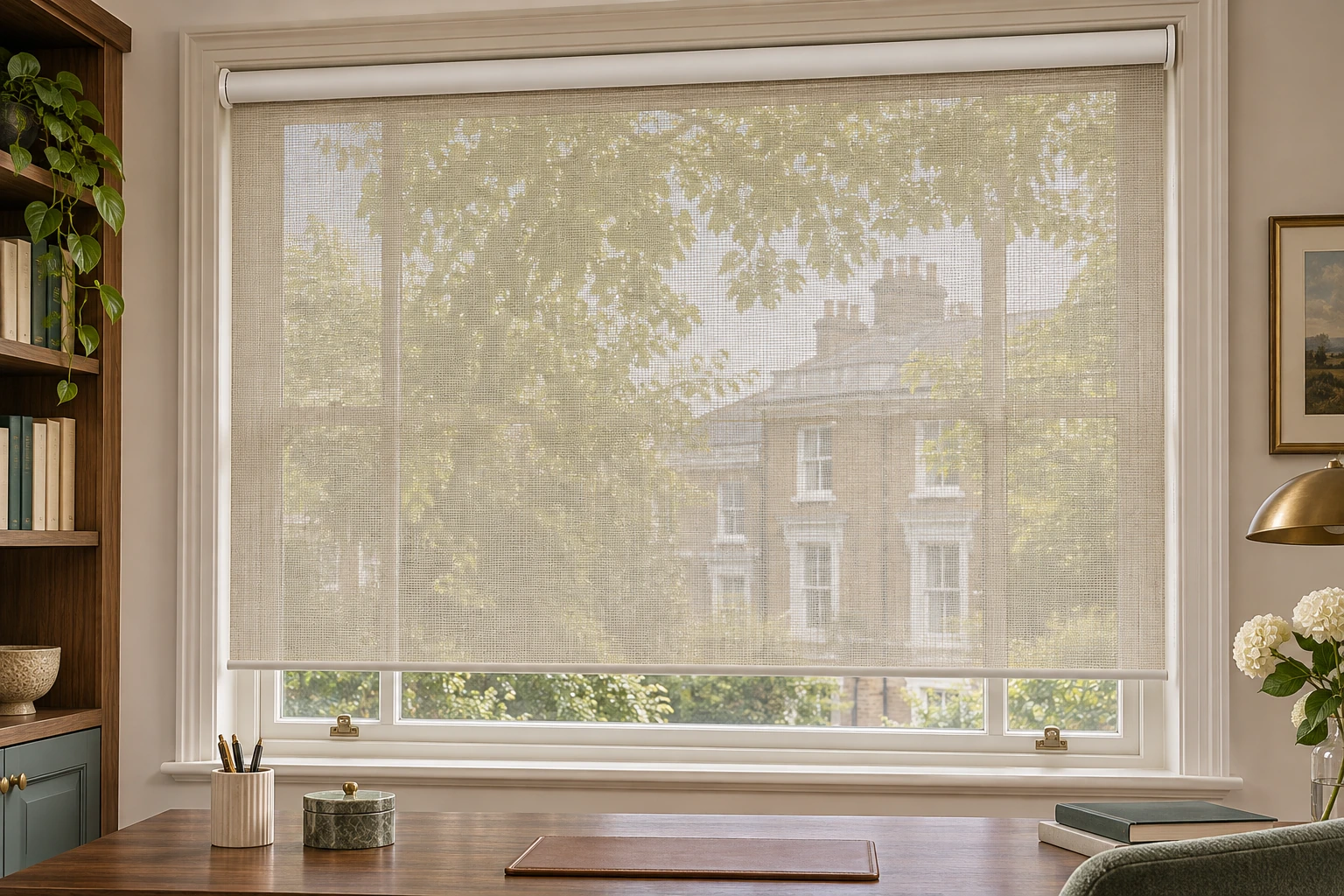
The weave’s openness affects how much can be seen through it, but colour and the direction of the strongest light also influence the result. A fabric that looks ideal on a sample card may behave differently against bright glazing.
We discuss the position of desks, television screens and seating before narrowing the choices. The aim is to manage the light where it causes a problem while retaining useful daylight elsewhere. For demanding commercial projects, the selected fabric’s technical information should form part of the assessment.
02 / The detail
Make a separate plan for evening privacy
A screen fabric is not a one-way privacy barrier. When the room is brightly lit after dark, the view into it can become more apparent. The same material that gives a pleasant daytime outlook may therefore need a second treatment for evening use.
Depending on the opening, we can discuss a separate opaque blind, curtains or a different fabric choice. Allowing for both products before installation is easier than discovering later that there is insufficient depth or wall space for an additional system.
03 / The detail
Specify the whole installation for the room
Screen fabric is commonly used in rollers, but the suitable mechanism depends on the dimensions, cloth and intended operation. On broad glazing, we consider fabric width, blind divisions and the gaps between units. We do not assume a single sheet can cover every opening.
An internal screen can improve glare control, but it should not be presented as a guaranteed cure for overheating. Glazing, ventilation and solar exposure still matter. For a workplace, tell us about any fire-performance or building specifications so the exact fabric can be checked.