01 / The detail
The roll direction changes the fit
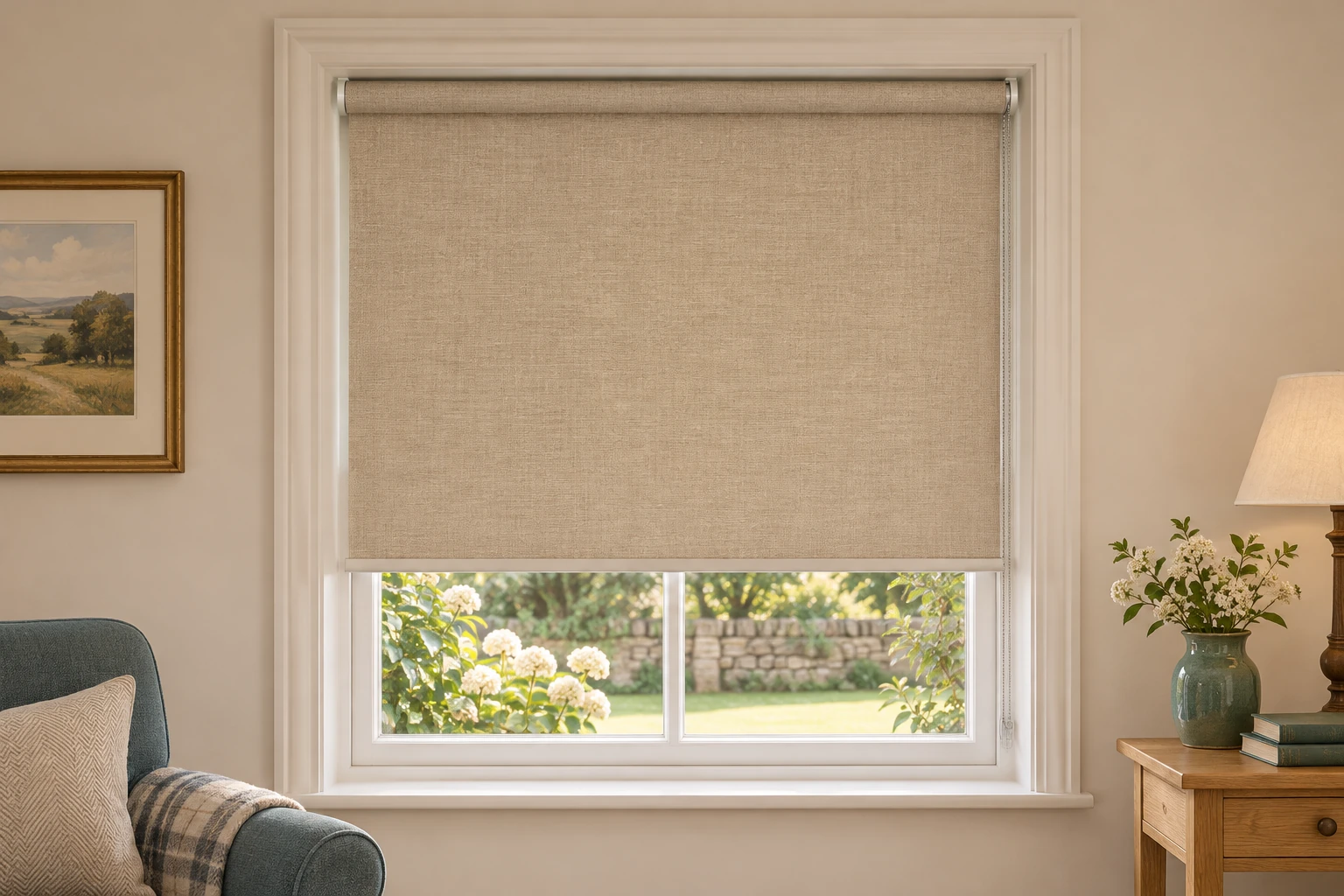
Fabric can descend nearer the glass or travel over the front of the roller. That choice affects the visible roll and the space behind the cloth. During the survey we consider projecting handles, opening sections and how far the fabric will stand away from the window.
A forward roll can help with an obstruction, but the extra distance from the glazing may also affect side light and privacy. We explain the trade-off against the actual opening rather than choosing the same arrangement for every window.
02 / The detail
Agree what the fabric must achieve
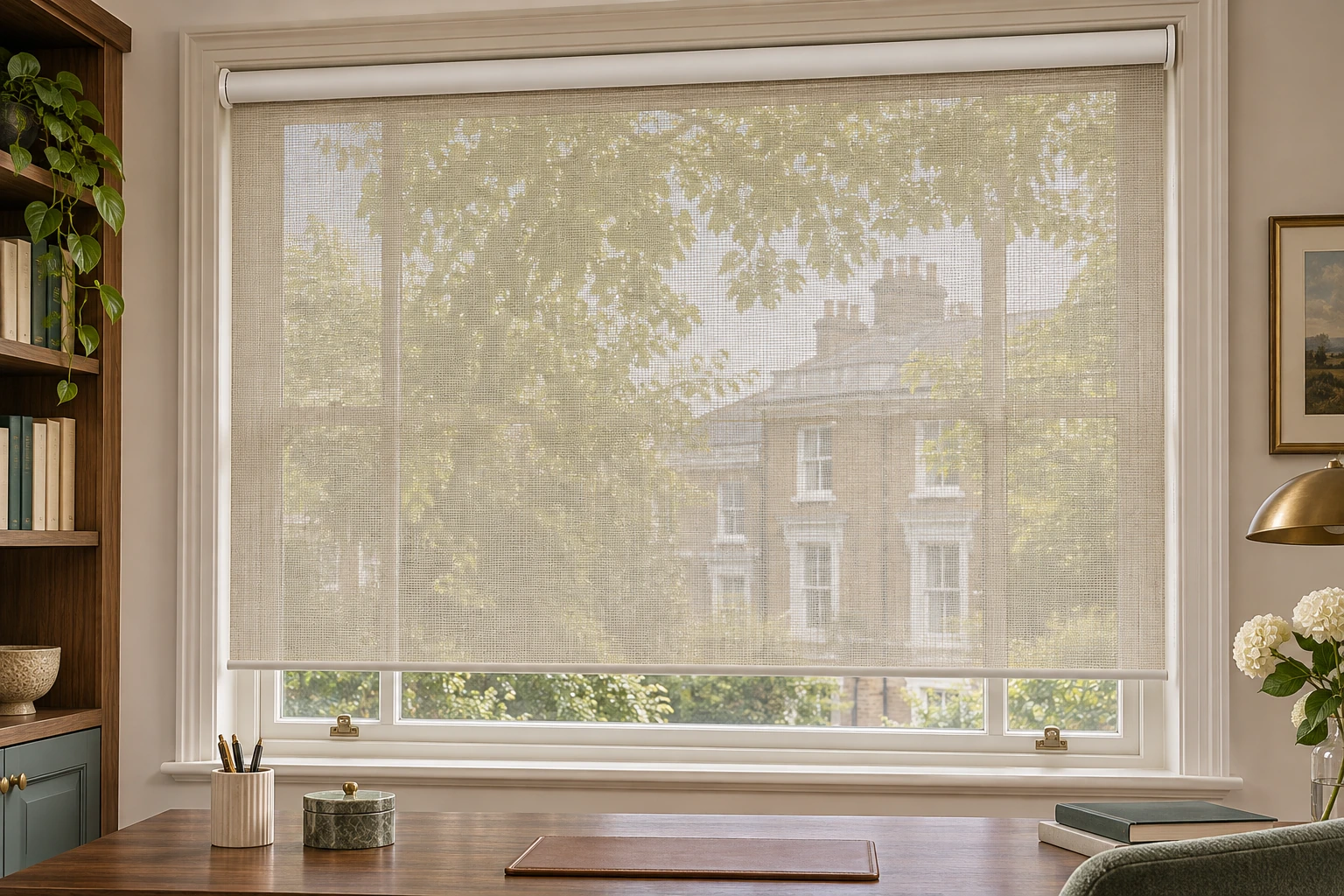
A decorative fabric can soften the room without making it dark. A screen weave may retain a view, while an opaque material is useful when privacy matters more. Looking at a sample in the room is more informative than comparing colour names alone.
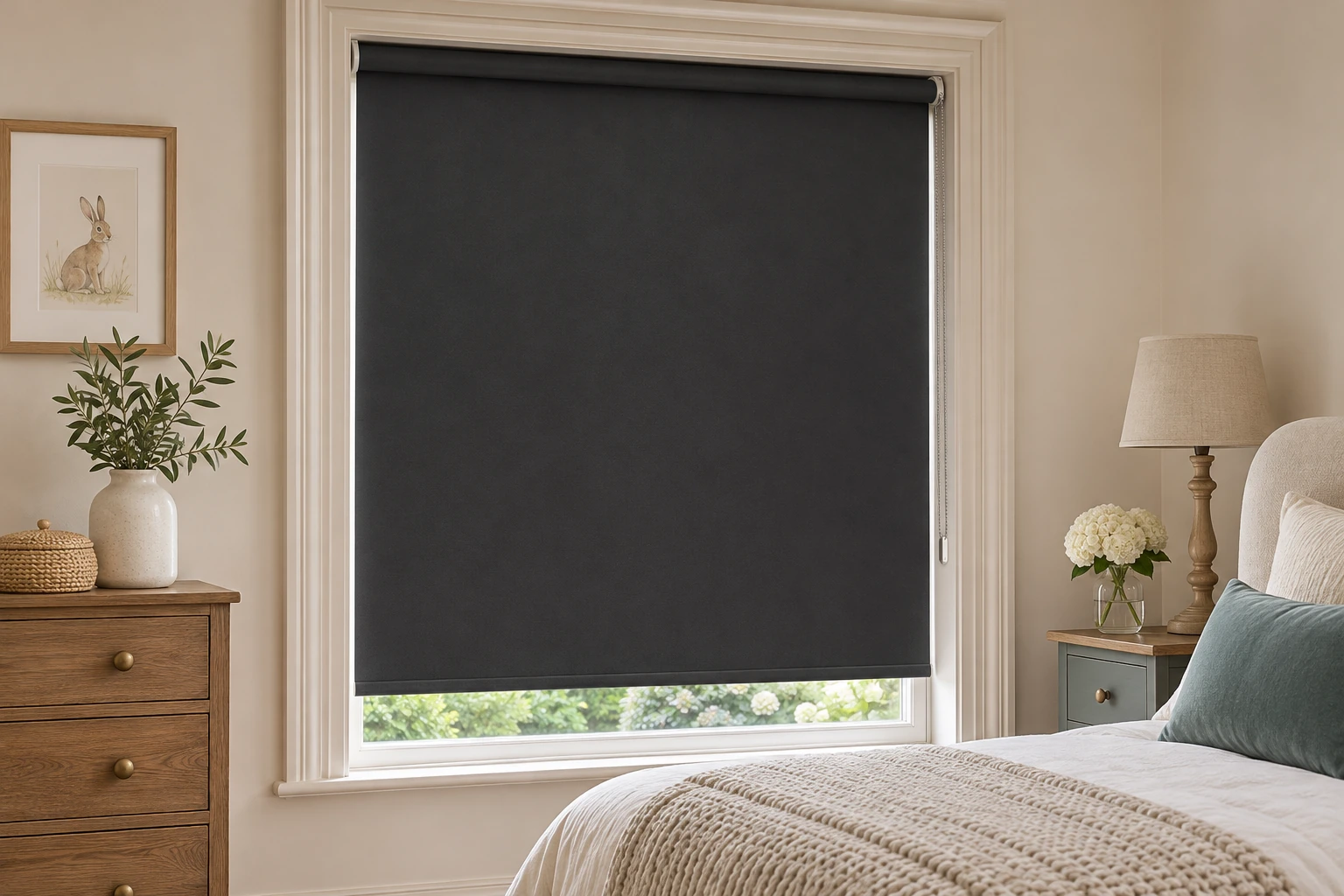
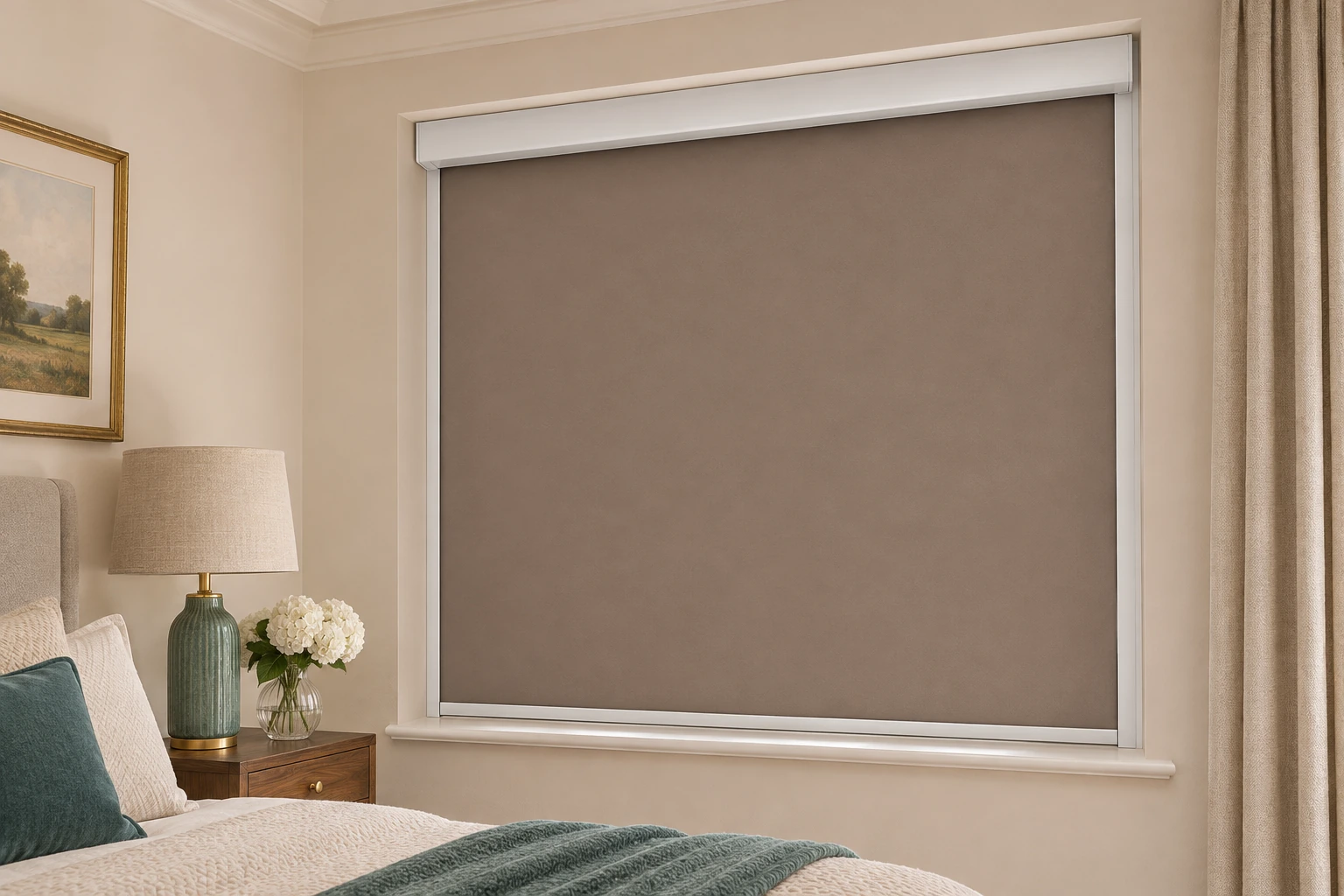
For a bedroom, discuss the edges as well as the cloth. A standard roller needs clearance beside its mechanism, so even blackout material leaves routes for light around the blind. Side-guided systems or an additional dressing may be more appropriate where darkness is a priority.
03 / The detail
Make the final arrangement convenient
On a wide window, one large blind gives an uninterrupted fabric surface; separate blinds can follow individual panes and give more flexible access. The available fixing positions, supported product sizes and effort needed to operate the blind all influence that decision.
Before manufacture, we confirm the control side and reach. A suitable manual system may be sufficient, while compatible motors can help with a high or obstructed window. Necessary control safety devices form part of the fitting, and we show you how the finished blind works.