01 / The detail
Make the material part of the choice
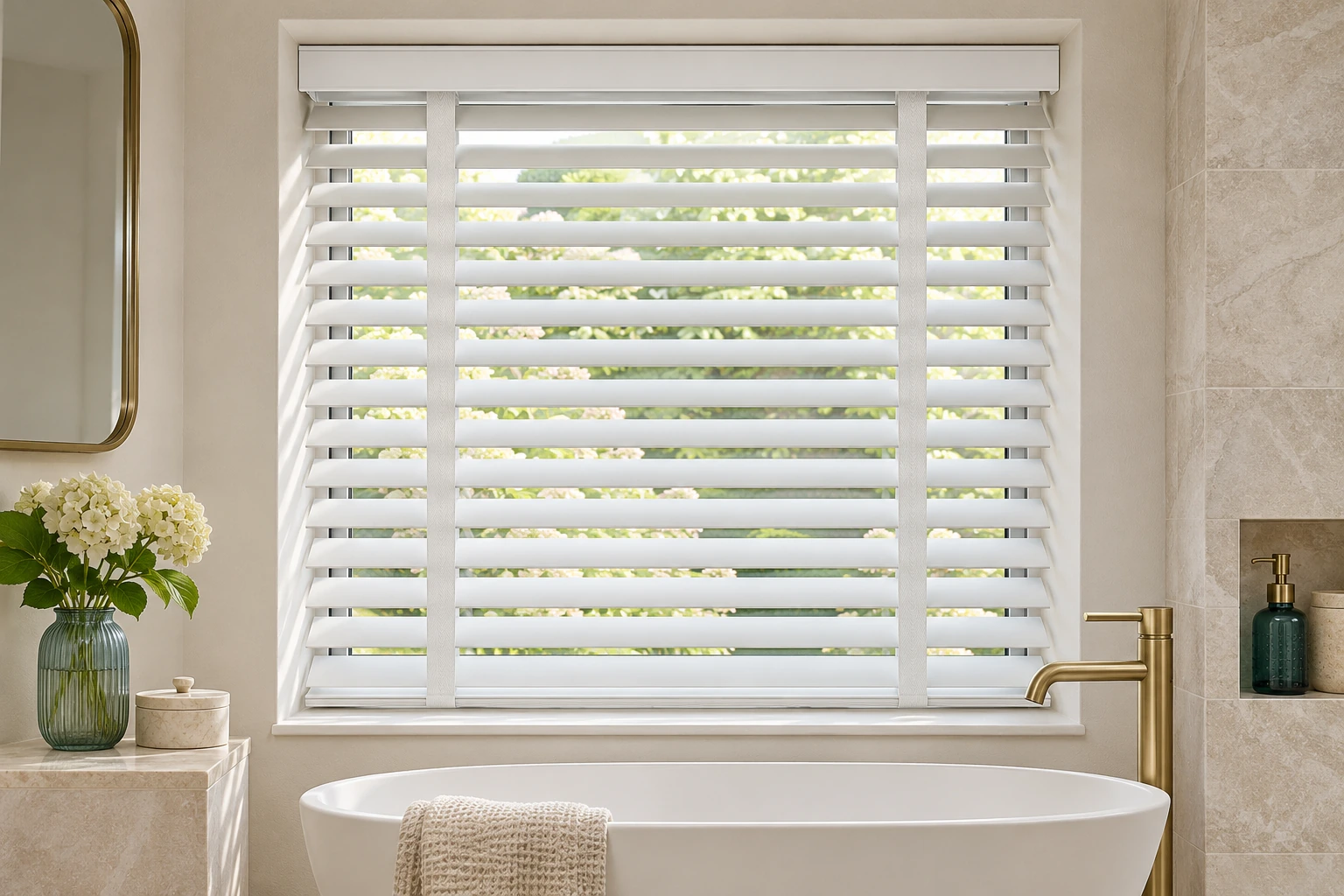
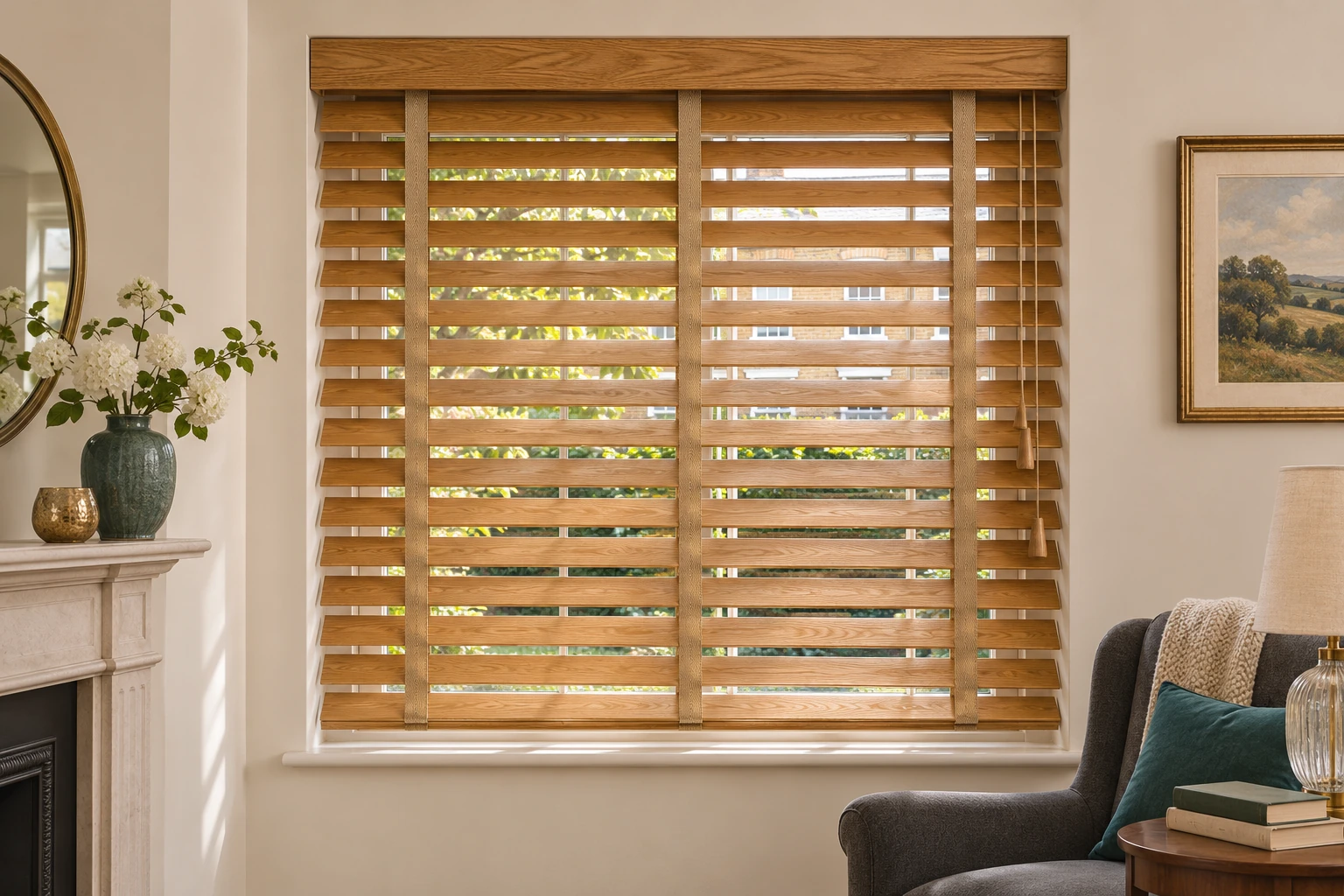
Timber has natural variation. A stain reveals that character, while a painted finish gives a different balance of texture and colour. Samples help establish the intended look, although a natural material should not be expected to repeat every mark or shade identically.
For a humid room, compare a suitable faux wood range before deciding on real timber. The right choice depends on the conditions around the window and the care you want to provide, rather than the room label alone.
02 / The detail
Consider what happens at bay-window corners
Neighbouring blinds need enough room for their headrails and slats to sit alongside one another. A deep handle, a narrow return or an angled bay can change the mounting position and leave different gaps from those on a single flat window.
We assess the bay as a complete arrangement. That includes the direction of the controls, the finish at each outer end and whether the blinds can be raised without catching. Separate measurements of each pane do not capture all of these decisions.
03 / The detail
Check the stack, weight and finishing details
Wooden slats occupy a noticeable area when gathered at the top. In a shallow opening this can reduce the visible glass or interfere with a window that opens inward. We discuss a higher face fixing or a different blind style where that would work better.
Decorative tapes change the appearance of the front face and should be considered alongside the slat colour and headrail finish. For broad openings, dividing the installation may make everyday lifting more manageable. We agree the layout and show you how to tilt and raise the chosen system.