01 / The detail
Look at the complete fabric specification
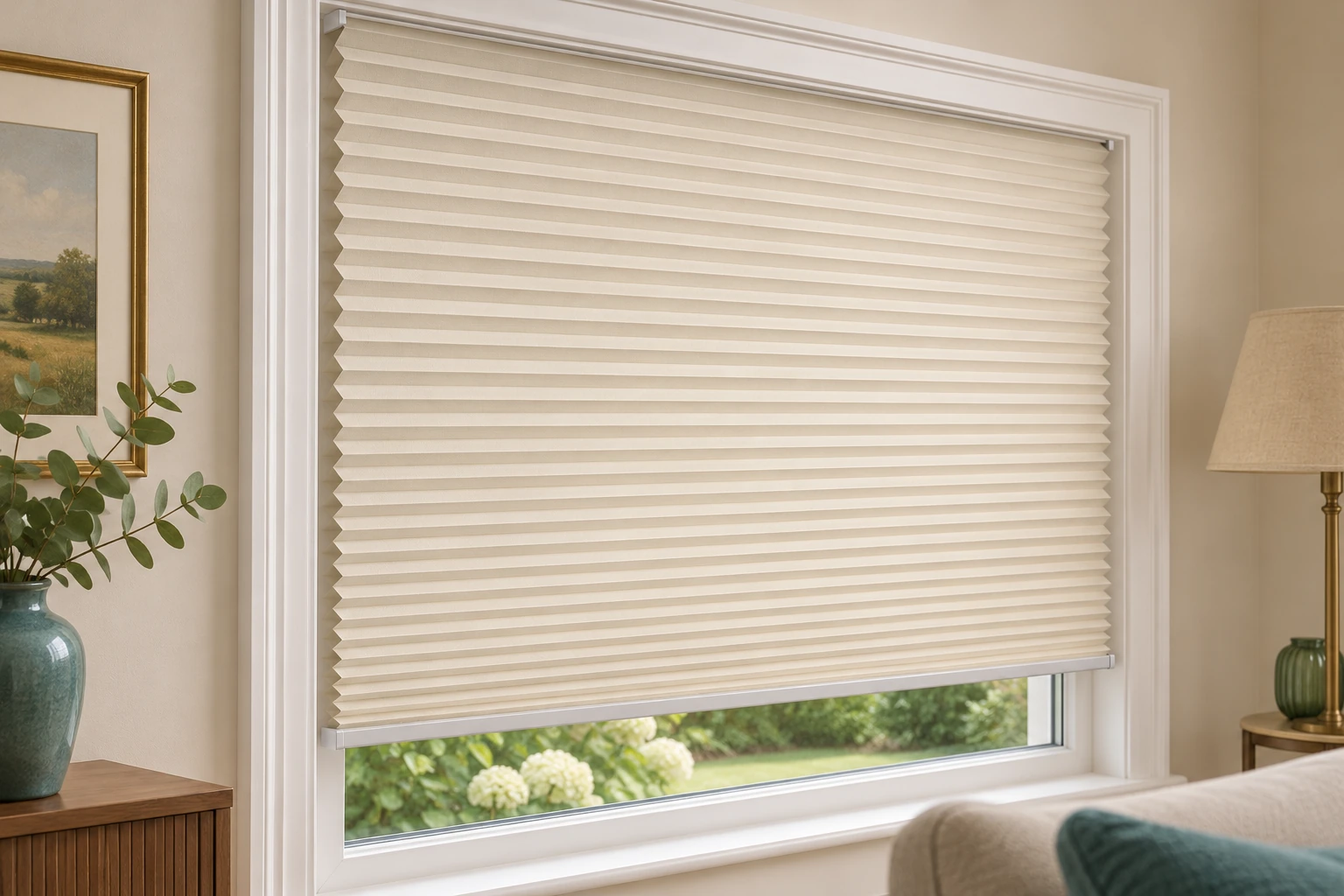
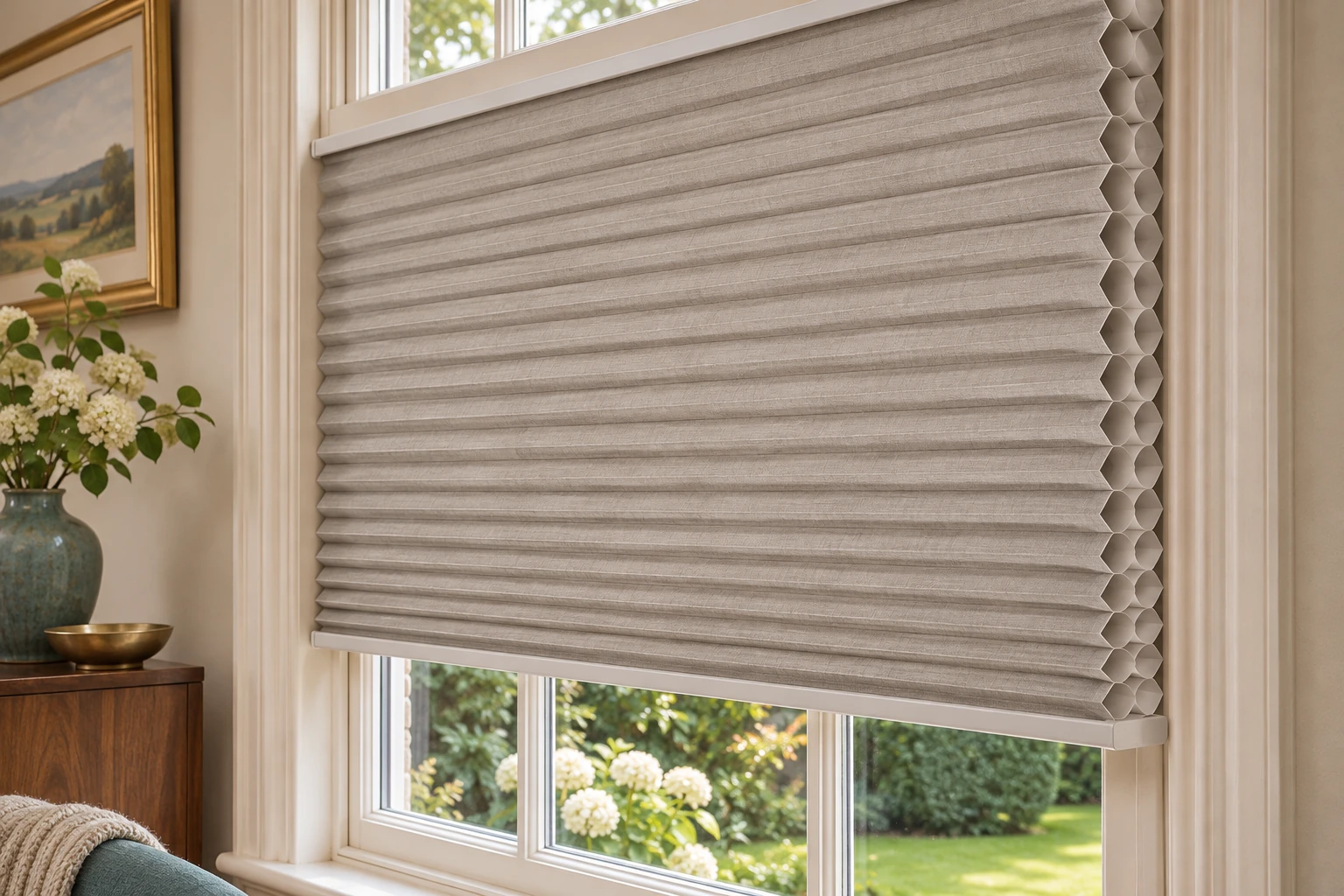
Cell size, surface texture and opacity change how a cellular blind looks and works. A thin sample or screen image does not show the full effect of the material spread across the glass. We discuss the chosen fabric in relation to the window’s size and light.
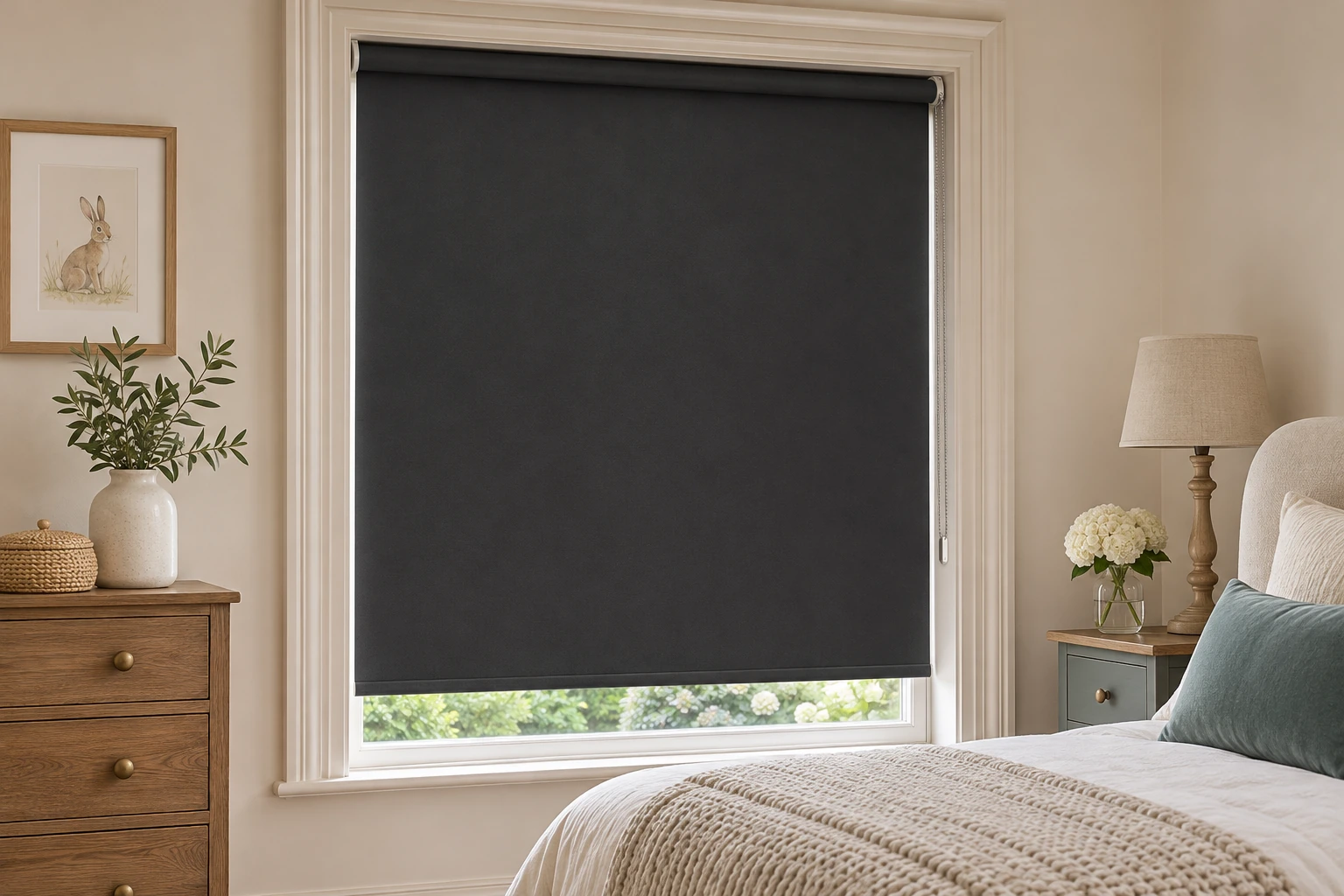
Blackout cellular cloth can prevent light passing through the material, but the finished blind still needs perimeter clearance. A frame or appropriate channels can reduce edge light; the required result should be agreed without treating every cellular blind as a sealed blackout system.
02 / The detail
Use the insulating structure sensibly
The air pockets provide an additional insulating layer at the window. Their practical benefit depends on the selected cloth, the fitting arrangement, the glazing and when the blind is used. We do not attach a fixed energy-saving percentage to an unspecified product.
For a room that becomes uncomfortably hot, explain its orientation, glazing and ventilation as part of the enquiry. Internal shading is one part of the wider room design. A darker or more insulating blind alone should not be expected to resolve every source of overheating.
03 / The detail
Choose controls that suit the fabric’s position
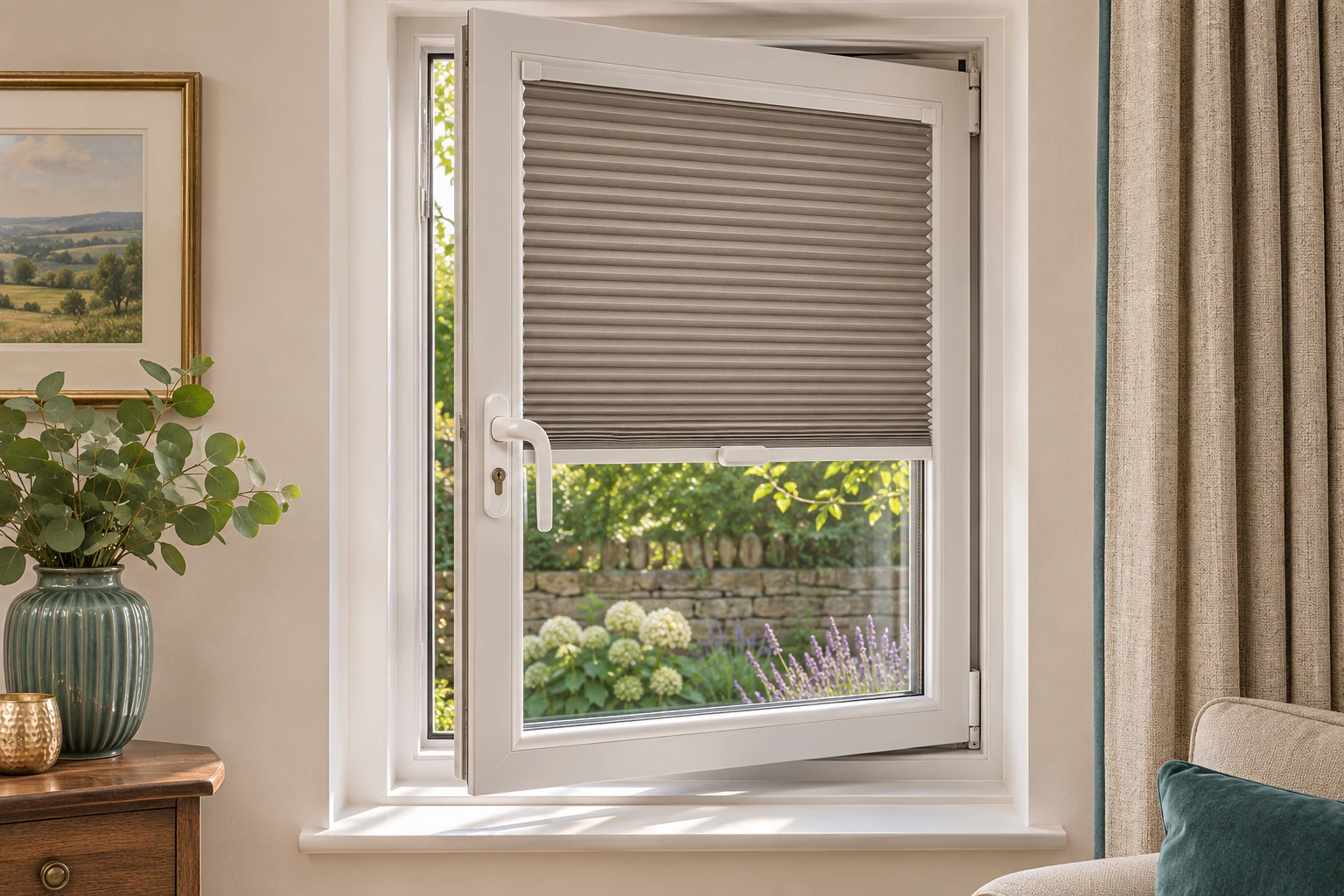
A conventional raising blind and a top-down/bottom-up system allow different ways to expose the glass. On doors, an appropriate tensioned or framed version can be considered. We check the proposed rail positions against handles and the window’s movement.
Motorisation is available on suitable systems, but it needs the correct product and power arrangement. Manual rails should remain within comfortable reach. Follow the supplied care instructions, allow the fabric to gather correctly and keep the travel path free of plants or other obstructions.