01 / The detail
See the finish before settling on the colour
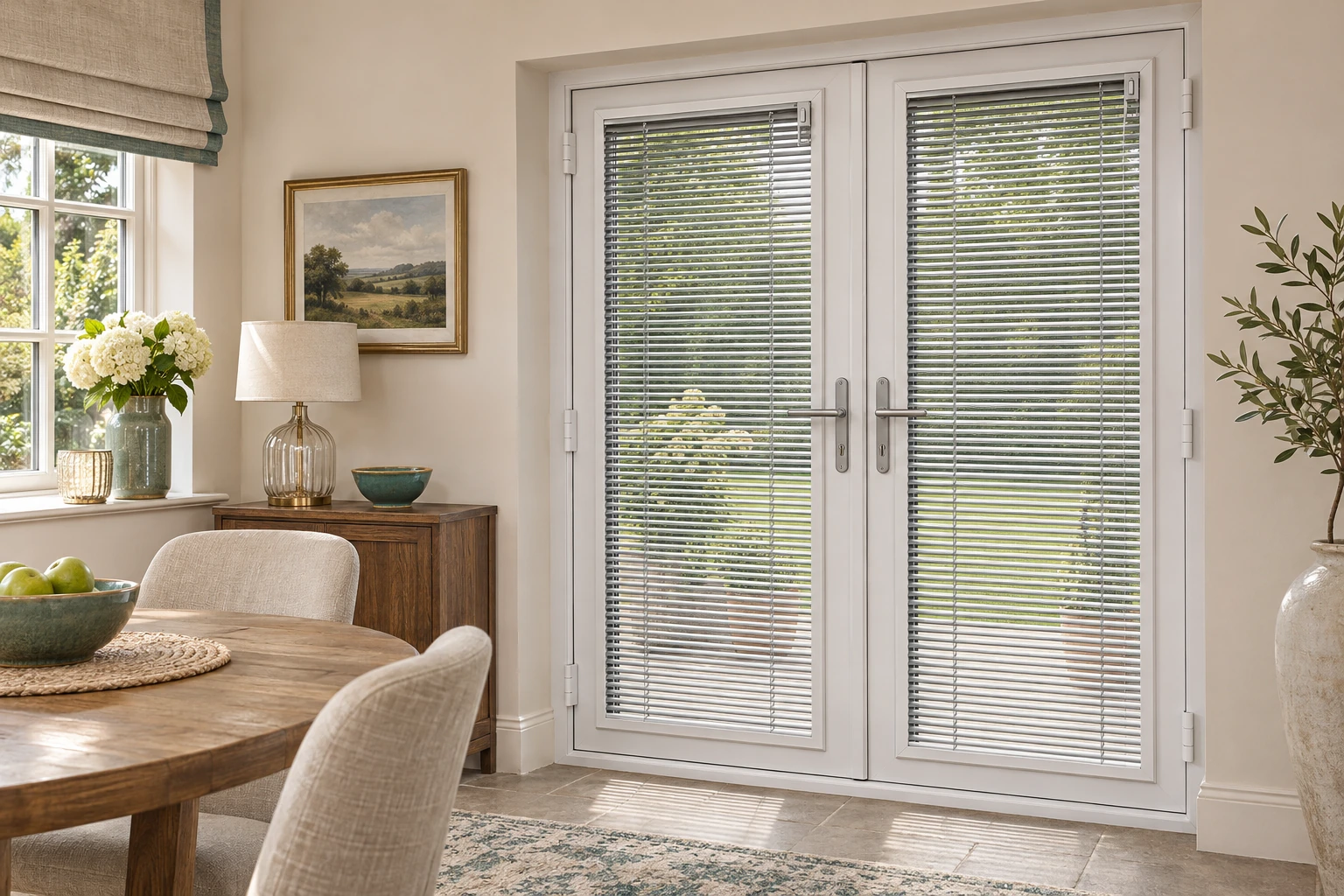
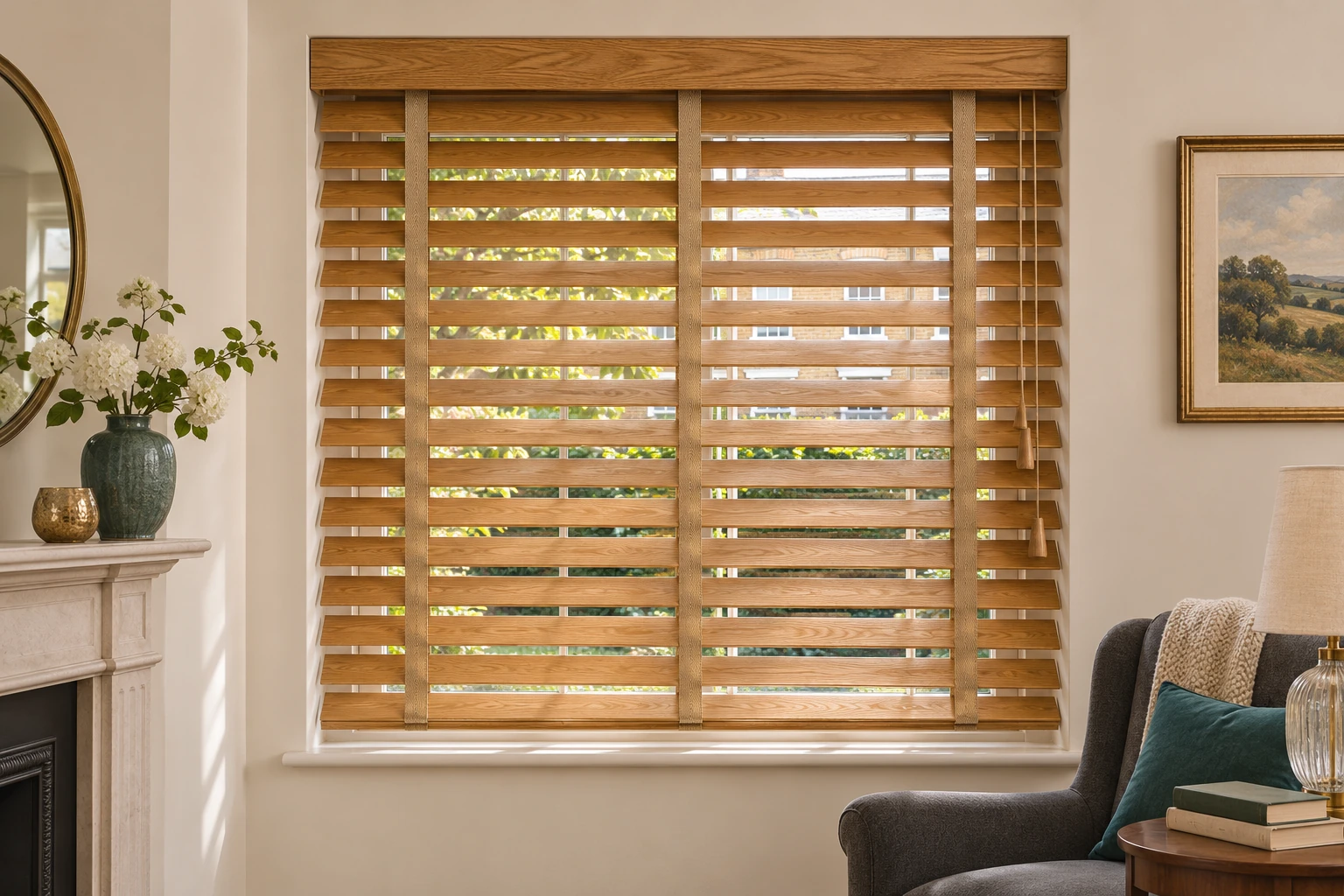
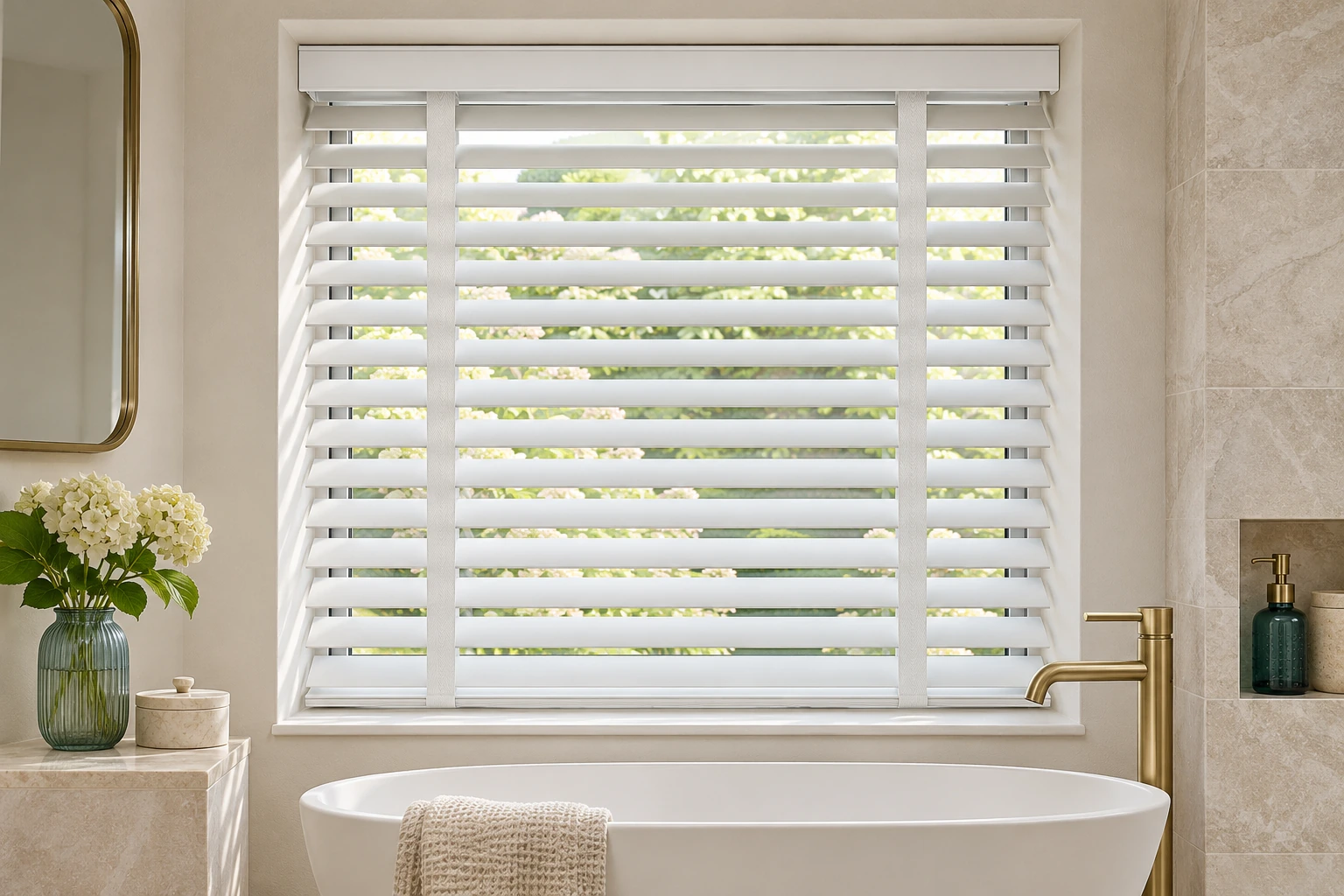
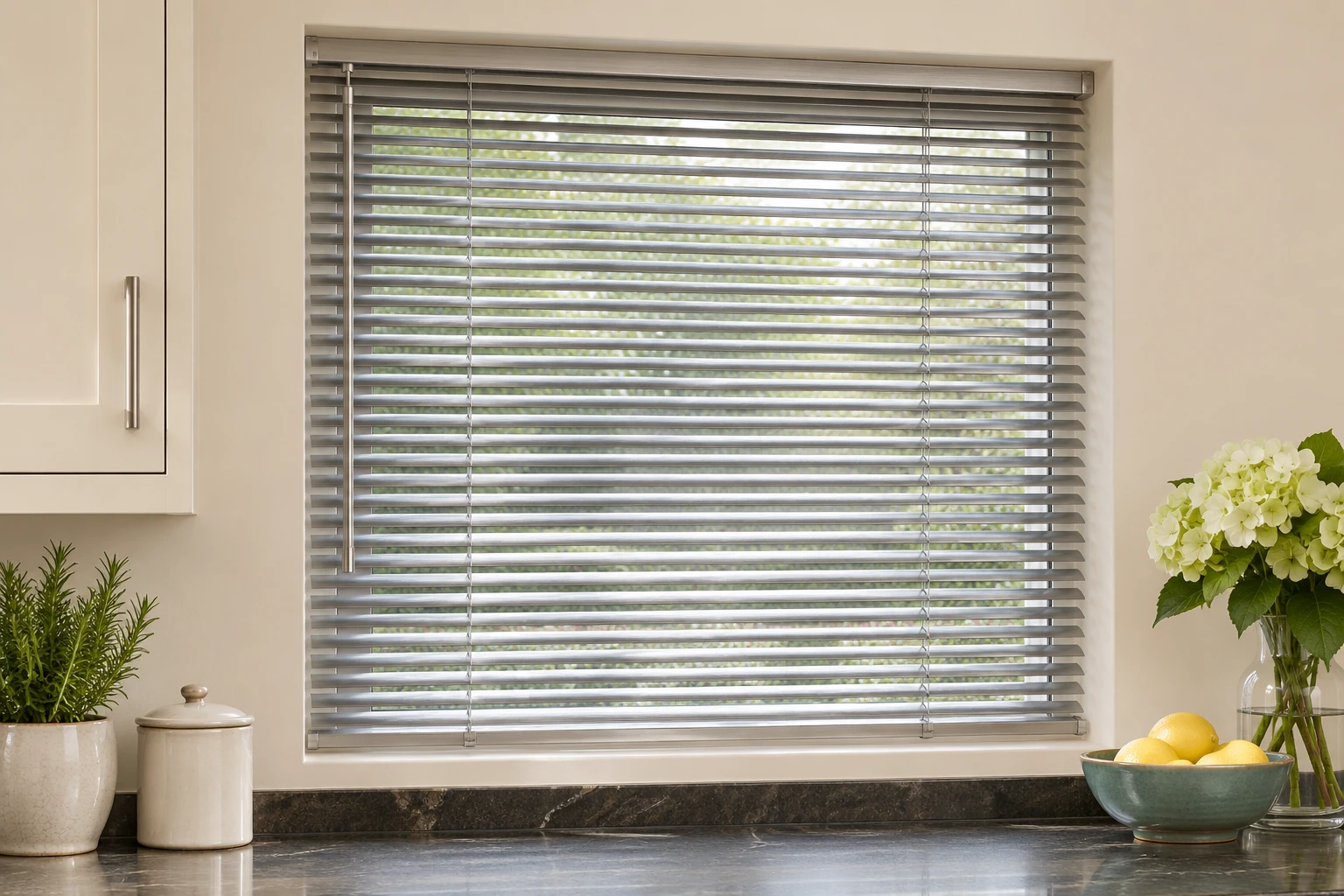
Brushed metal, matt paint and reflective finishes can look quite different on a full window. Slat width changes the rhythm of the horizontal lines too. We recommend assessing a physical sample alongside the frames and surrounding finishes when appearance is important.
A lighter slat may blend into a pale recess, while a metallic or darker finish makes the blind more visible. The appearance from outside can also matter in an apartment block or on a commercial frontage, so mention any building requirements at the outset.
02 / The detail
Plan lifting and tilting separately
Many people tilt Venetian slats every day but lift the blind only occasionally. Others need to raise it whenever they open a window or use a door. Tell us how yours will be used so we can recommend a manageable operating arrangement.
The raised slats form a stack beneath the headrail. We check whether that stack would obstruct an inward-opening sash and whether an alternative fixing position is possible. A framed or suitably tensioned system may be a better starting point for some moving windows.
03 / The detail
Choose it for light control, with realistic limits
Tilting slats can redirect light rather than simply cover it. However, joints between slats, cord routes and the perimeter still allow light through. If daytime sleep or a dark projection room is the main requirement, compare a suitable blackout system as well.
Slim slats need considerate handling. Follow the selected range’s cleaning instructions and avoid bending them against furniture or window handles. At installation we check the travel and tilt, fit the required control safety components and explain the normal operating sequence.