01 / The detail
Put the fabric where privacy is needed
A top-down/bottom-up arrangement can leave part of the upper glass uncovered while screening the lower section. It is useful to describe the actual sightline: a pavement, an overlooking window or the view from a neighbouring garden may require different coverage.
The moving rails must also be accessible. A manually positioned rail is less convenient behind a deep worktop or above a stairwell. We check how the chosen system will be used from within the room and whether another control method makes more sense.
02 / The detail
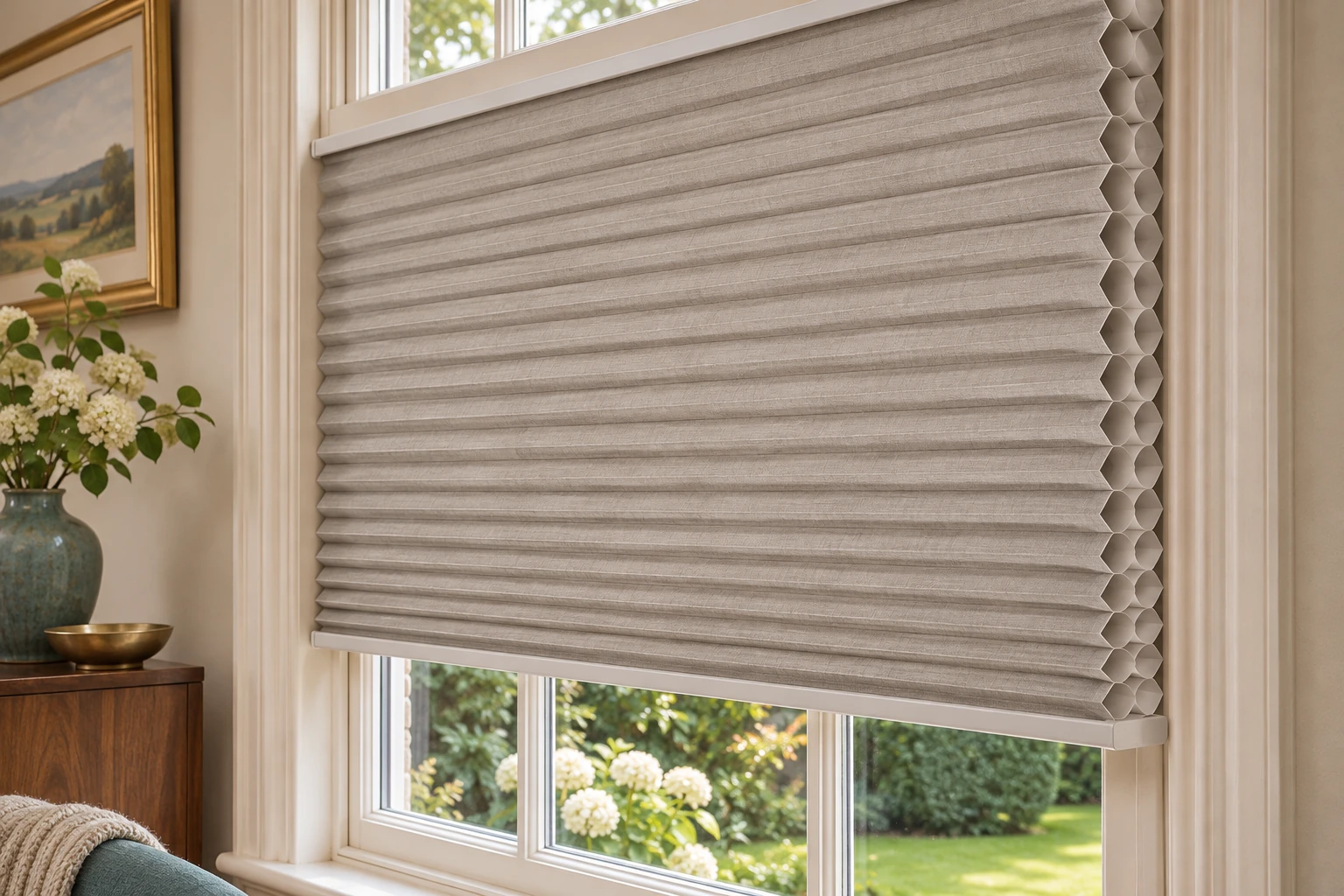
Understand the difference between a fold and a cell
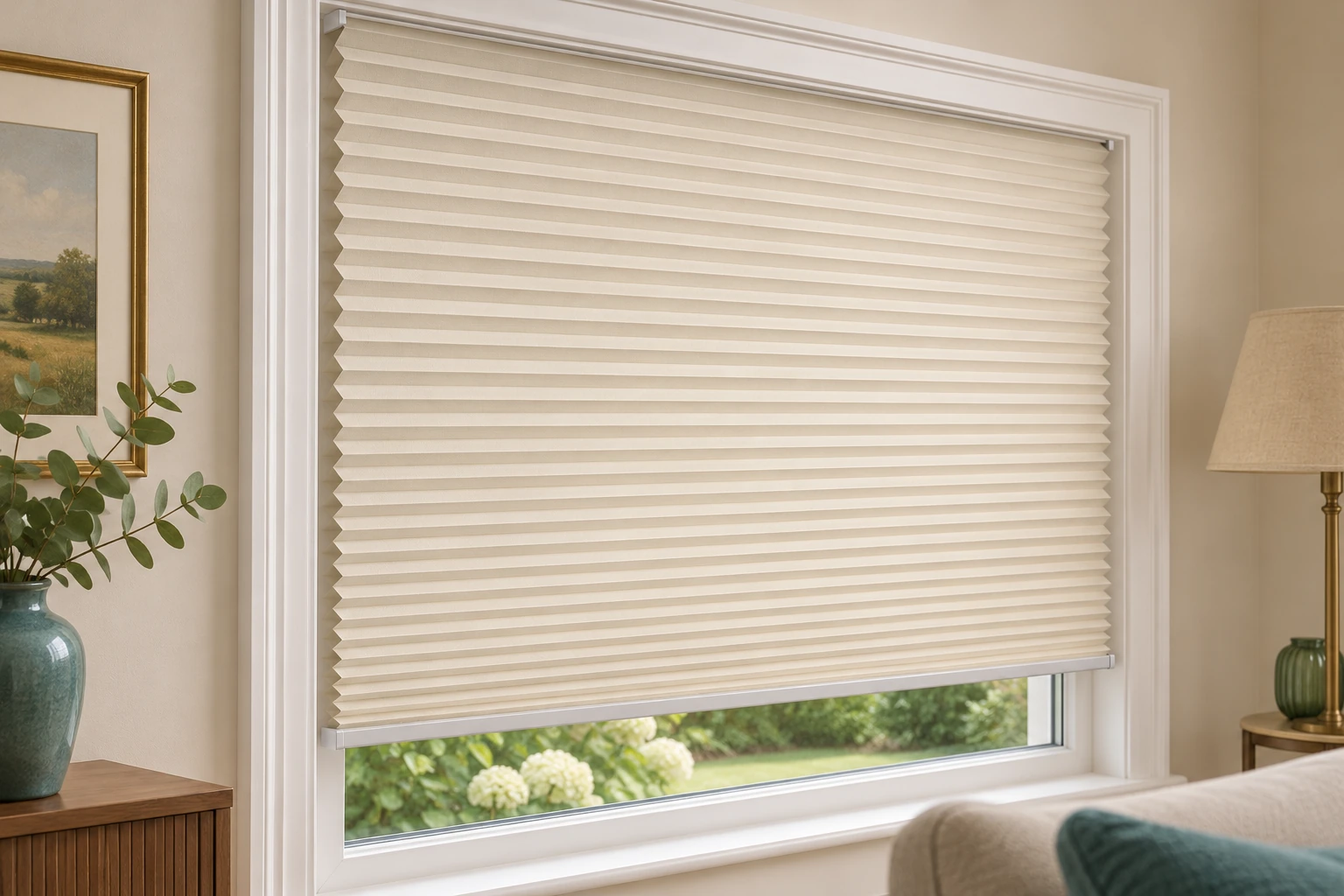
A single-pleated fabric is folded like a concertina. Cellular fabric has a different construction, forming enclosed pockets between its faces. Compare both if insulating performance or the appearance of internal cord routes matters to your project.
Fabric transparency varies independently of the colour. A pale material may be quite opaque, while another permits silhouettes or a view. For stronger darkening, consider the entire installation: edges and, on some single-pleated designs, cord holes can admit light.
03 / The detail
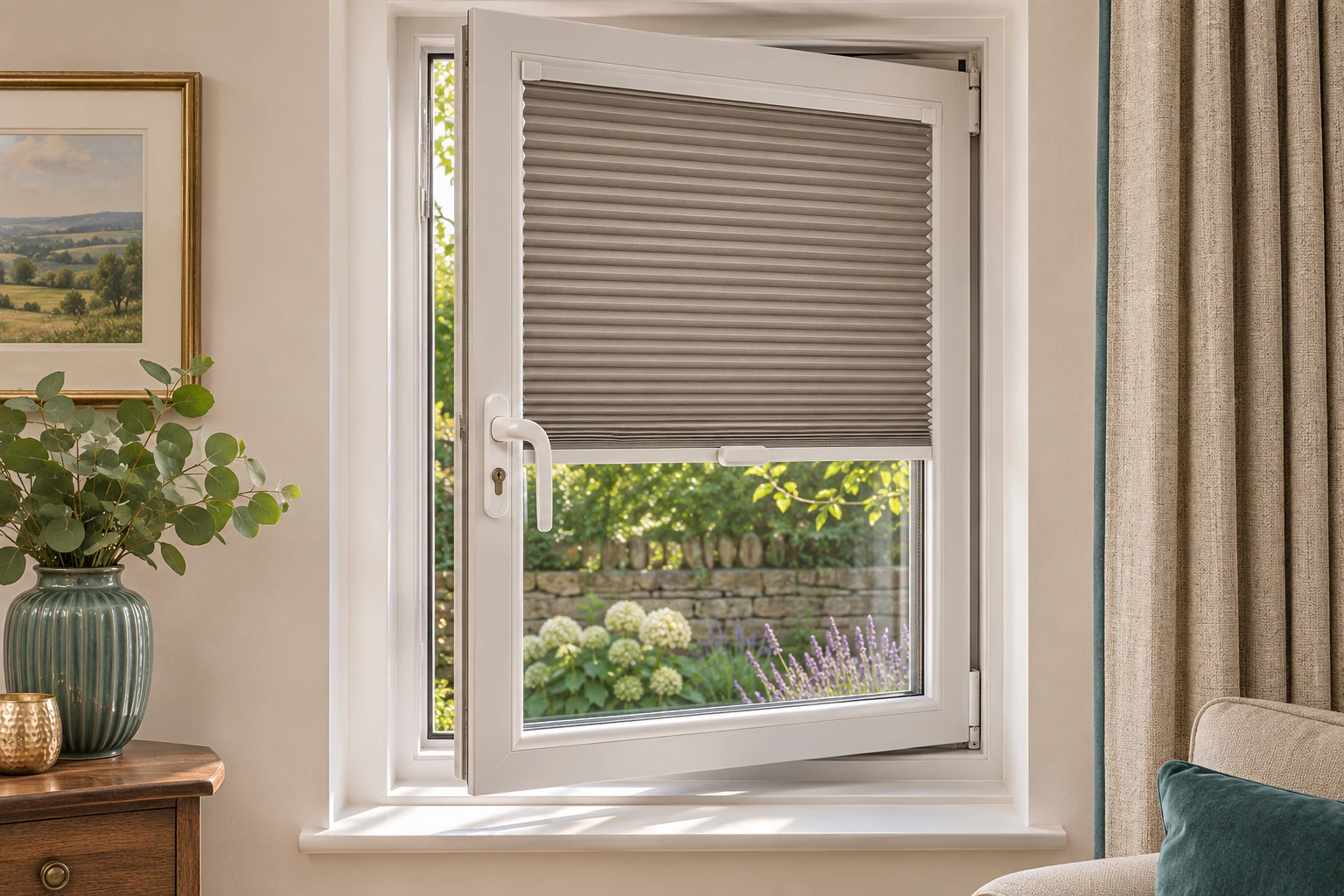
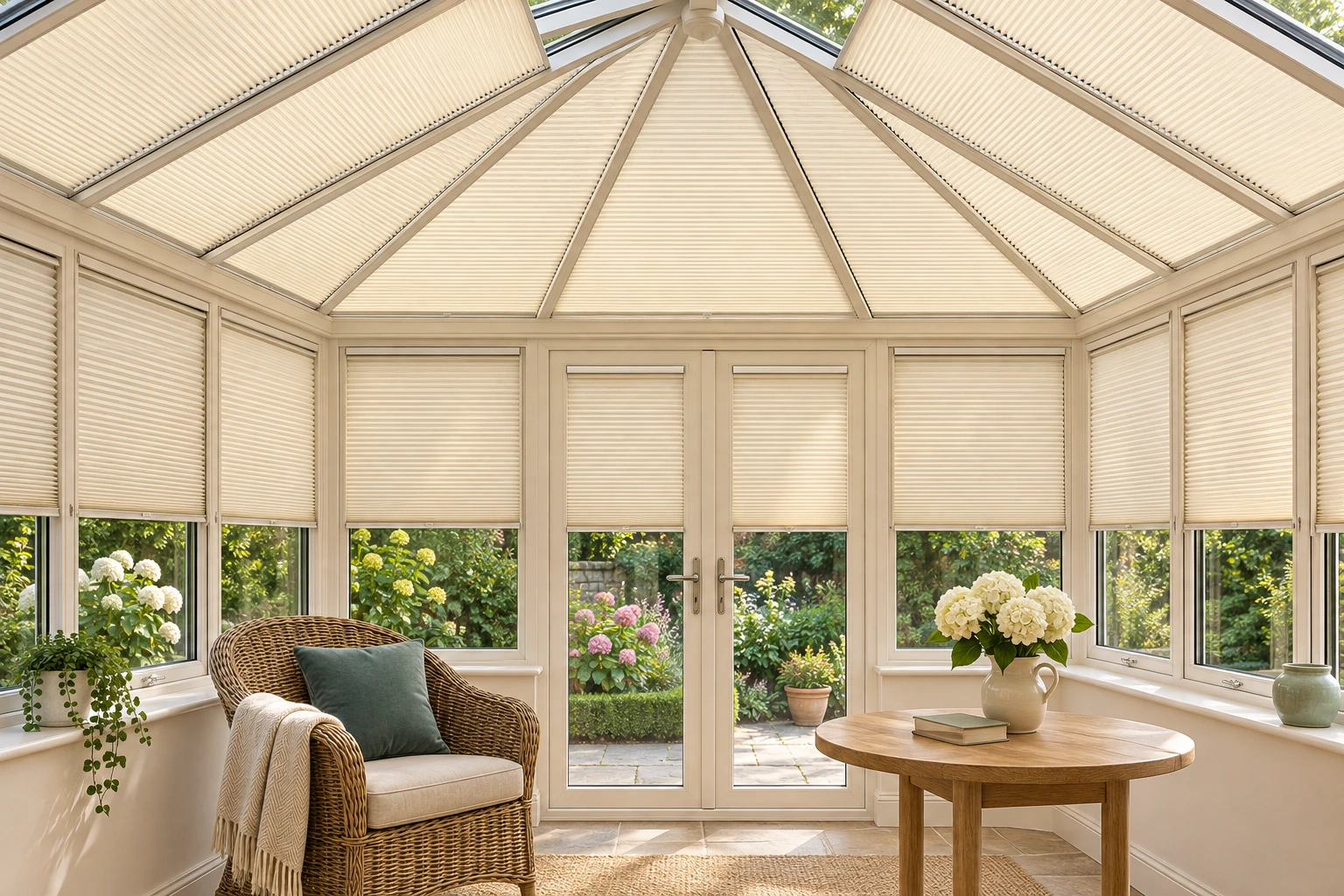
Check how the blind behaves at the opening
A tensioned blind needs a compatible fixing arrangement; an angled or shaped opening may also require additional supports. We explain any rails, wires or fixed areas that will remain visible before an order is placed. Not every part of a shaped blind will necessarily move.
Pleated cloth needs sensible care to retain its form. Follow the manufacturer’s guidance on regular operation and cleaning, and keep objects out of the path of the bottom rail. At handover we explain how to move the rails without twisting or pulling on the fabric.