01 / The detail
Treat the raised blind as part of the design
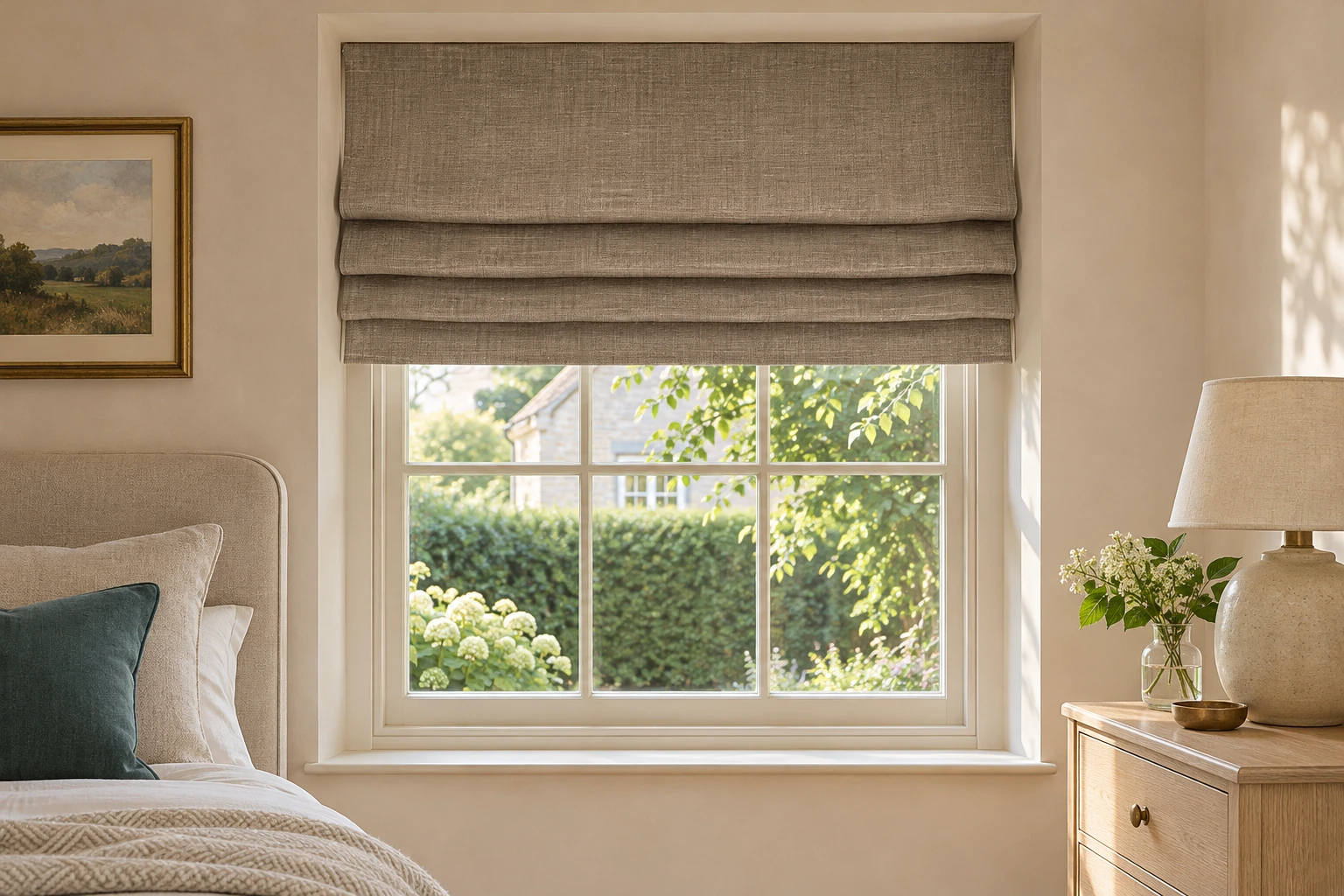
The folded fabric remains beneath the headrail when a Roman blind is raised. An inside-recess position therefore covers part of the upper glass. Fitting above the recess may expose more of the window, provided there is enough wall space and a suitable fixing surface.
We assess that position against ceiling details, handles and opening sashes. On a group of windows, setting out the headrails together can be more important visually than matching each individual recess. Tell us about any decorating or building work still to be completed.
02 / The detail
Discuss pattern placement and lining together
A large motif may look different once it is divided by the folds or made into a narrow blind. Where several Romans sit beside one another, pattern placement and any fabric joins should be discussed before manufacture rather than assumed from a small sample.
The lining influences the body of the finished blind and the amount of light passing through it. Blackout lining can improve room darkening, but it does not seal the perimeter or necessarily remove light through construction details. We explain those limits for the chosen make-up.
03 / The detail
Plan for operation and later care
A fabric with a substantial lining can create a heavier blind, which affects the suitable headrail and controls. We check reach and discuss compatible motorisation where appropriate. Safety requirements apply to the operating system and the cords on the back of the blind.
Care depends on the face fabric, lining and construction. Do not assume a Roman blind can be put in a washing machine or cleaned while still attached to its mechanism. Keep the supplied care information and ask before attempting to remove the fabric assembly.