01 / The detail
Describe the result in practical terms
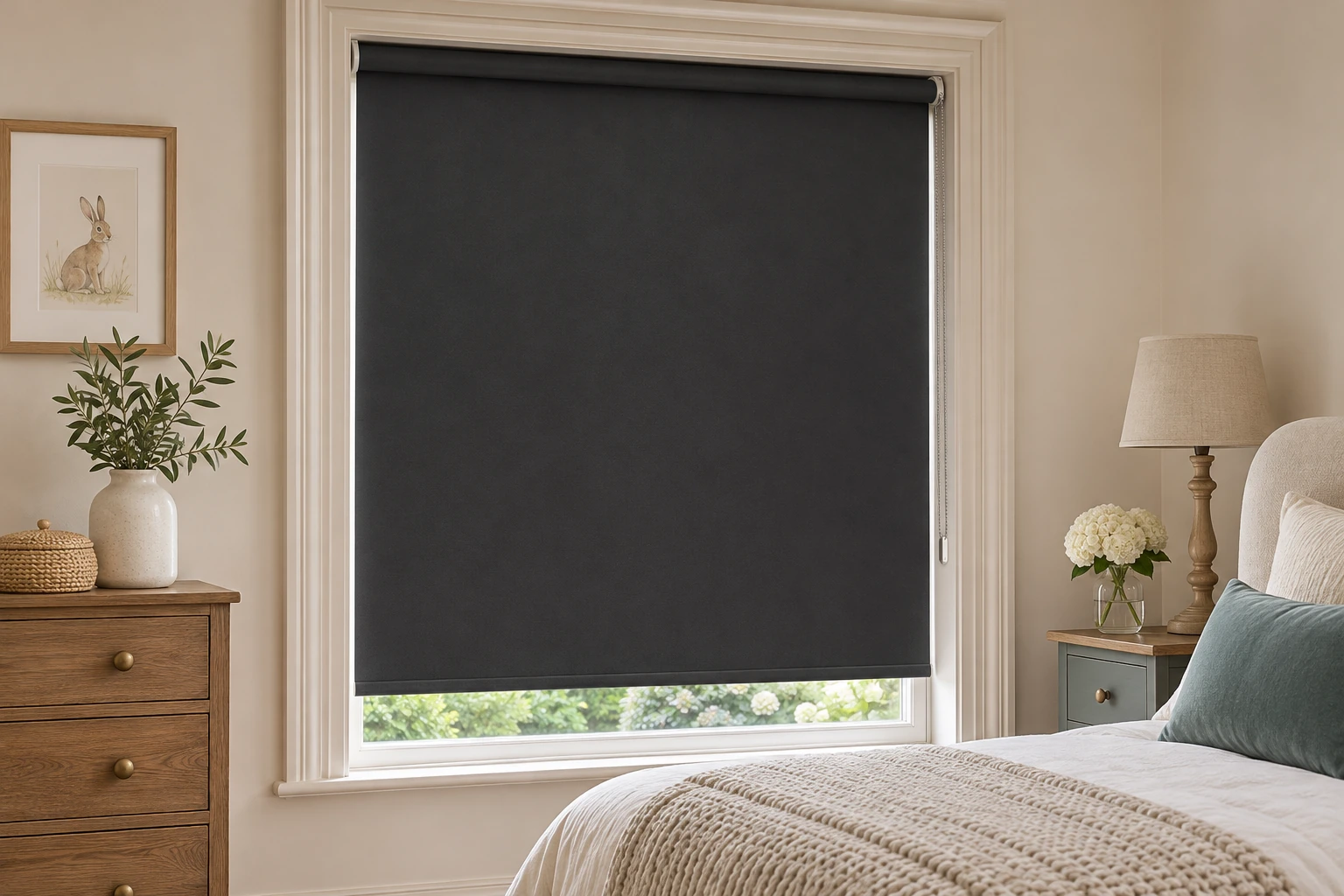
A bedroom that feels noticeably darker may need a different specification from a room used for projection or other light-sensitive work. Tell us when the room is used, which directions admit sunlight and whether light around the edges would still be a problem.
This helps avoid choosing a product solely because its fabric is called blackout. We explain what the proposed installation is intended to achieve and identify any openings, glazing panels or gaps outside the blind’s scope.
02 / The detail
Follow the routes that light can take
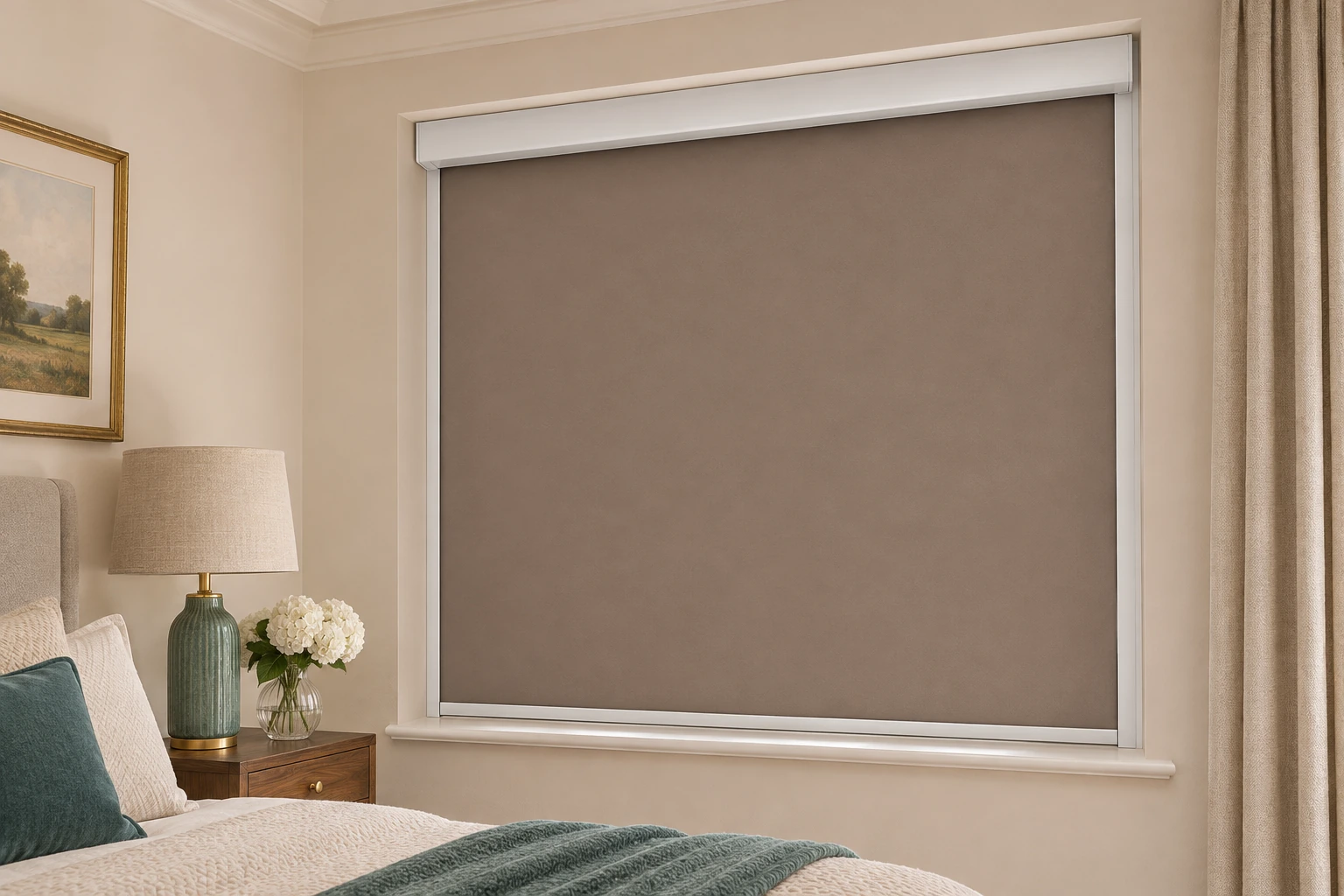
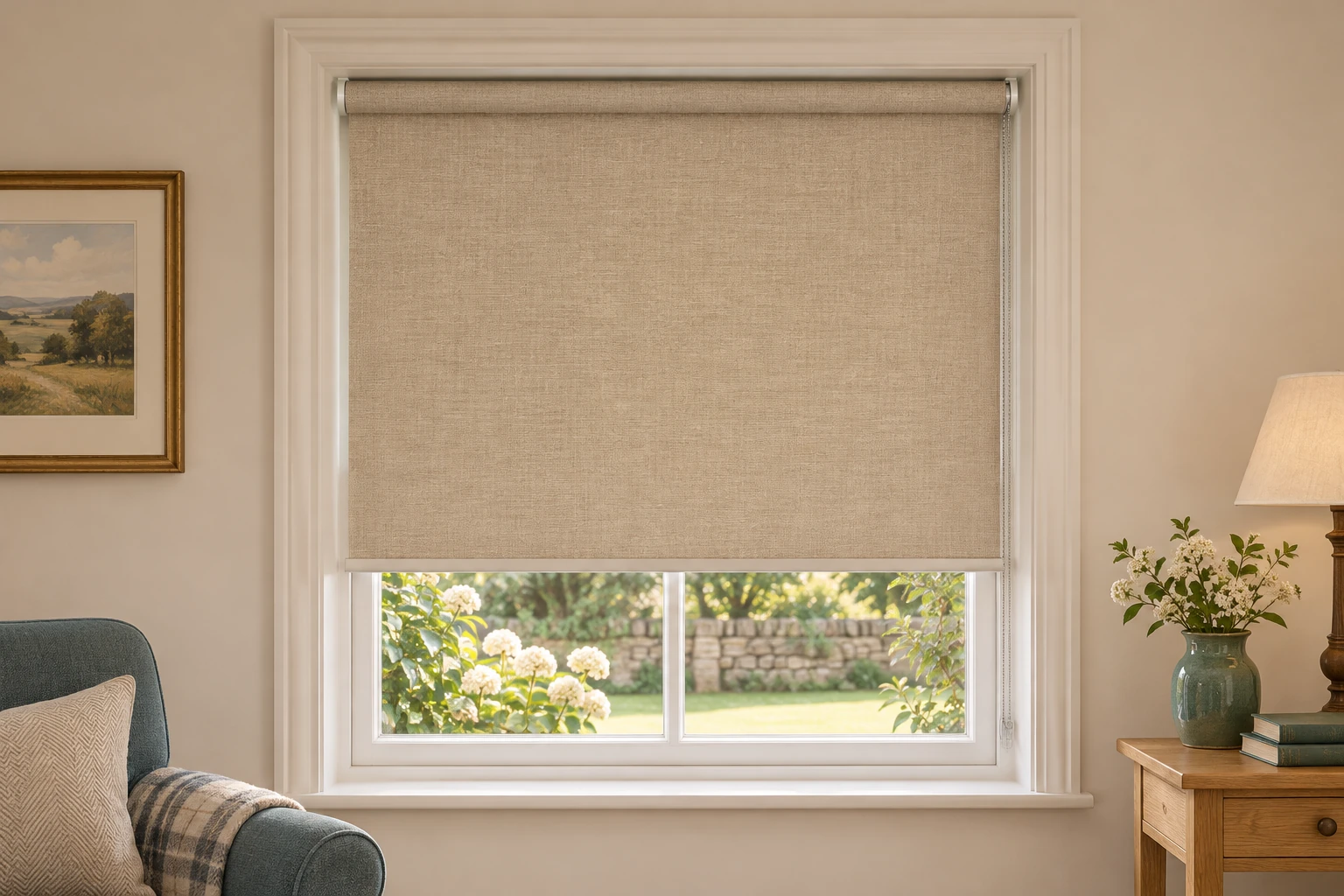
On a conventional roller, the fabric does not fill the entire width of its mechanism. Light can pass beside it, over the top or around the bottom. A face-fixed arrangement with greater overlap may improve the result where the wall and window layout permit.
For more demanding applications, a suitable cassette with side and bottom detailing can provide better control of the perimeter. The recess must support that arrangement, and obstructions or uneven surfaces need assessment. A decorative headbox by itself does not establish blackout performance.
03 / The detail
Keep ventilation and operation in the plan
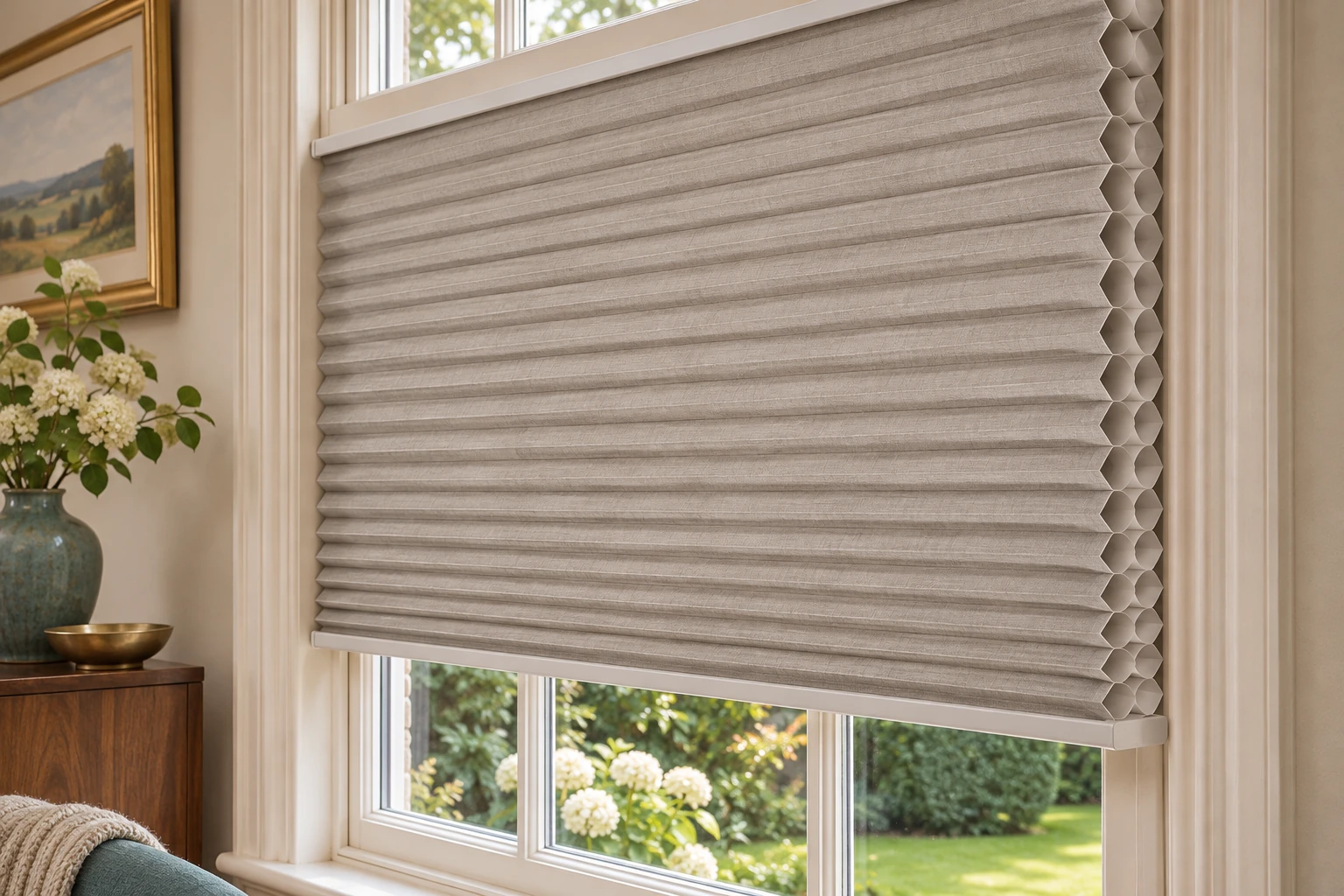
Room darkening should work alongside the way you open, ventilate and maintain the window. We check handles, moving sashes and the practical position of the controls. High windows or several blinds used together may justify a compatible motorised arrangement.
Where young children use the room, suitable control safety is part of the specification and fitting. We also discuss realistic care and access to any channels. The agreed system and fitting details should be recorded clearly before manufacture, especially where a particular performance outcome matters.