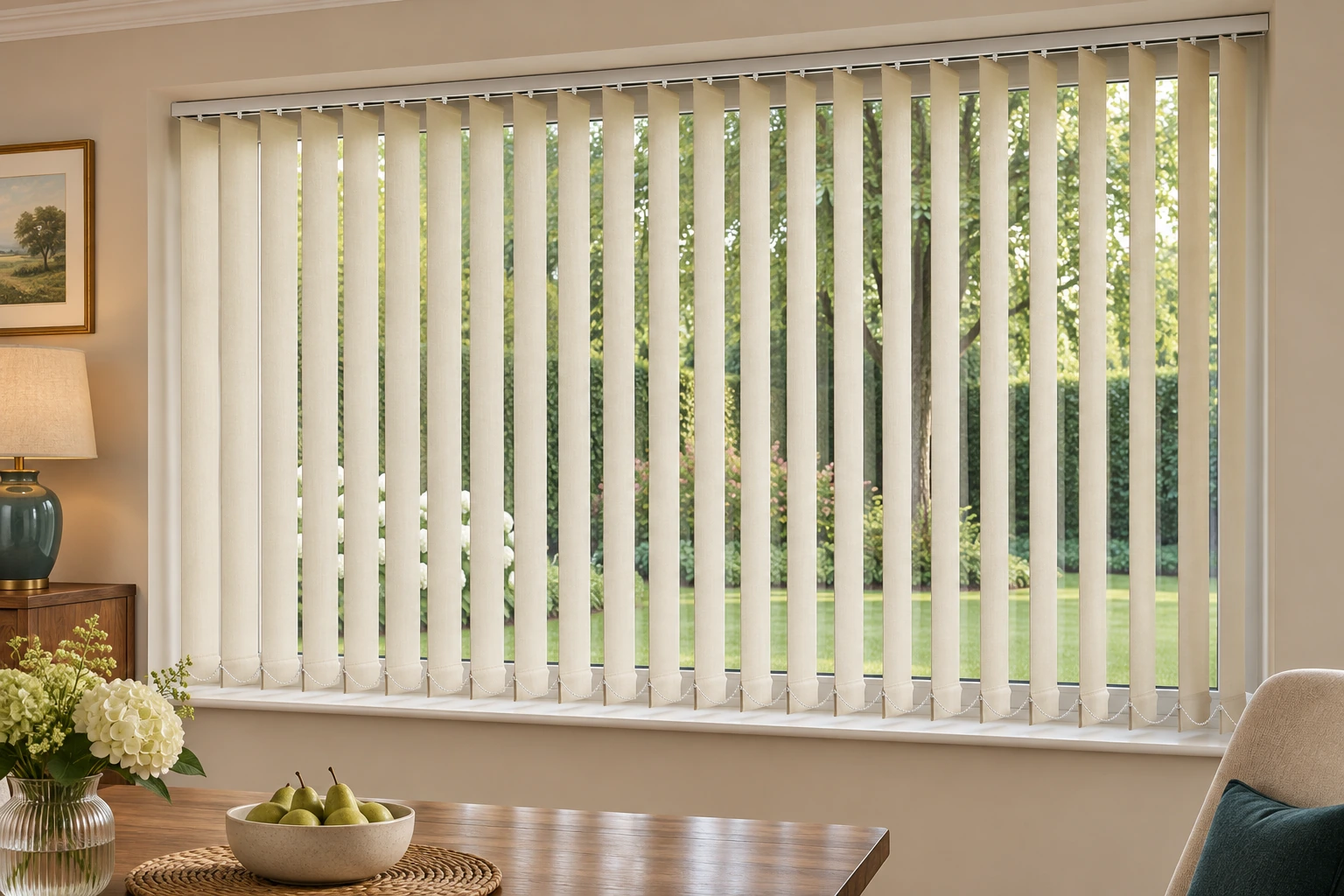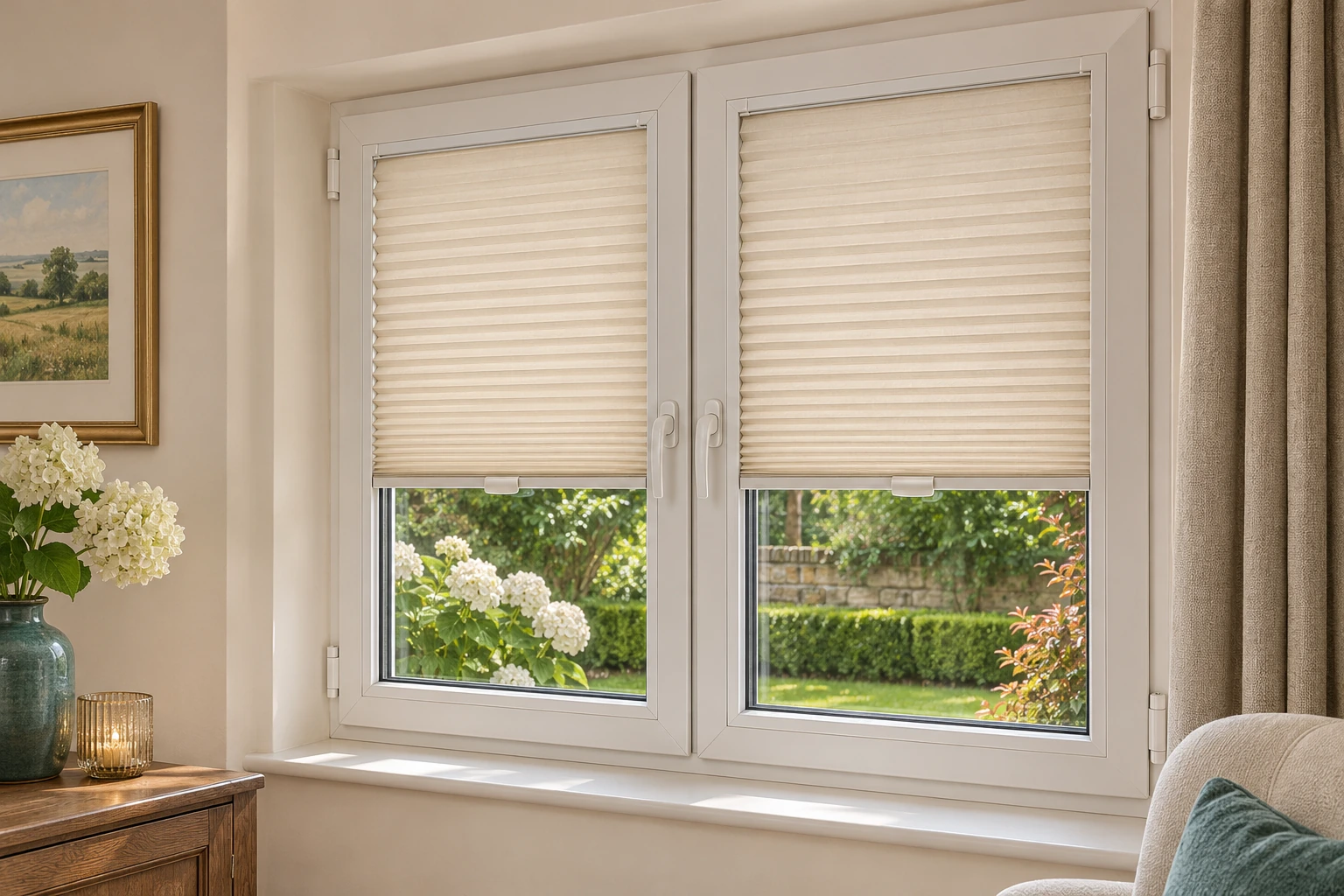
01 / The detail
Think about the doorway when it is open
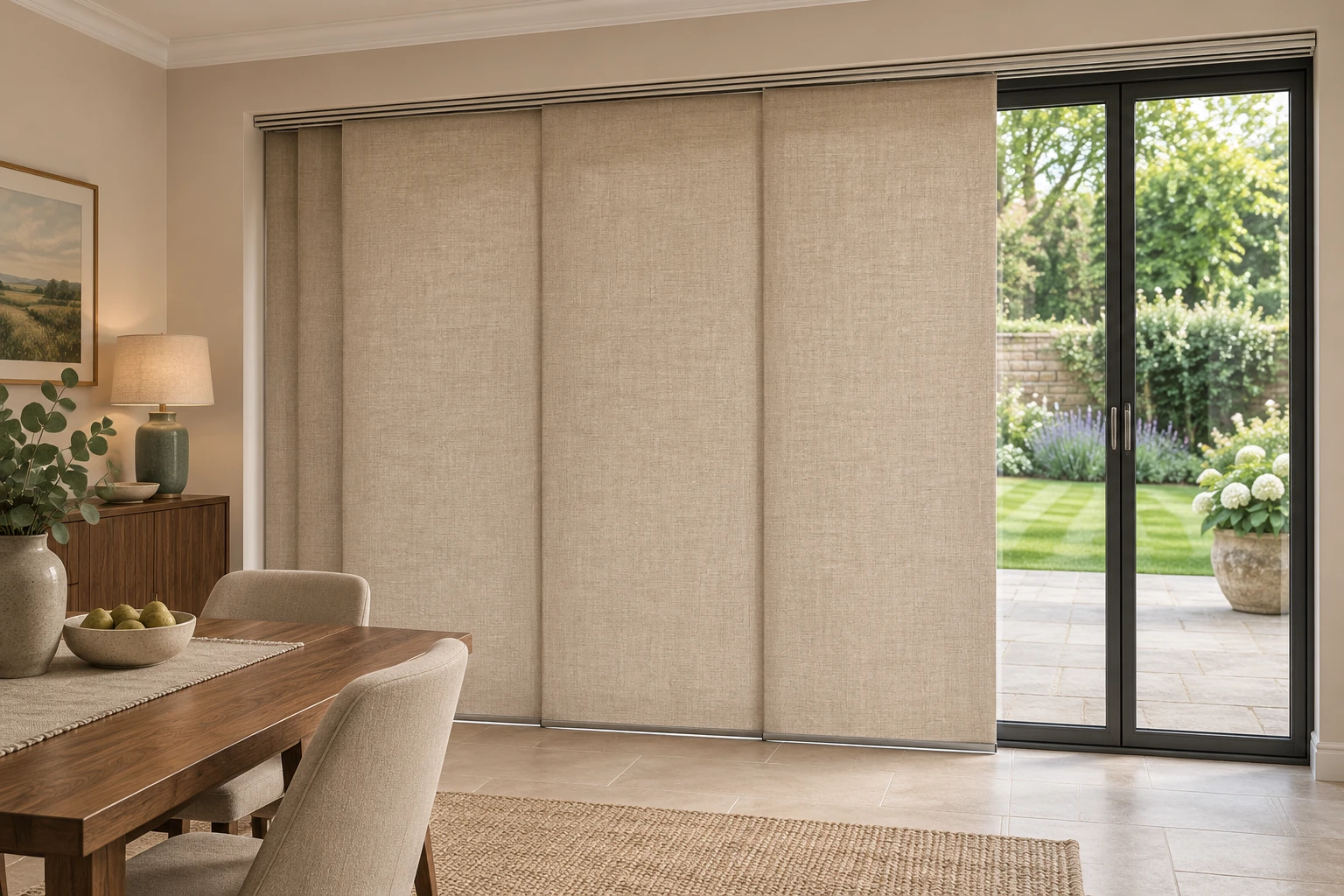
Allusion’s separate fabric sections can allow you to pass between them when the door is open. That is different from drawing a conventional curtain each time, but the doorway still needs a sensible layout and the fabric must be treated carefully.
We assess the door furniture, floor clearance and available stacking space. If the opening is exposed to strong draughts, discuss how the blind will be used and gathered clear. It should not be treated as an insect screen or a barrier across an open door.
02 / The detail
Give the fabric room to hang and rotate
The track position determines how the vanes clear handles, walls and furniture. A ceiling fixing may produce a different visual effect from a wall-mounted installation, but either needs suitable structural support. We establish the position before deciding the final drop.
Long fabric sections make uneven floors and changes in level more noticeable. We also consider where the gathered fabric will sit relative to radiators, seating and the active door leaf. Photographs of the whole opening are particularly useful for an initial discussion.
03 / The detail
See privacy as an adjustable effect
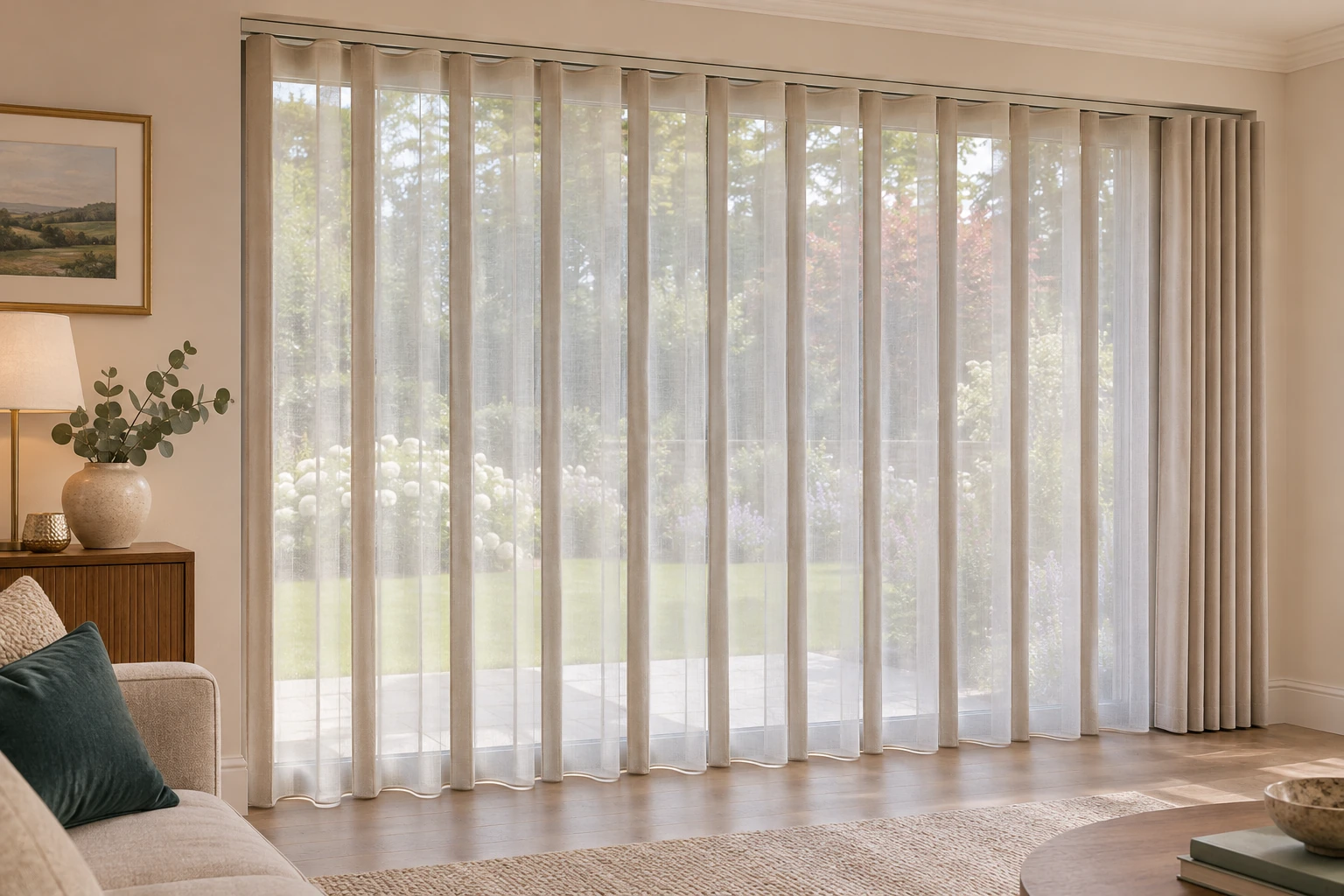
Rotating the vanes changes how the sheer and denser sections overlap. The chosen fabric and lighting determine the actual view and privacy. Review the options with evening use in mind if the room is overlooked, and choose a different system where strict blackout is essential.
Wand operation is available on suitable systems, and compatible motorised arrangements can be discussed. We confirm the actual controls and demonstrate the sequence for rotating and drawing the blind. Cleaning instructions belong to the selected fabric; do not assume all vanes can be washed.