01 / The detail
Decide where the open blind will sit
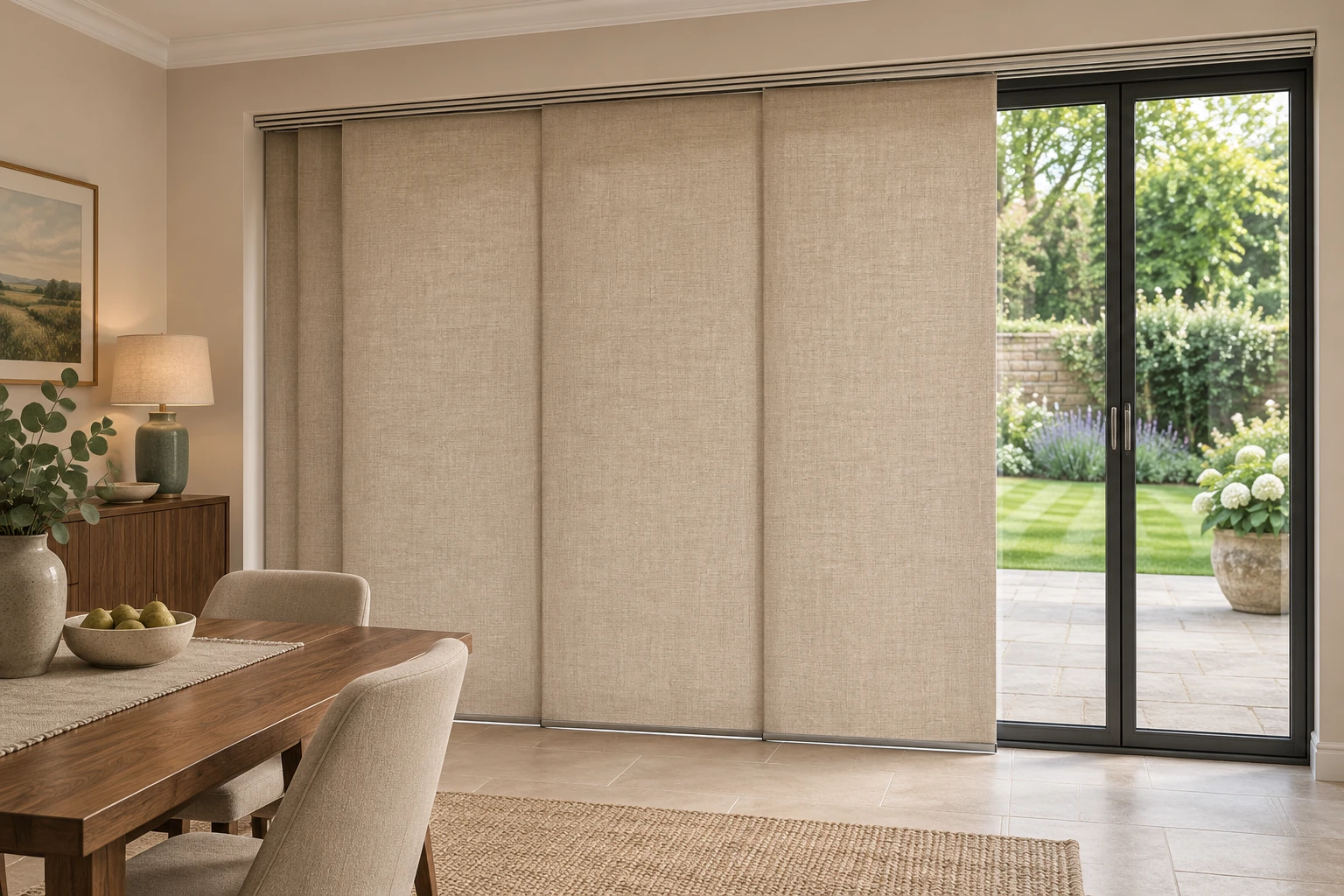
Each panel retains its width as it moves. The panels overlap into a stack rather than gathering like curtain fabric, so part of the opening remains covered unless there is suitable space for the track to extend beyond it.
We draw the proposed arrangement around the actual doorway and wall space. The number of panels, direction of travel and overlap should be considered together. For frequent access through a narrow door leaf, a different blind type may prove more convenient.
02 / The detail
Consider the fabric at panel scale
Large panels show the texture and pattern of a material differently from small swatches. Plain or subtly textured fabrics often emphasise the clean divisions; a large print needs its placement and repetition discussed before the panels are made.
Fabric opacity is a separate decision. Screen materials can preserve some outlook, while opaque cloth offers greater visual screening. Even blackout material does not close every overlap or perimeter gap in a panel arrangement, so this is not a dedicated light-tight solution.
03 / The detail
Check the track, fixings and daily access
A multi-channel track needs sufficient depth and a suitable supporting surface. We assess how far the panels will project from the glazing and whether handles, radiators or ceiling details would obstruct their travel. Room-divider applications need the same careful fixing assessment.
The chosen control should be accessible without reaching through the panels. Suitable wand and other system-specific options can be discussed. At handover, we demonstrate smooth movement and explain how to keep the track and fabric clear of obstacles and avoid pulling directly on the cloth.