01 / The detail
Choose the operating experience first
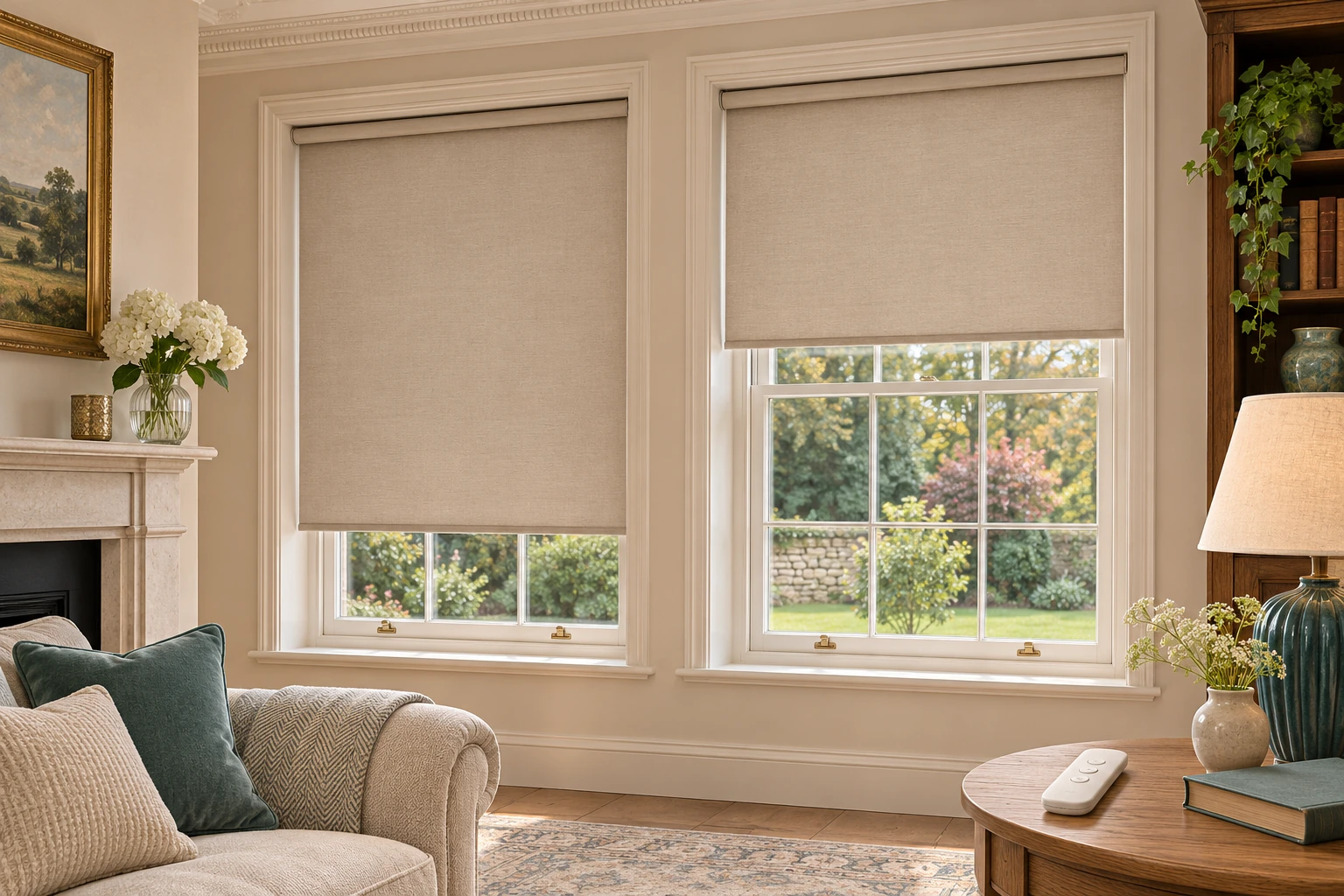
A remote can provide a simple way to raise and lower the blinds. App control, voice commands and scheduled movements introduce additional compatibility requirements. The exact motor technology, controller and any hub need to work together; the word smart does not establish that compatibility.
For an existing home-control installation, send the system details or introduce the contractor responsible for it. We agree which functions are included and who will complete any integration. That prevents a blind being ordered on the assumption that it will communicate with every platform.
02 / The detail
Make power and maintenance accessible
Rechargeable motors can avoid a new power cable at some windows, but their charging point still needs to be reachable. Battery duration varies with the product, blind size and use. A battery system is not automatically suitable for every large or demanding installation.
Wired motors require the correct supply and an agreed route to it. We discuss cable positions, any separate electrical work and access to the motor before the fitting details are fixed. Concealing everything permanently behind finished joinery can make later servicing unnecessarily difficult.
03 / The detail
Include commissioning and everyday control
The specification should identify the blinds, motors, individual controls and any room groups. During installation we set and check the required travel limits for the agreed system and demonstrate its normal operation. Keep the controller and product information with your order documents.
Ask how the chosen system behaves during a power or internet interruption and how it is charged or reset. Not all motors can be moved manually. The best arrangement is one the household or building team can operate confidently without relying on an unexplained collection of apps.