01 / The detail
Moisture resistance needs a product-level check
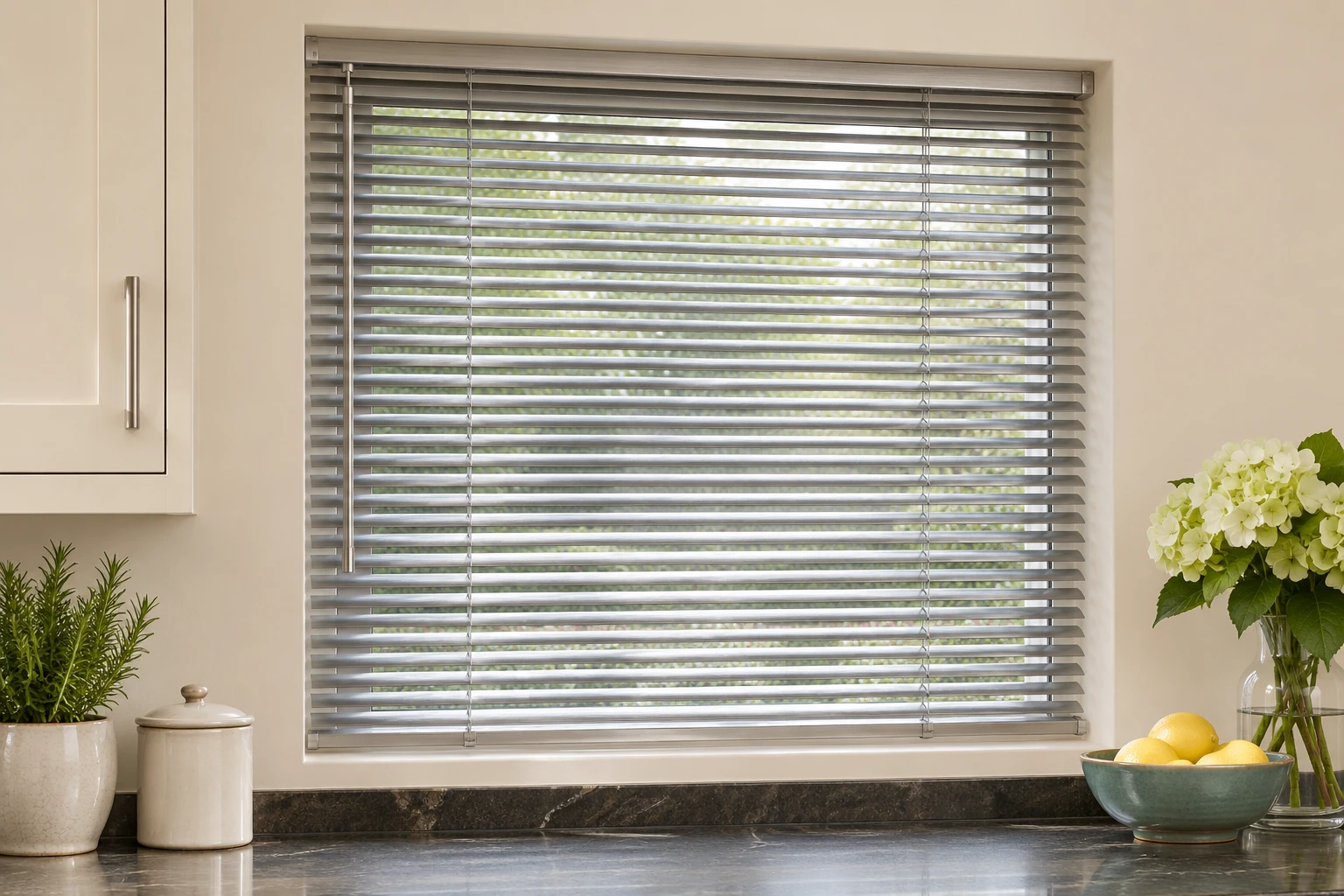
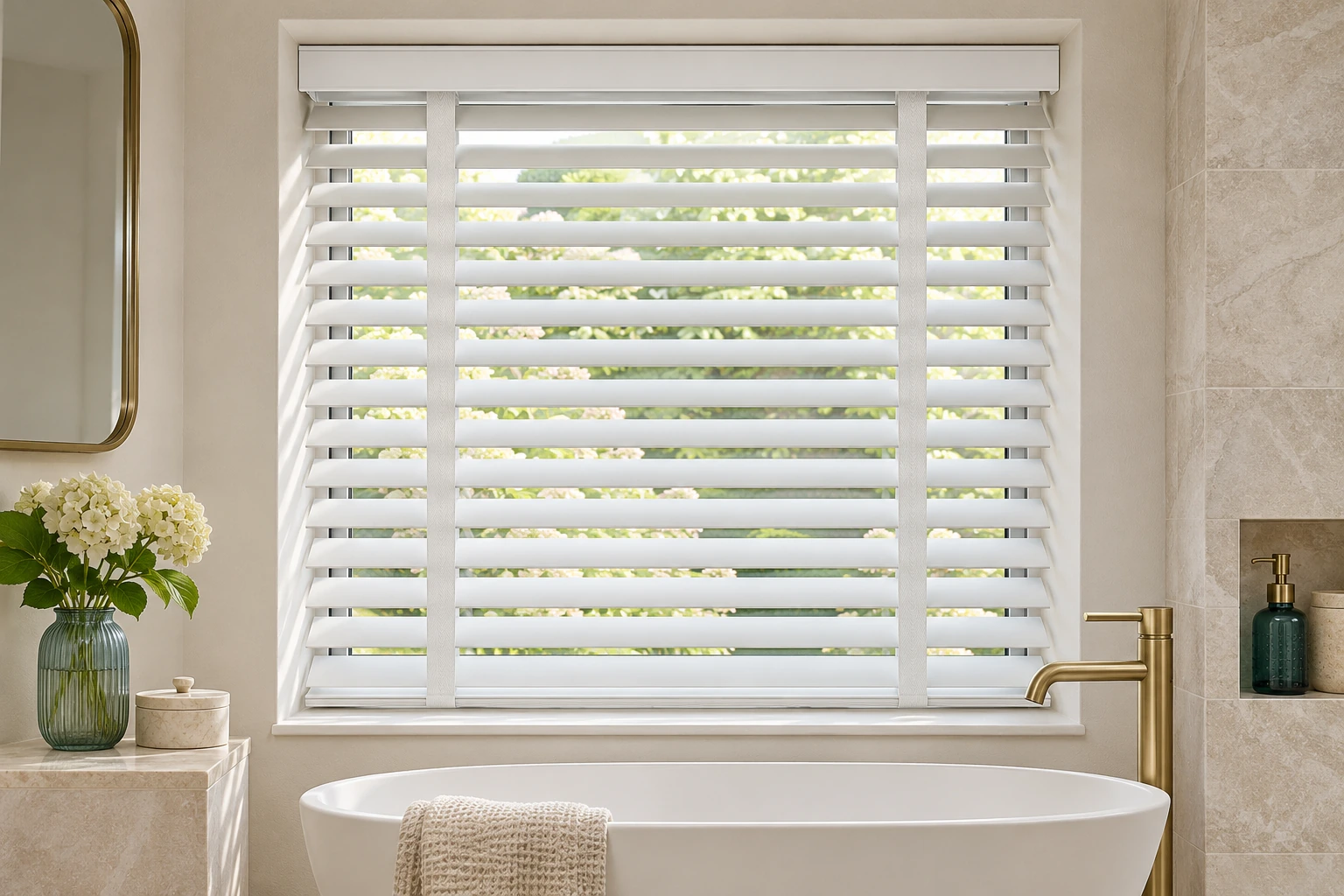
The term faux wood covers different manufactured materials and finishes. We check the chosen range’s suitability for the actual conditions instead of treating every version as waterproof. Hardware and controls also need consideration where condensation is persistent.
Tell us whether the window sits close to a shower, bath, hob or sink. That helps establish sensible clearances and whether another treatment would be more appropriate. A blind should not be expected to solve poor ventilation or withstand unrestricted heat and water exposure.
02 / The detail
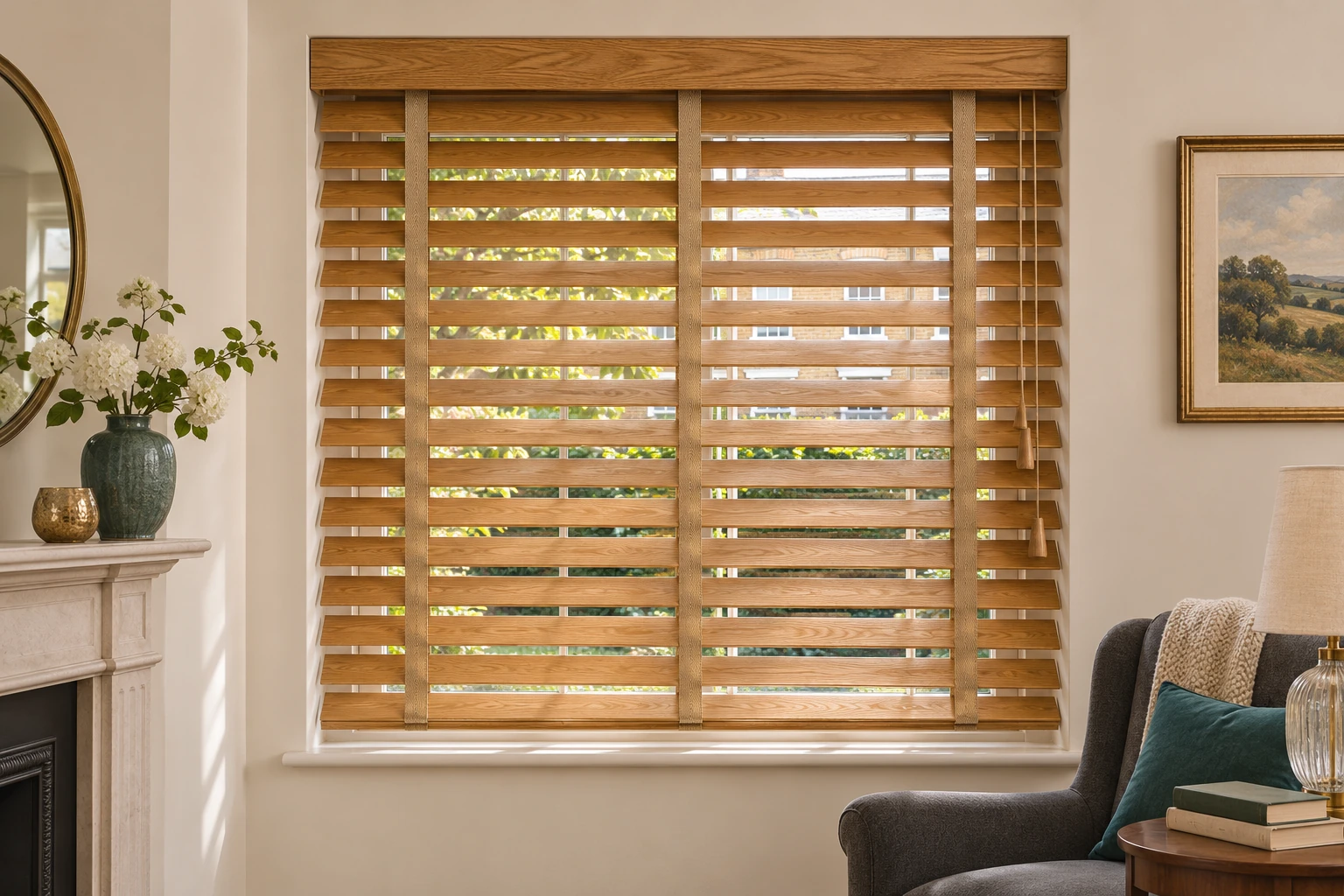
Allow for the weight of a larger blind
A broad faux wood installation can be substantial to lift. The comfortable solution may be two or more blinds following the window divisions, especially if they need to be raised frequently. We assess the proposed size against the selected system rather than promising one unit across every opening.
Dividing an installation adds junctions, so the arrangement also needs to look intentional. We discuss where the headrails meet, how the slats align visually and which controls will be easiest to reach from the room.
03 / The detail
Refine the details before manufacture
White and cream finishes are not interchangeable, particularly beside existing painted frames. Surface texture, slat width and optional tapes affect the appearance across a whole window. Review samples with your other finishes where a close colour relationship matters.
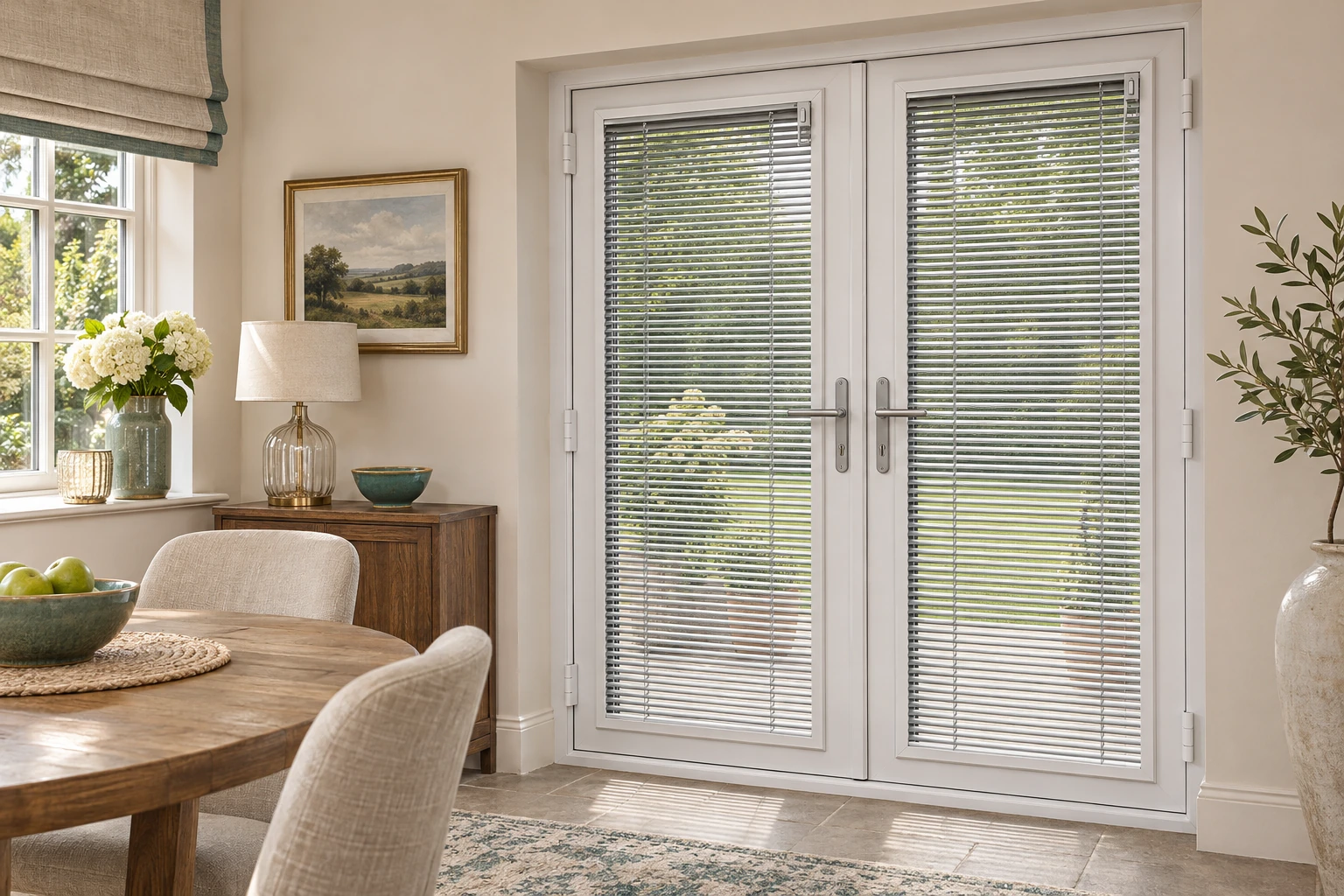
We check the raised stack and the sweep of the slats against handles and inward-opening windows. After fitting, the team demonstrates the controls and explains appropriate care. Keep the quotation and product details so any later enquiry relates to the correct material and system.