01 / The detail
Separate the appearance of the frame and slats
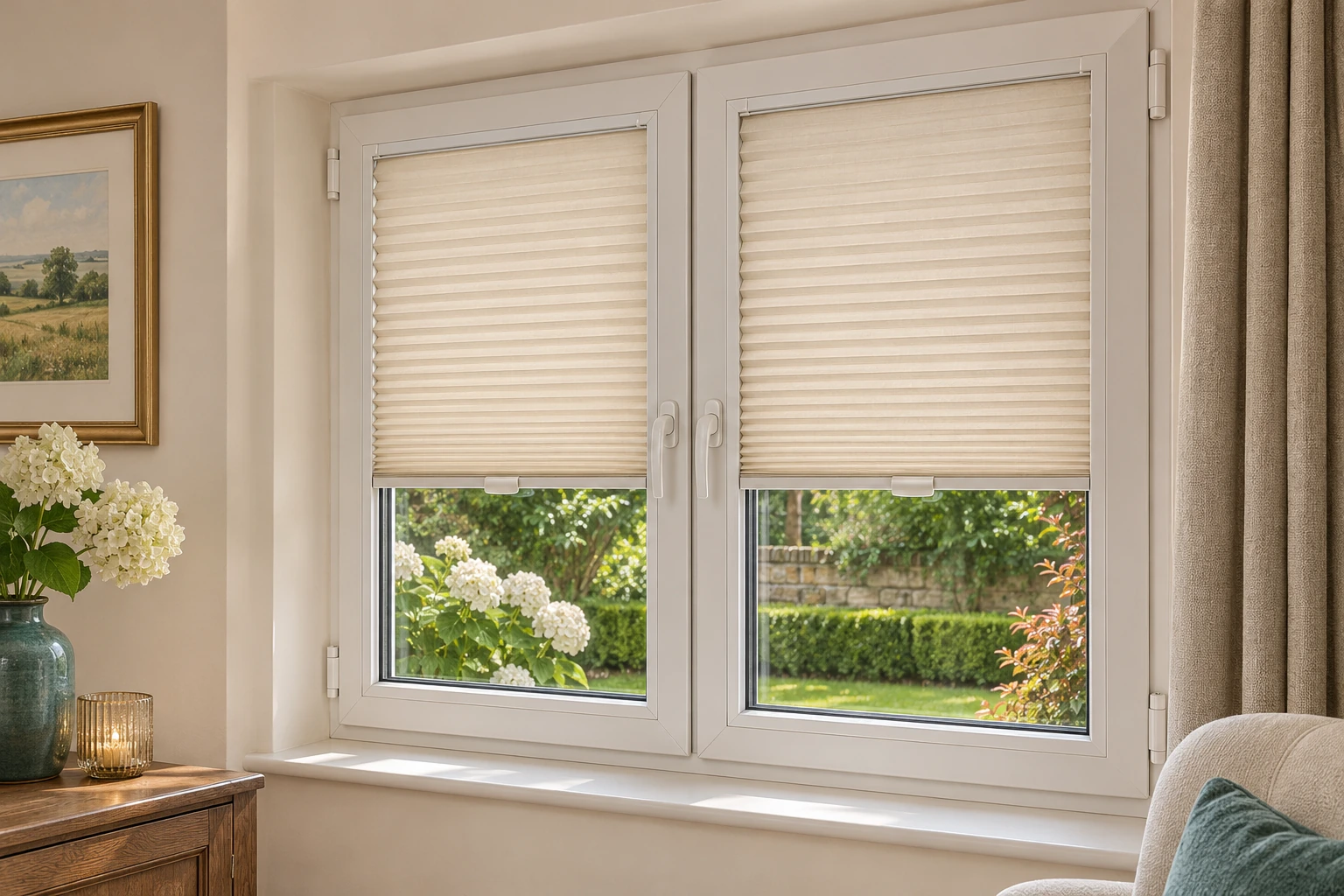
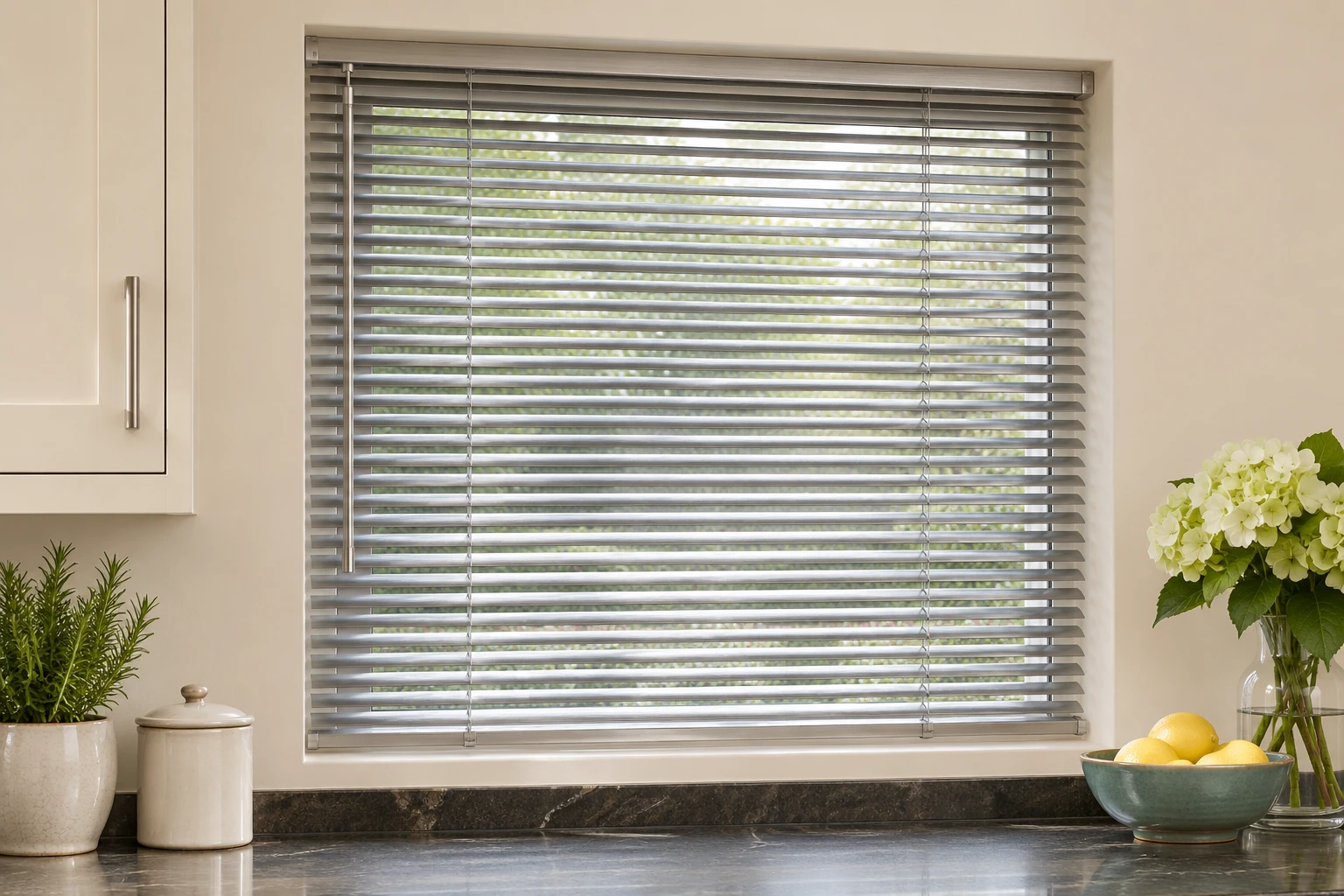
The frame usually relates visually to the window, while the slats become the moving surface within it. A brushed metal slat, for example, may sit inside a white frame without trying to imitate the window finish. We can compare combinations before the order is agreed.
Because the glazing is divided into smaller blind areas, slat proportions matter. Look at a representative sample rather than judging a close-up photograph alone. Where different windows sit side by side, we plan the finish and operating positions as a set.
02 / The detail
Check the slats through their full movement
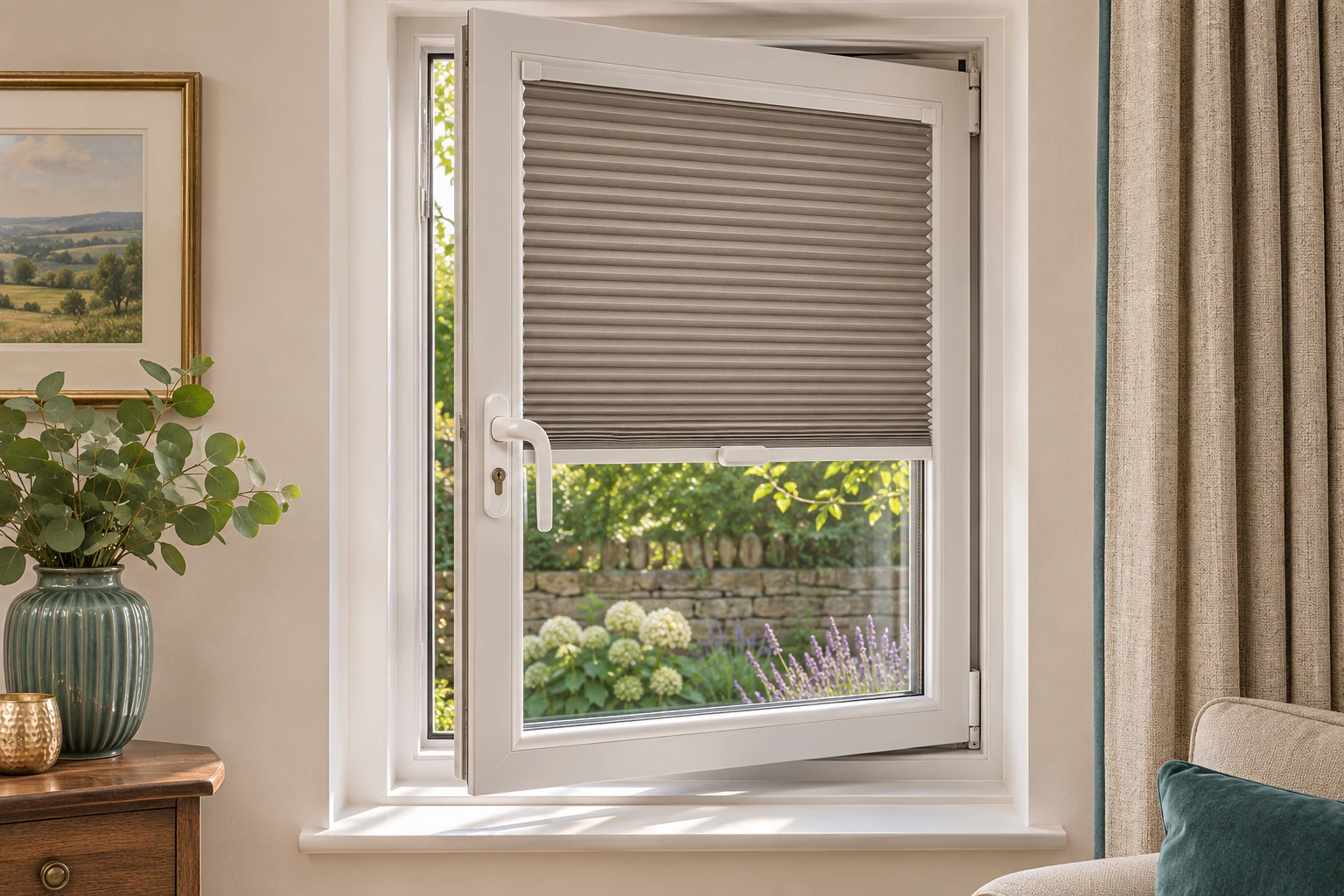
The blind needs room for the slats to tilt and for the stack to gather, as well as room for the surrounding Perfect Fit frame. Handles and projecting trim can limit the useful movement even when the overall glass size appears suitable.
At survey we also check how the window opens. A frame must not collide with a wall, hinge or neighbouring door panel. Where clearances are marginal, we compare suitable alternatives rather than relying on the promise that every framed blind will fit.
03 / The detail
Use the controls for the way you want to live
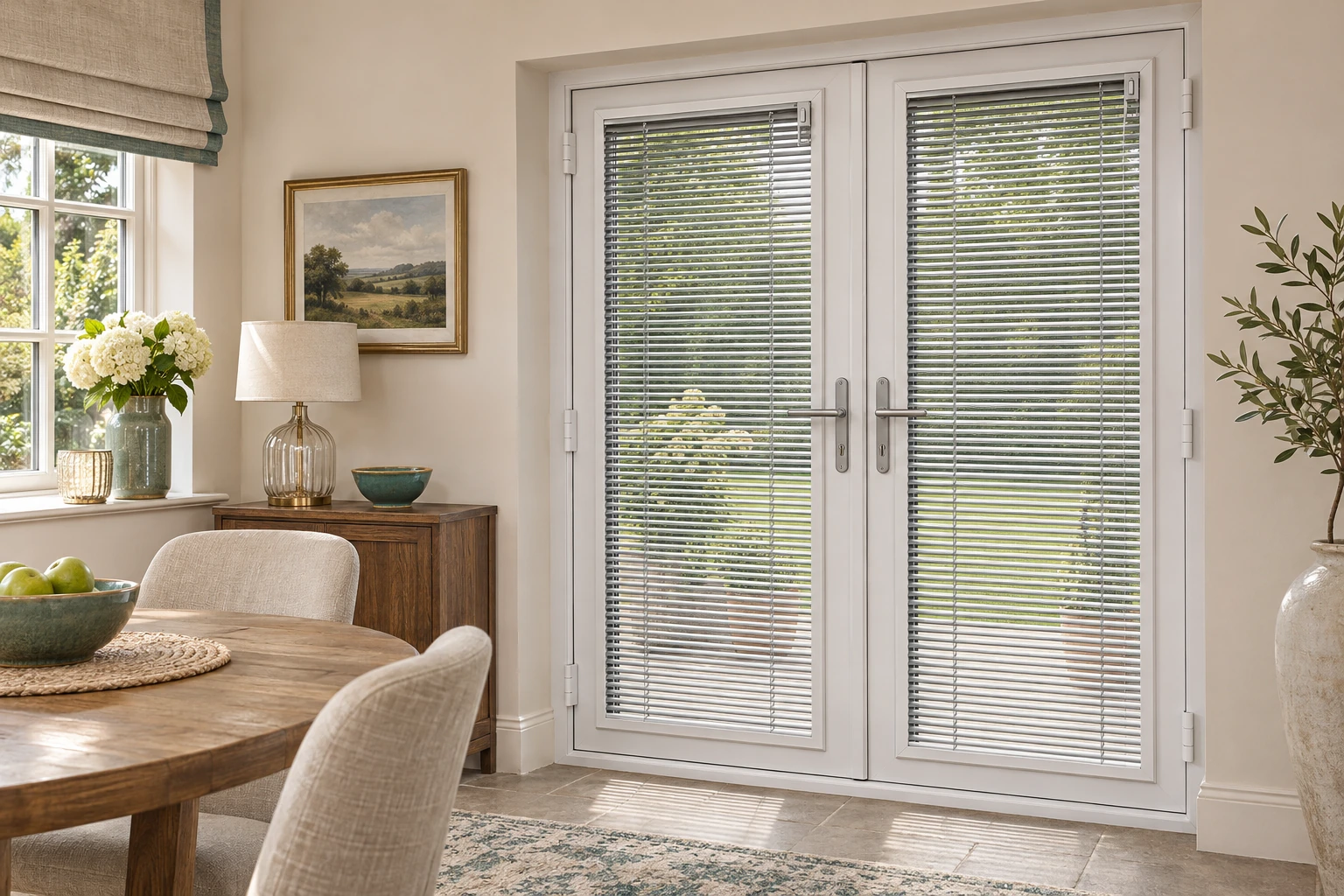
Some rooms mainly need slat-angle adjustments; others need the blind raised regularly to expose the glass. We establish how the selected model handles both operations and whether each user can reach the relevant control comfortably.
A Venetian remains a slatted product. Light can enter between slats and around its edges, even within a frame. For bedrooms with demanding darkness requirements, discuss a suitable fabric or dedicated blackout arrangement. We provide operating and care guidance for the specific slat finish installed.