01 / The detail
Decide which part of the glass to cover
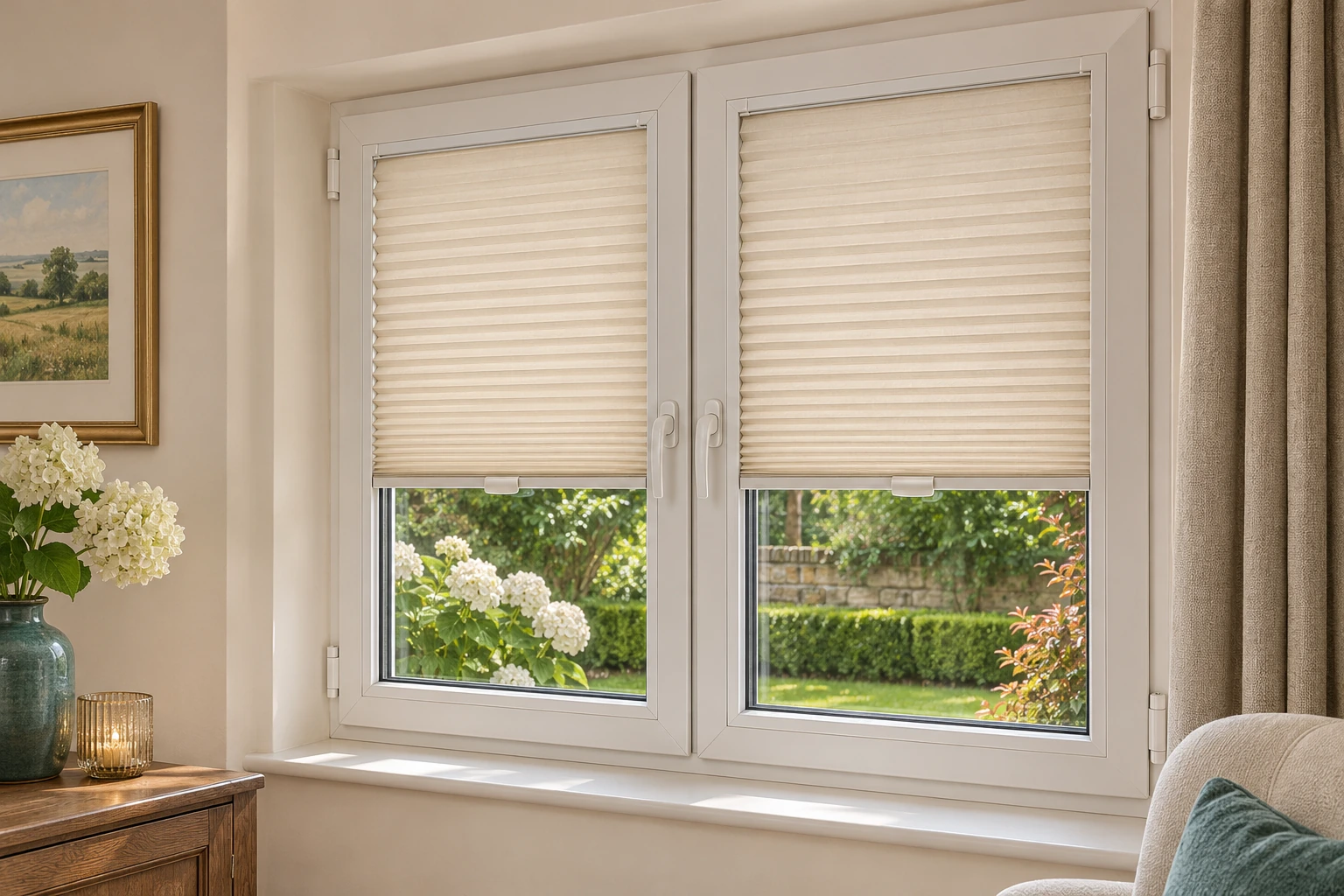
On a suitable top-down/bottom-up system, the fabric can be positioned to preserve daylight above a privacy screen. That can work well where a low street view matters more than covering the entire window. Other models have a different travel arrangement.
We establish the intended movement before selecting the system. Think about the heights at which the rails will sit and whether a worktop, sofa or plant display would make them difficult to reach. A convenient position matters as much as a neat frame.
02 / The detail
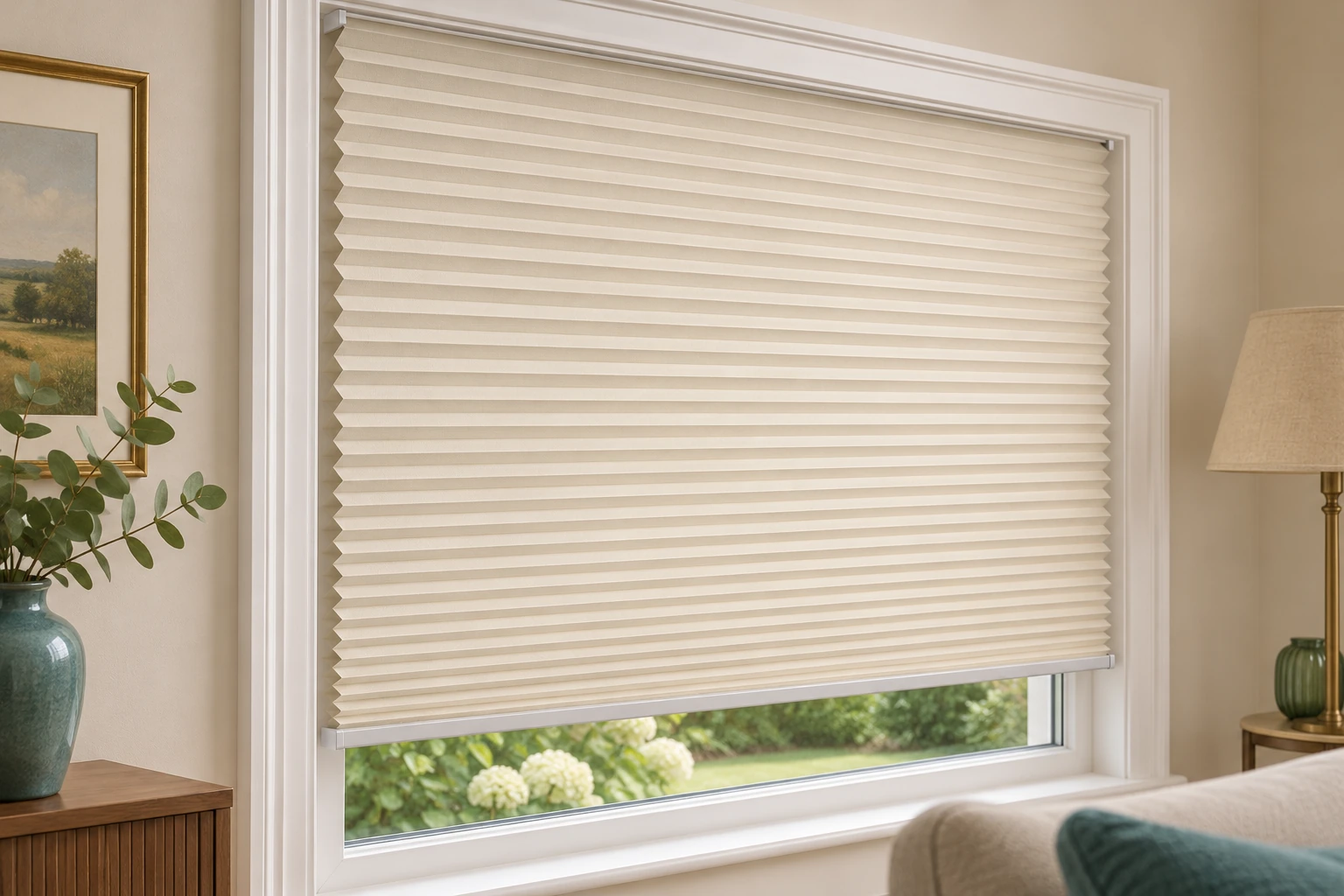
Compare single pleats and cellular cloth
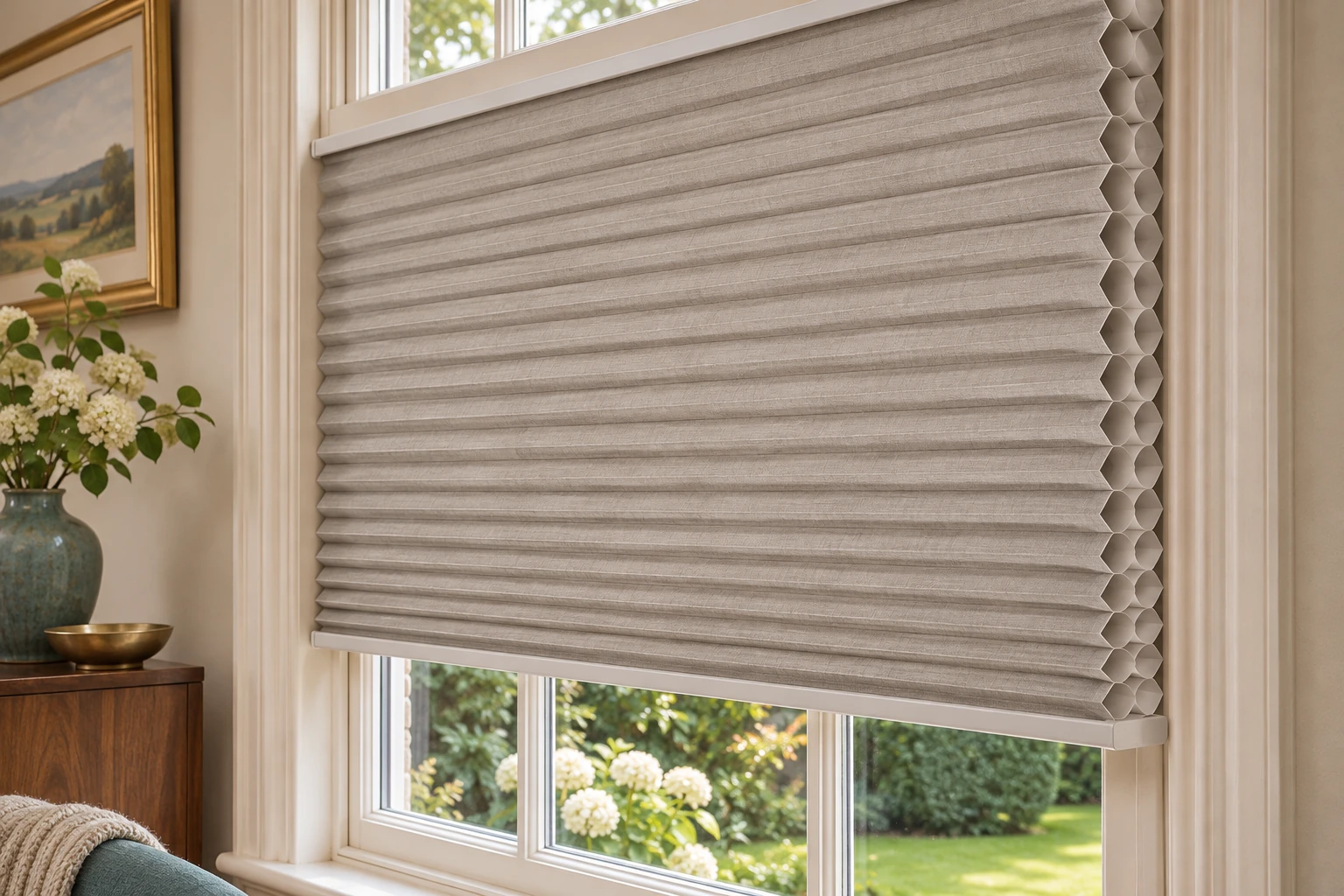
Single-pleated fabric has a folded sheet construction. Cellular fabric creates pockets between its faces, changing the appearance from the side and concealing internal cord routes on suitable designs. The two can look similar in a small online image.
Opacity and texture still need a separate choice. A light-filtering cloth may suit a living area; an opaque cellular option may be more useful in a bedroom. We explain the likely perimeter light and do not describe every framed fabric as a complete blackout treatment.
03 / The detail
Assess the whole opening, not just the glass
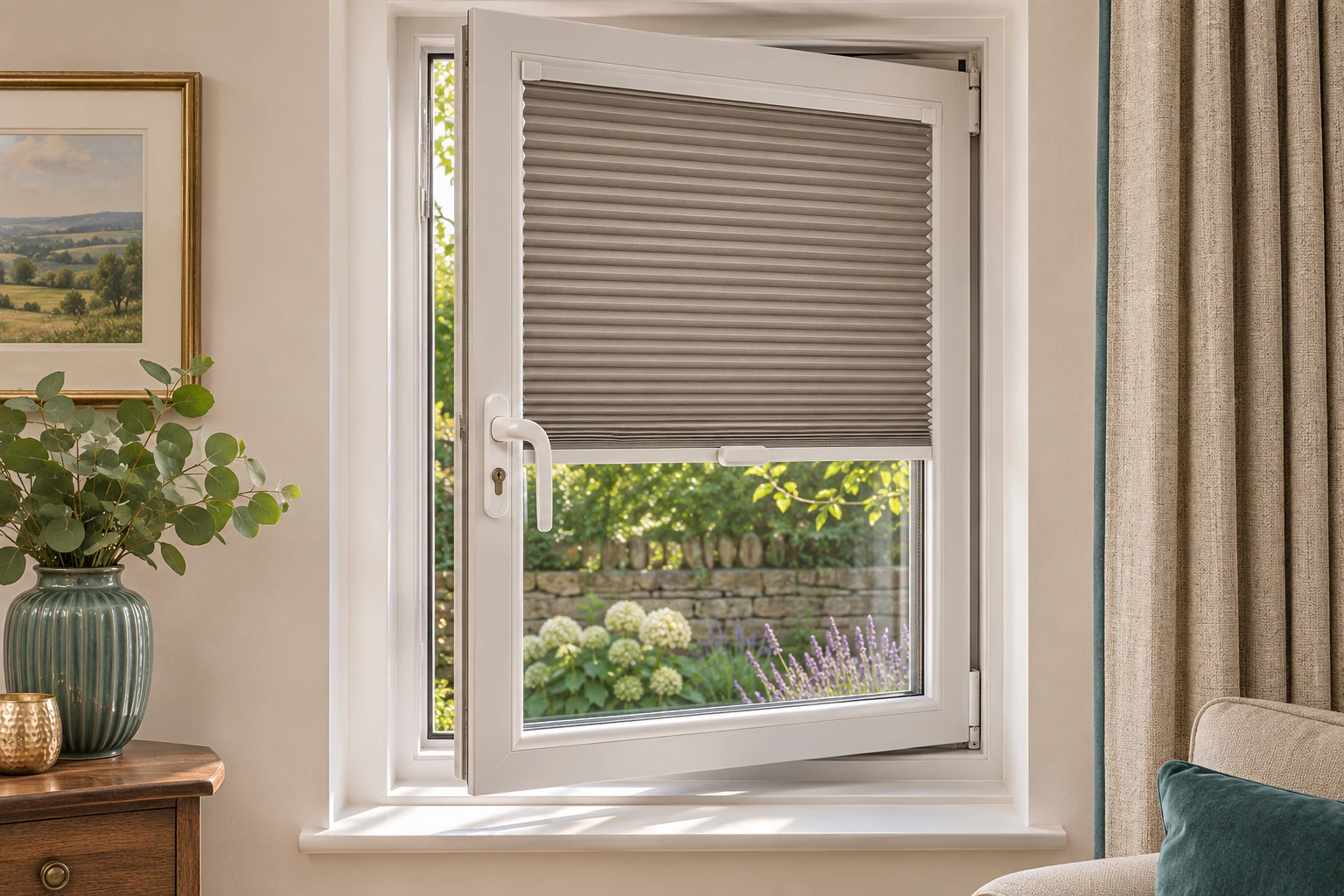
The glazing bead and seal must suit the chosen fixing method, and the frame needs clearance from handles and hinges. On folding doors, the extra depth can affect how closely panels park together. We assess these details before confirming that Perfect Fit is appropriate.
At fitting, we check the movement and show you how to guide the rail without twisting the fabric. The pleats should gather freely, with no objects in their path. Follow the supplied instructions for cleaning and for maintaining the fabric’s folded shape over time.