01 / The detail
Make sure the roller has room to work
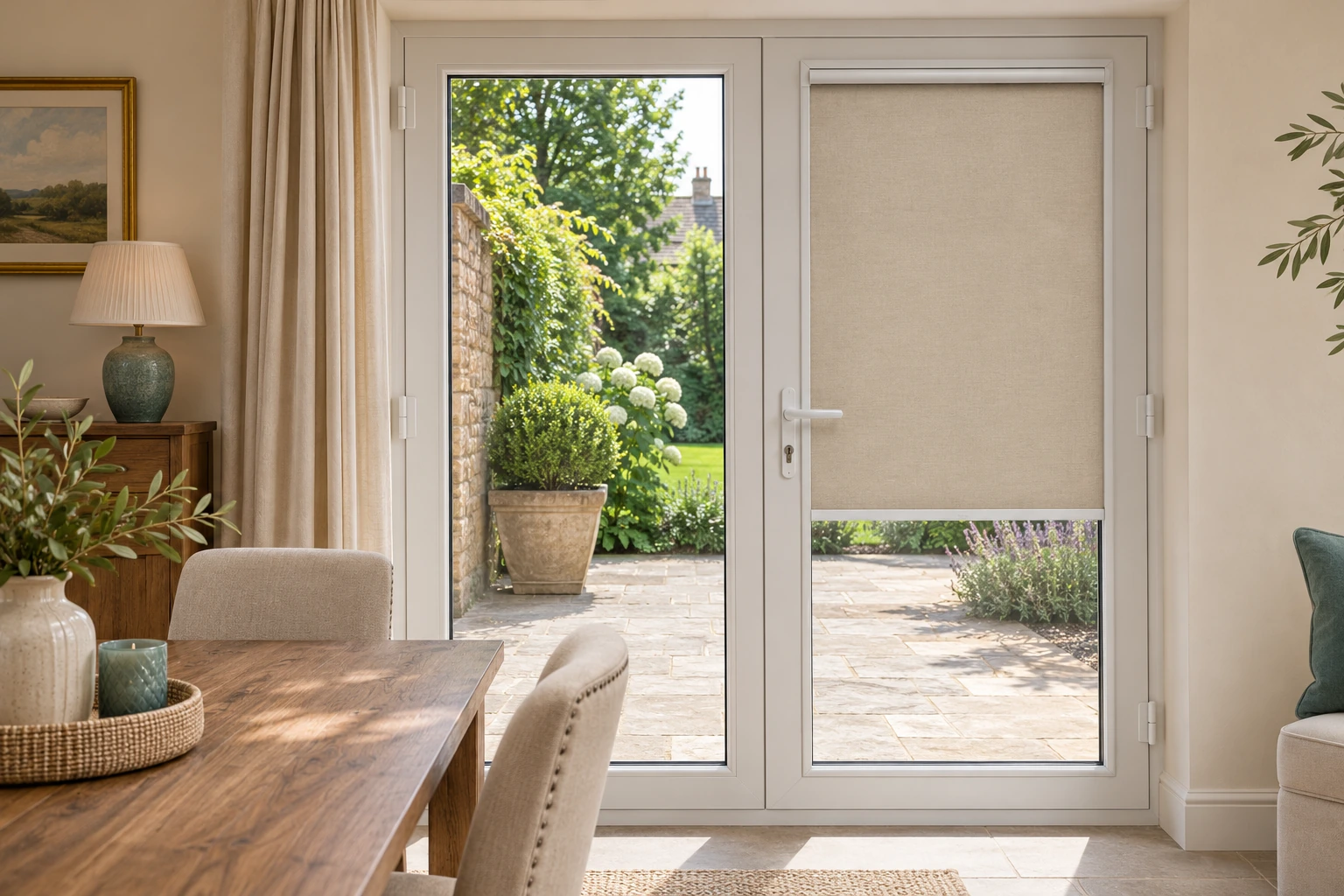
A roller needs space for its mechanism, fabric roll and moving bottom bar. Inside a framed system, that space must be assessed alongside glazing depth and the position of the handle. It cannot be established from the visible glass dimensions alone.
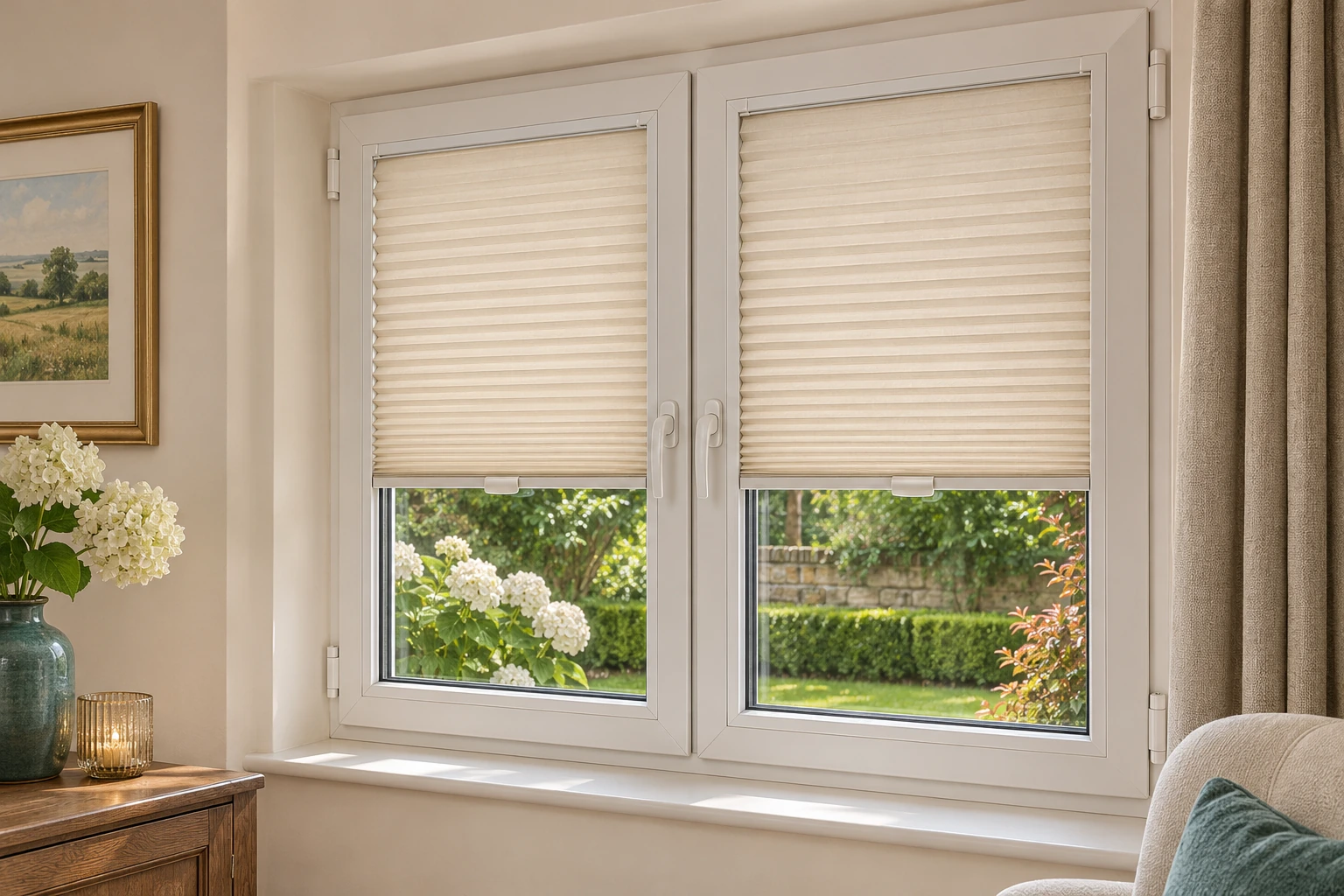
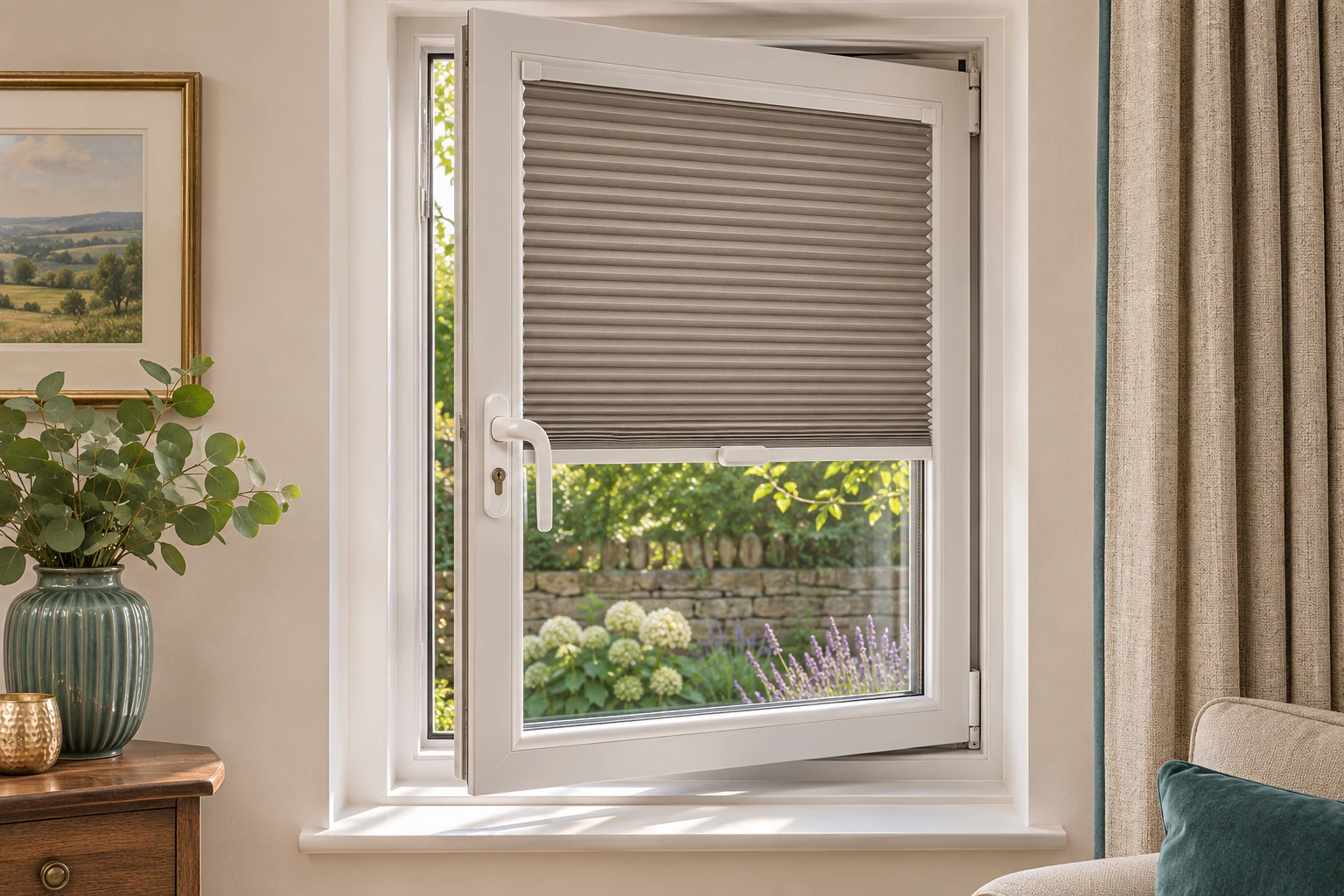
We check whether the proposed frame would interfere with hinges, surrounding trims or another pane when the door opens. On folding or sliding doors, the clearance in the parked position is particularly important. A suitable pleated alternative may be worth comparing if space is restricted.
02 / The detail
Choose fabric for a small, framed area
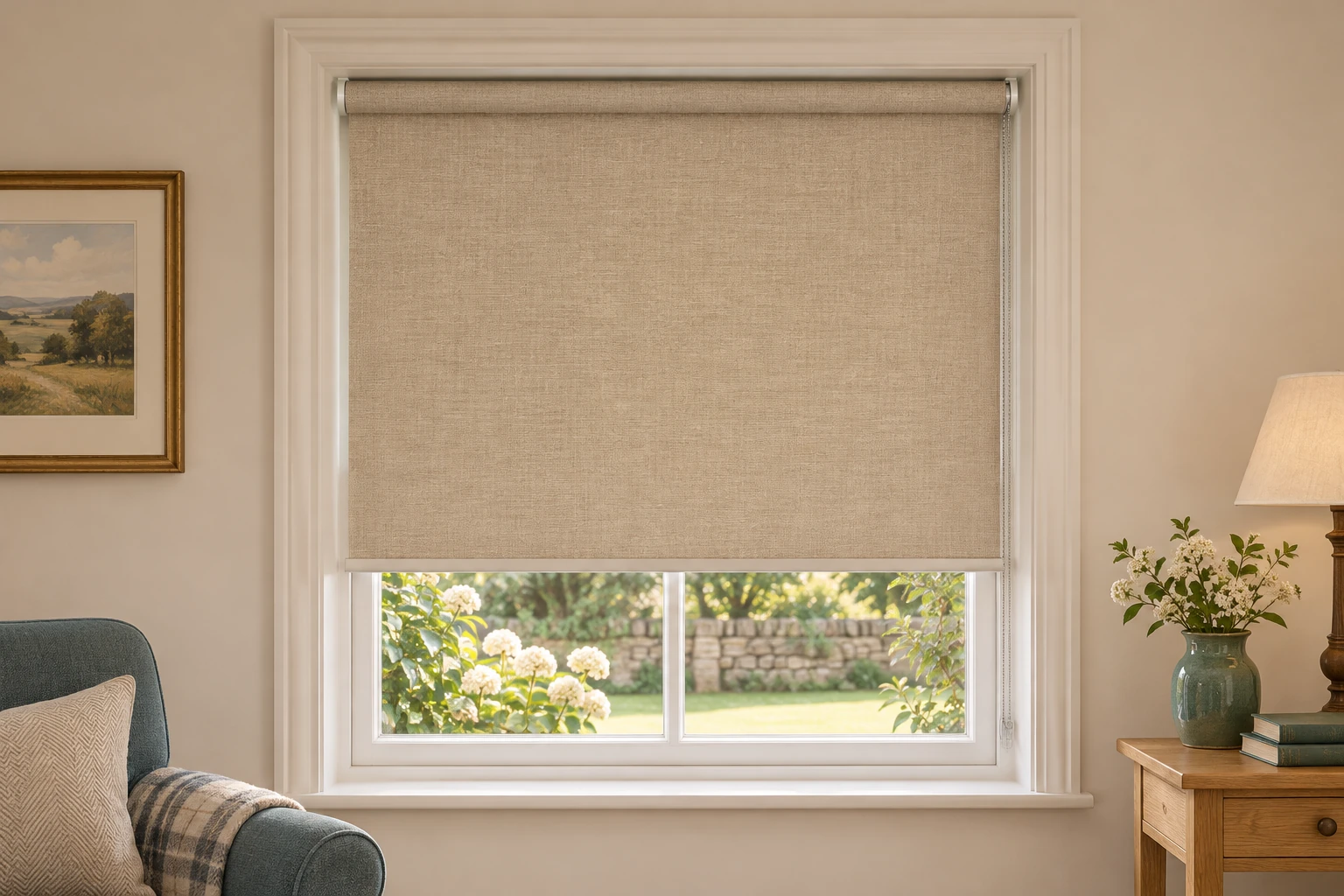
The frame divides the window into individual fabric panels. Plain or subtle textures can produce a quiet appearance; a large print may look quite different when repeated over several narrow panes. We discuss the overall composition before a material is selected.
Light-filtering and opaque fabrics serve different purposes. If room darkening is the main aim, we explain the limits of the complete roller arrangement. Blackout cloth does not make every framed installation light-tight, and adjacent glazing may still need treatment.
03 / The detail
Identify the actual operating method
Do not assume every Perfect Fit roller uses the same control. The selected system may have a suitable spring, chain or motorised arrangement, each with different implications for reach and everyday use. We confirm what is included in the quotation.
After installation we check the movement of both blind and window, demonstrate the control and explain the product’s care instructions. If the frame needs removing for cleaning, follow the guidance for that version rather than pulling at the fabric or glazing seal.