01 / The detail
Describe the exposure, not just the room name
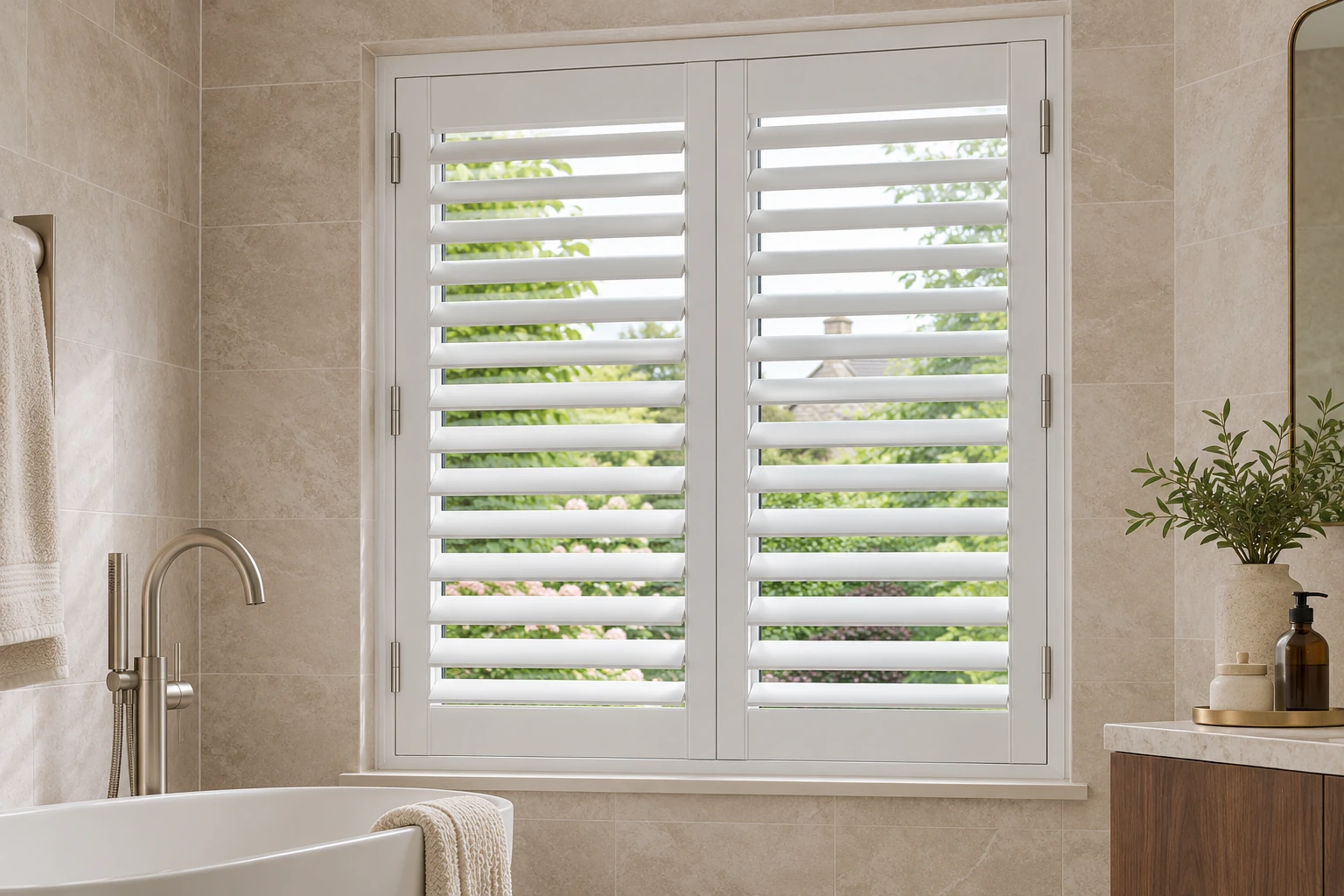
A window beside a shower is exposed differently from one across a well-ventilated bathroom. Tell us where water reaches the opening, whether condensation persists and which cleaning products are normally used. These details help us check the manufacturer's guidance for the selected material and components.
A waterproof shutter material does not seal the window, waterproof the surrounding wall or correct damp. Hinges, hardware and fixing surfaces still need consideration. Where a building or ventilation issue exists, it should be addressed separately rather than concealed behind a new treatment.
02 / The detail
Check privacy at the angles that matter
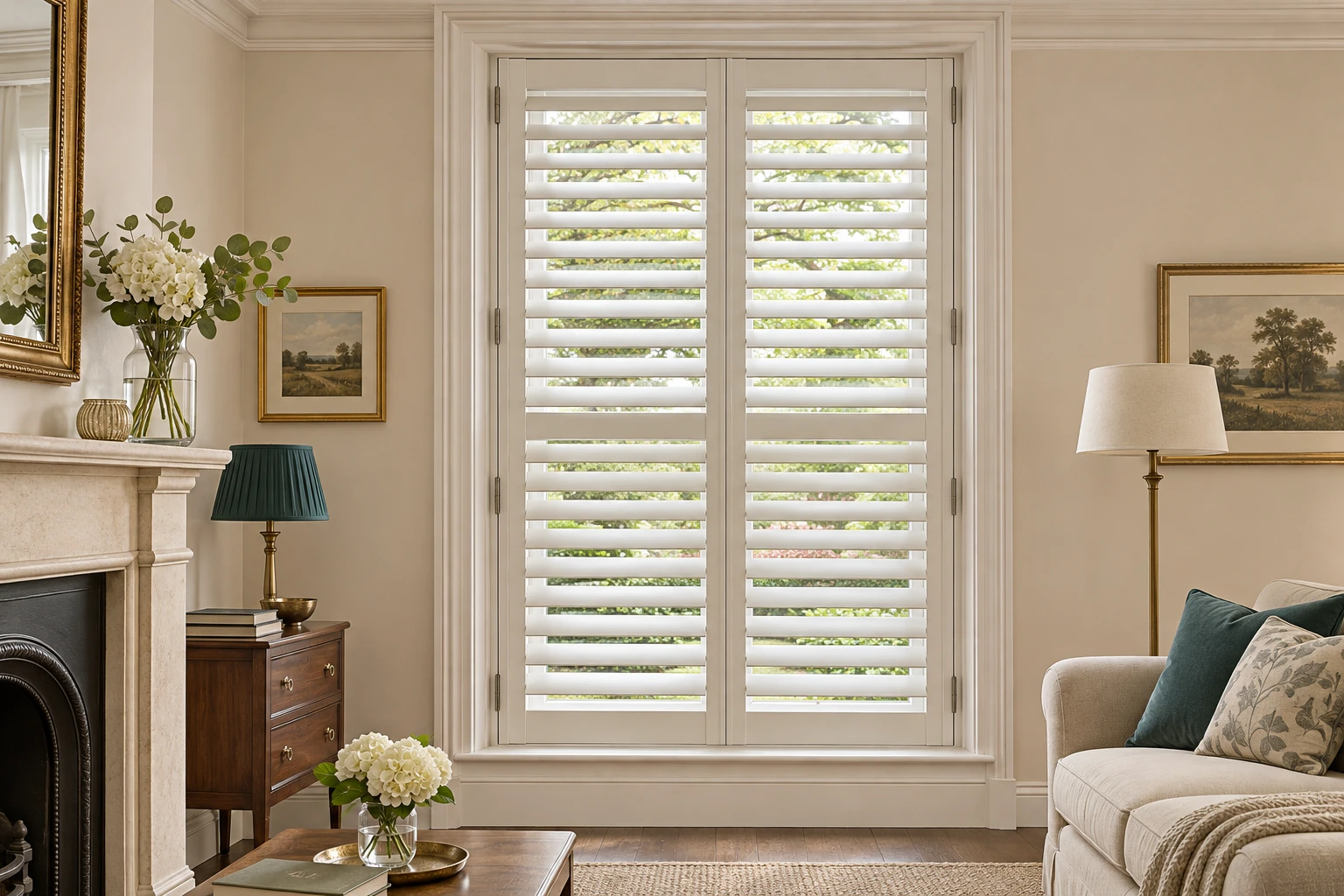
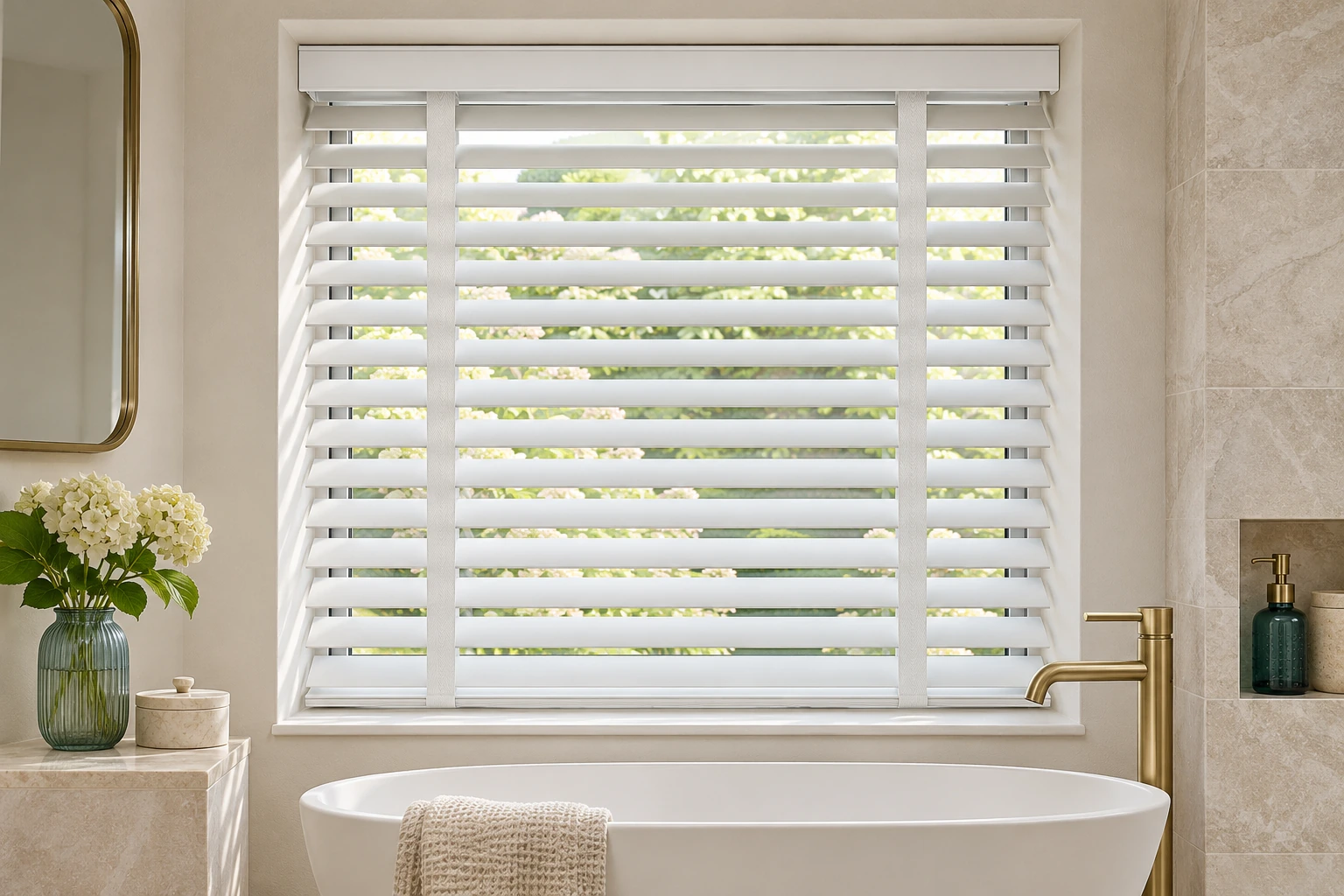
A bathroom may be overlooked from a neighbouring landing, garden or pavement. We discuss those sightlines and the privacy you need when the room lights are on. Louvre angle and coverage are considered together; an attractive partially open setting may not provide the screening you want.
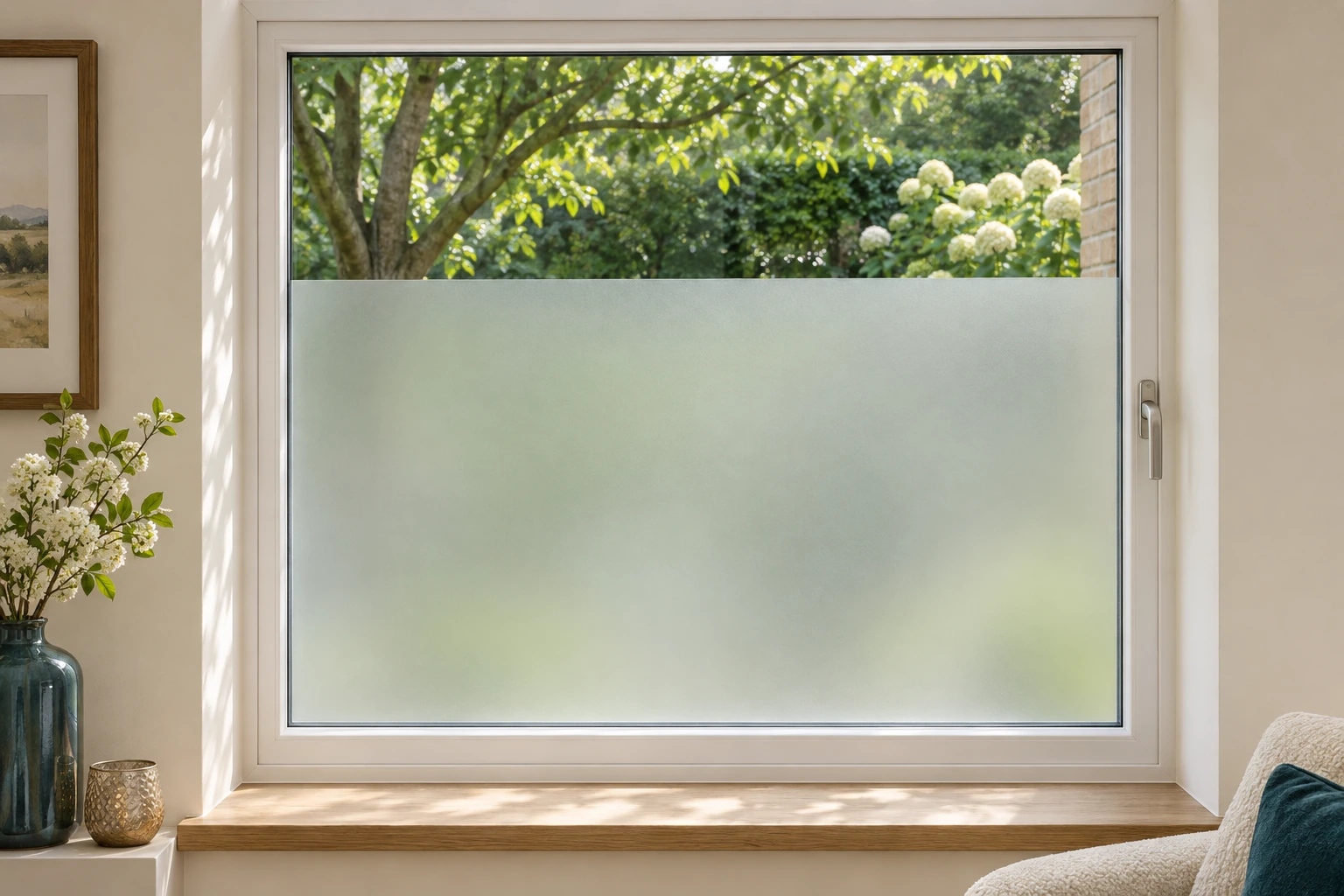
Full-height coverage is often the natural starting point, but the final panel arrangement depends on the window. Any uncovered glazing or fixed upper section is discussed explicitly. A shutter gives adjustable control, while suitable frosted film offers a different, permanent approach to obscuring a view.
03 / The detail
Leave room to clean and use the window
Basin taps, bath edges and deep tiled reveals can restrict panel movement. We check where the frame can fix, whether louvres clear the handles and how you will reach the glass. Those measurements are particularly important where the window is directly above a fitted unit.
Care follows the chosen product's instructions. A suitable finish can be straightforward to wipe, but aggressive chemicals and abrasive pads should not be assumed safe. At handover we explain the controls, access and cleaning guidance for the actual shutters supplied.