01 / The detail
Define the result before choosing a finish
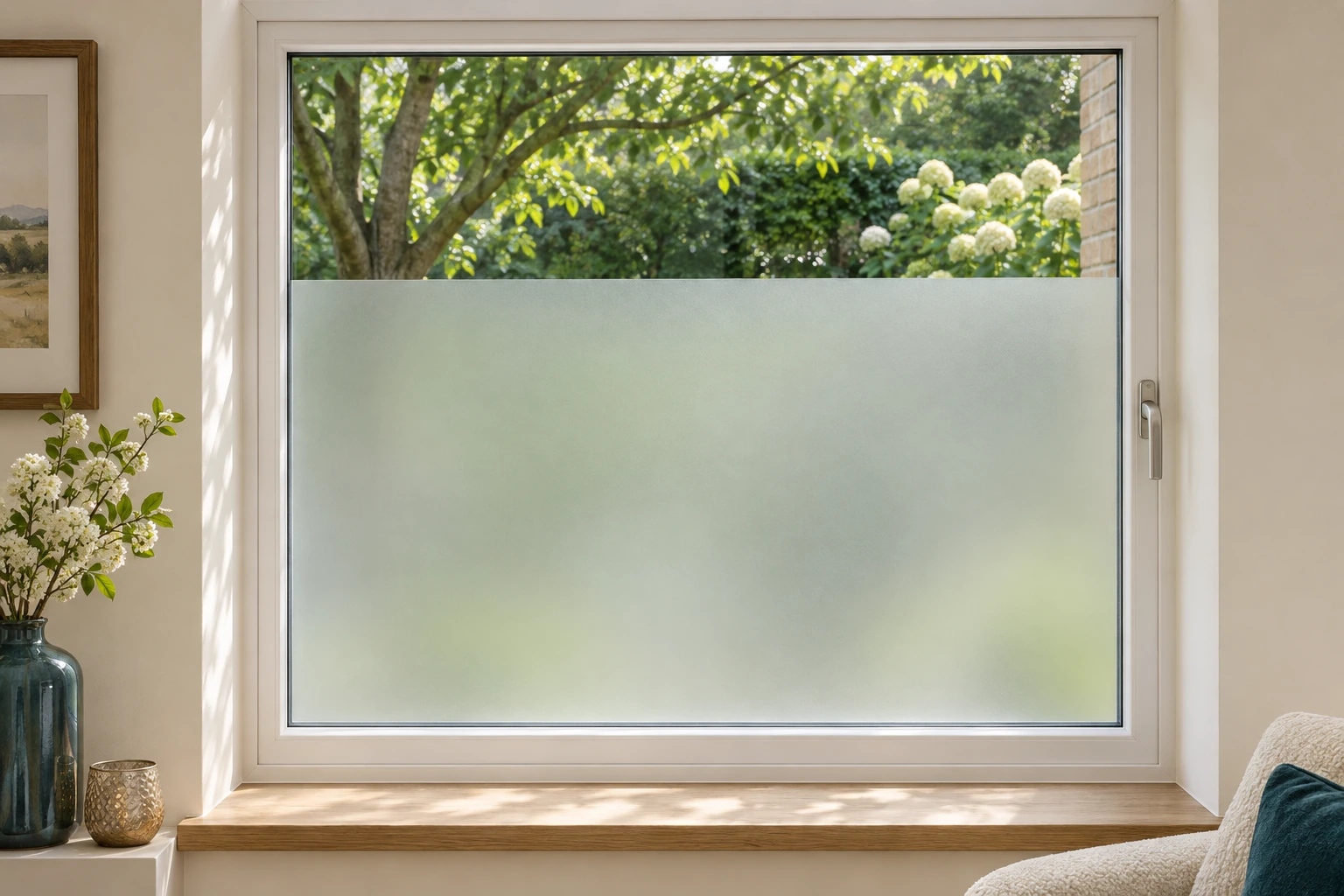
Frosted film obscures a clear view through the treated area. A reflective solar film behaves differently and can change both the colour and reflectivity of the glass. Decorative patterns introduce another choice: how much of the glazing remains clear and where the treatment sits.
A reflective daytime privacy effect depends on the lighting difference between inside and outside. It should not be assumed to keep a lit room private after dark. We discuss that limitation before recommending film for a bathroom, bedroom or other space where evening privacy matters.
02 / The detail
Check the existing glazing carefully
The glass construction, condition, coatings and exposure affect which film can be used. Double glazing, low-emissivity coatings and other specialist glass should not be treated as interchangeable. We need enough information to check the selected manufacturer's compatibility guidance before proceeding.
Film changes how glass handles solar energy, so a compatibility assessment also considers thermal-stress concerns. Tell us about existing film, damaged edges, known glazing specifications and any relevant glazing warranty. We do not offer one universal film for every window type.
03 / The detail
Agree the visible finish and aftercare
For privacy treatments, agree the height, pattern and clear areas as part of the layout. For solar-control work, compare samples for outward view, tint and reflection. If a specified safety or security performance is required, it needs an appropriate product and documented installation specification.
Installation requires access to the relevant glass surface and careful preparation. The selected product's curing and cleaning guidance is explained at handover; immediate cleaning or aggressive scraping should not be assumed suitable. A fixed film remains in place, so consider whether you would prefer an adjustable blind instead.