01 / The detail
Follow the movement of the window or door
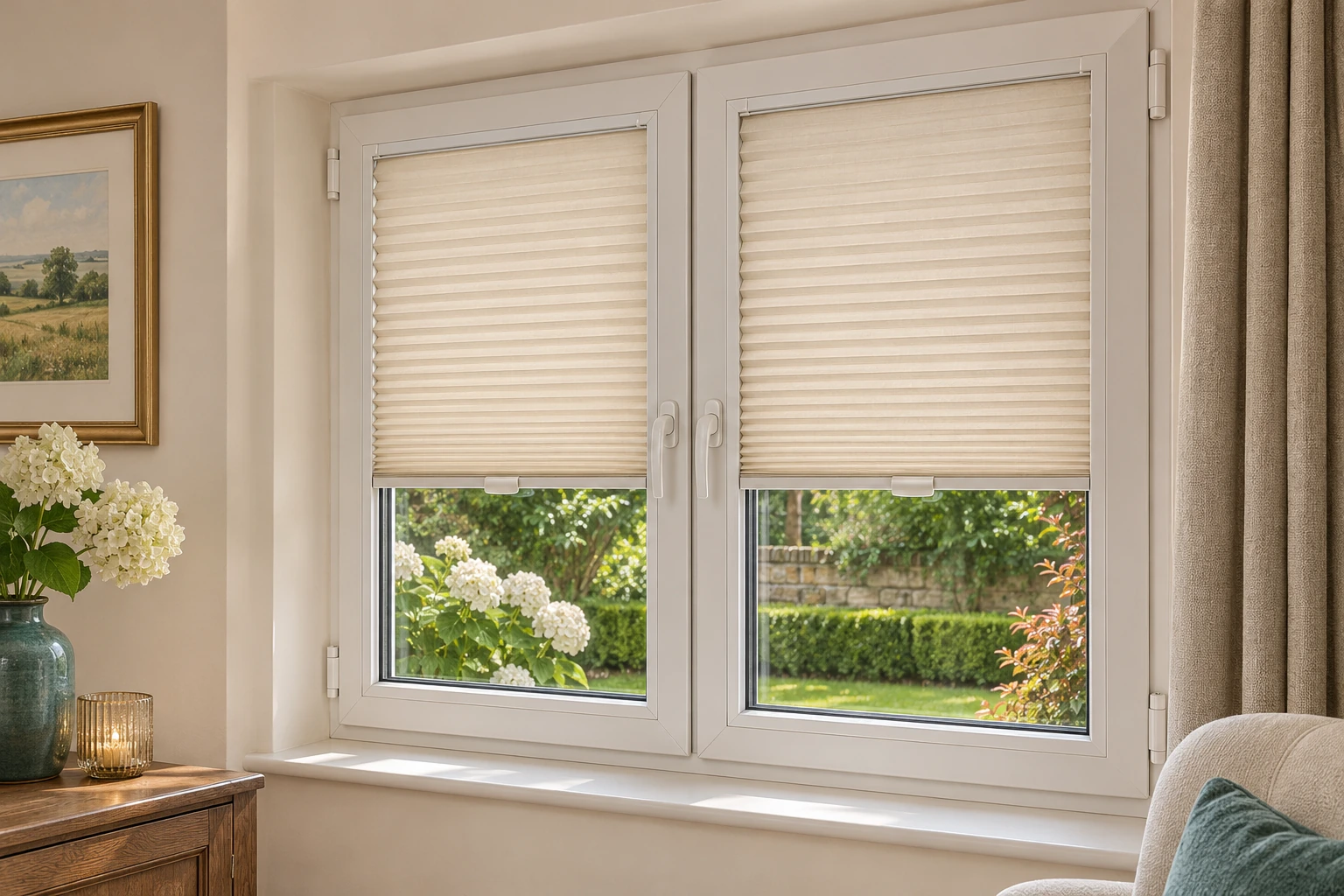
An outward-opening casement and an inward-opening door leave different places for a screen. We look at the full movement, including tilt functions, handles and any existing blind. A screen should be positioned so that normal ventilation and access remain practical.
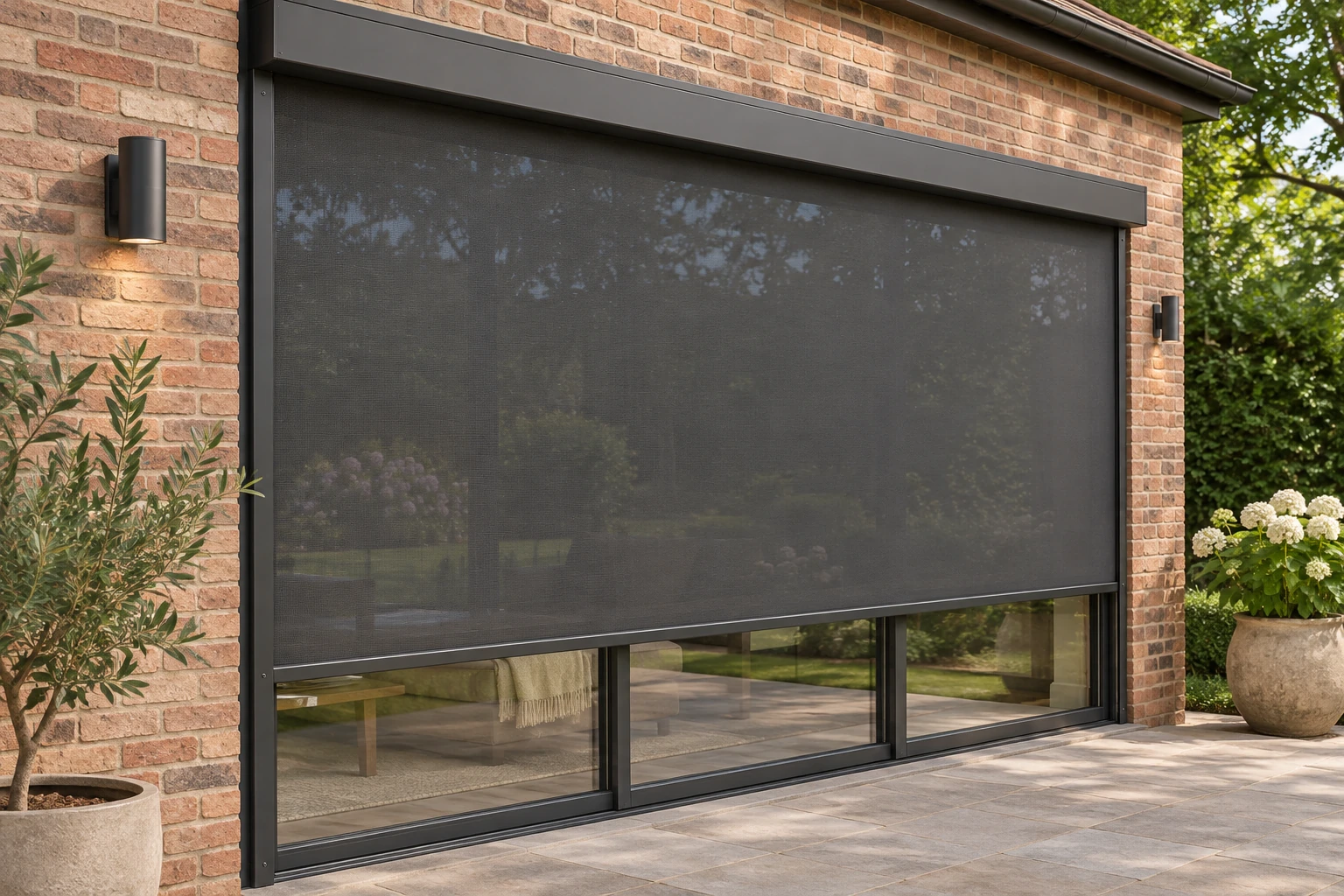
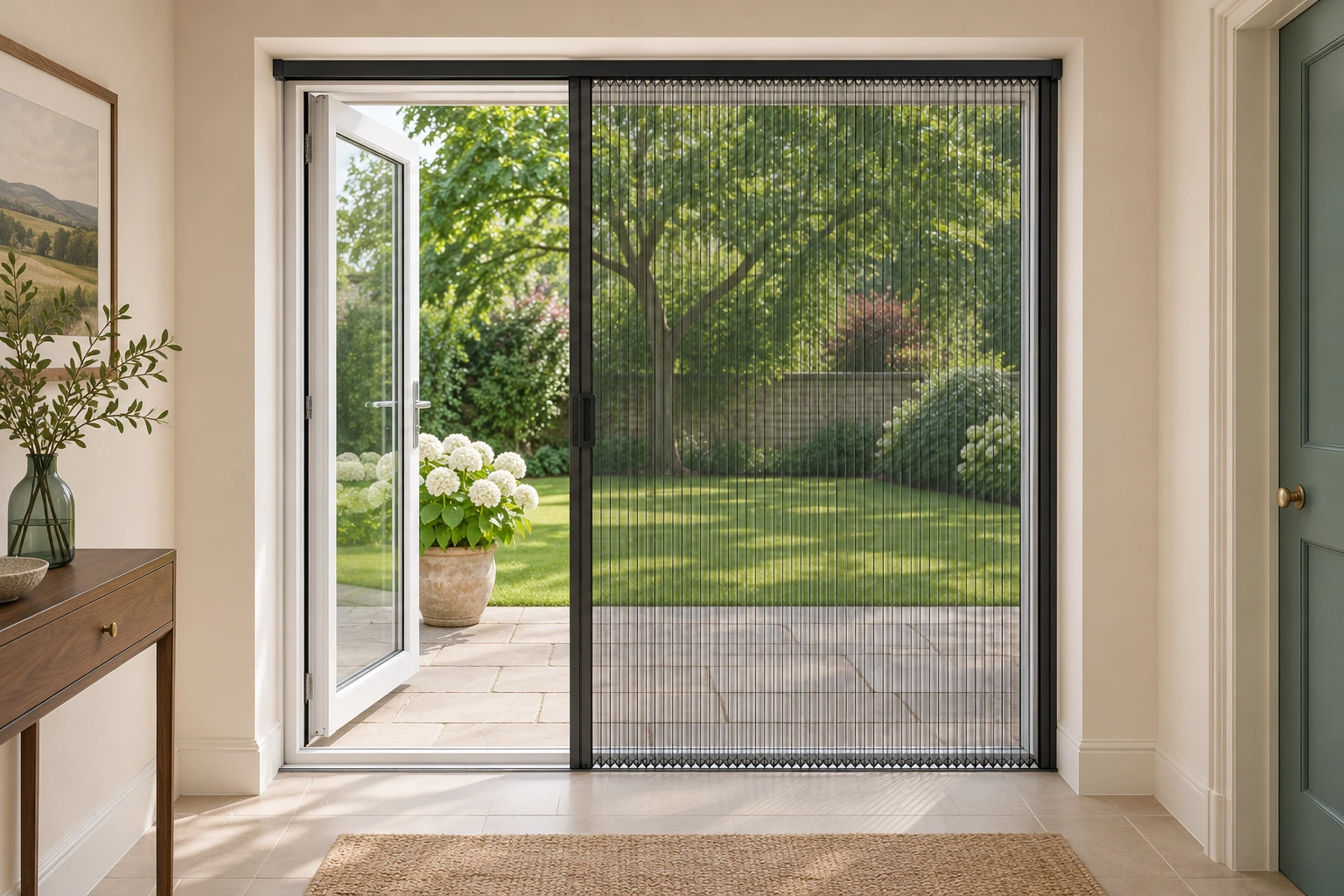
Fixed mesh may suit an opening where regular passage is unnecessary. A retractable or pleated screen can make more sense at a doorway that needs to open completely. System suitability and maximum dimensions are checked for the proposed arrangement rather than assumed from the product name.
02 / The detail
Discuss the mesh and its limitations
Mesh differs in weave, appearance and purpose. A sample helps show its effect on the view and the feel of the opening. Denser screening changes the balance of airflow and visibility, so the material should follow your priorities and the relevant manufacturer's specification.
The fit around the perimeter matters too, and insects can still enter through another uncovered opening. An ordinary insect screen is not a child-safety barrier, a fall restraint or a secure way to contain a pet. Any such requirement needs a separately suitable solution.
03 / The detail
Make the threshold and cleaning accessible
At a doorway, look closely at the guide or threshold detail and the route people take through it. Tell us about pushchairs, wheelchairs or other access requirements. The housing also needs a suitable position where the retracted screen will not conflict with the door.
We explain how the selected screen moves and how to care for its mesh and guides. Grit and debris should not be allowed to obstruct the mechanism. For a commercial setting, discuss the cleaning routine and frequency of use so that the proposal reflects the actual workload.