01 / The detail
Choose the fabric by its effect on the room
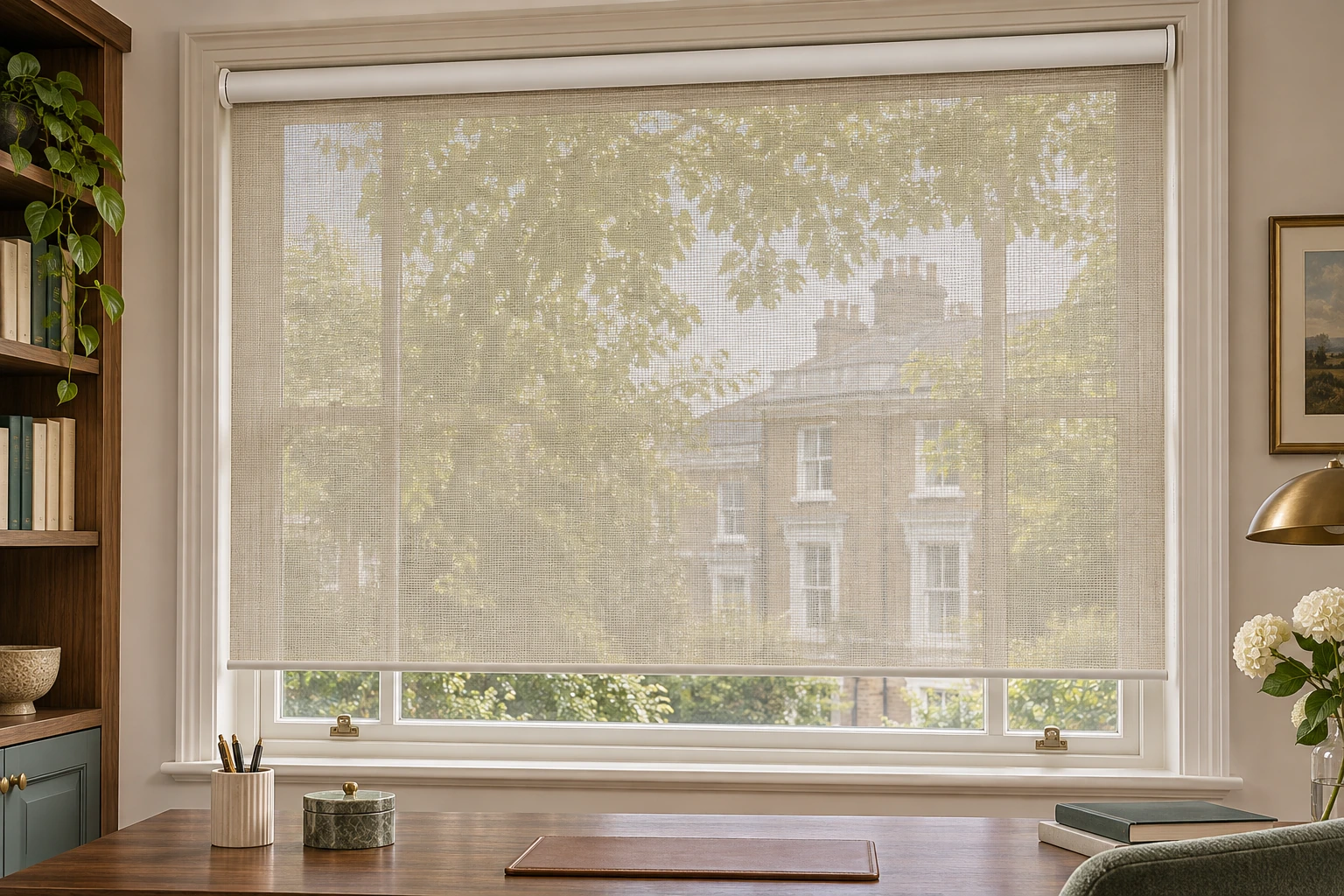
A more open screen can retain some outward view, while a denser material changes the balance of light, view and enclosure. Colour also affects how the screen looks against the building. We discuss samples in relation to your glazing rather than choosing from a colour name alone.
Daytime screening does not automatically provide night-time privacy. A brighter room behind a mesh can become visible from outside after dark. If privacy throughout the evening is essential, tell us so that an appropriate fabric or separate internal treatment can be considered.
02 / The detail
Allow space for the complete mechanism
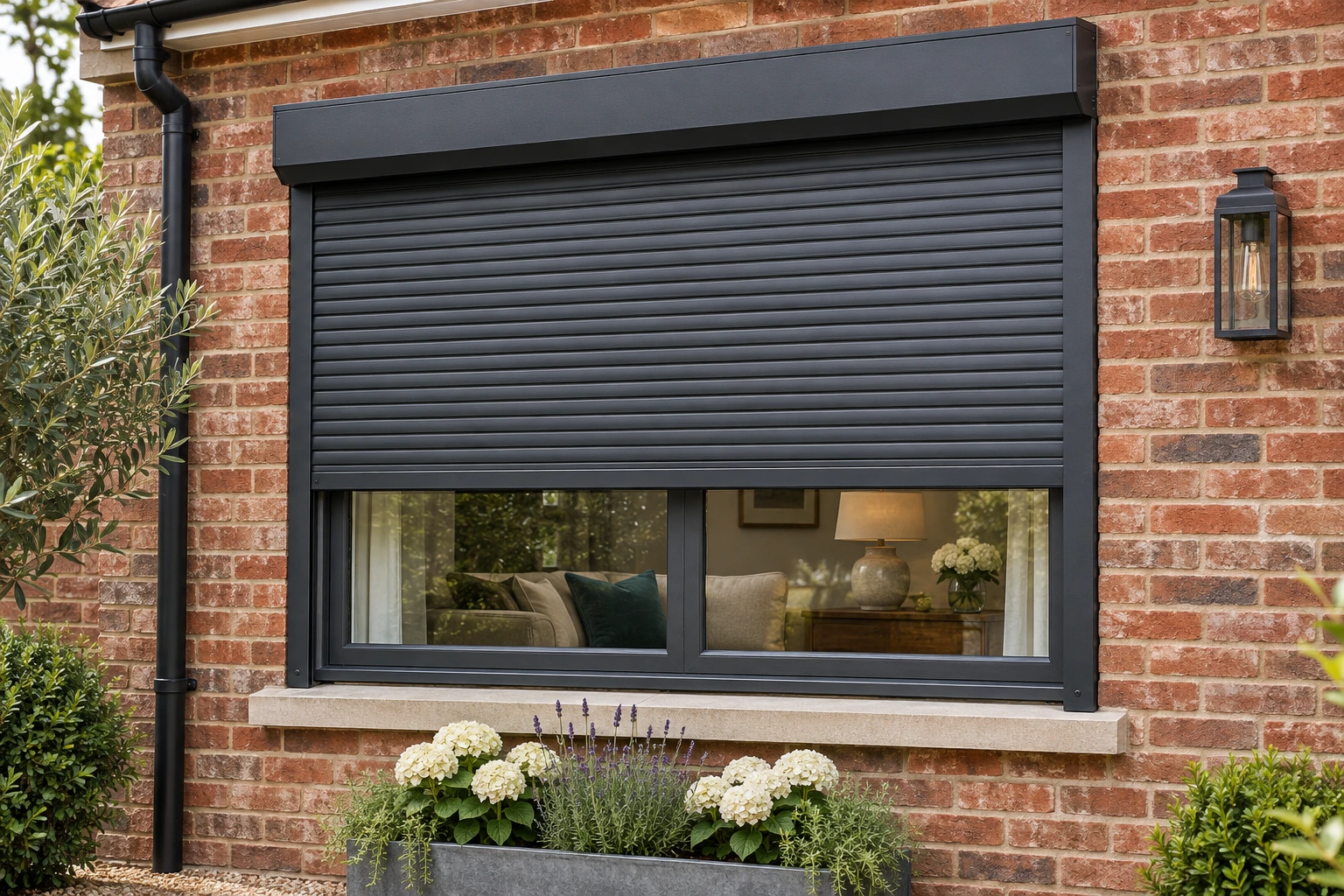
The headbox, side guides and bottom bar all need a planned position. Their relationship to opening windows, door handles, vents and drainage details can determine whether a system is practical. The supporting surfaces must also suit the selected fixing arrangement.
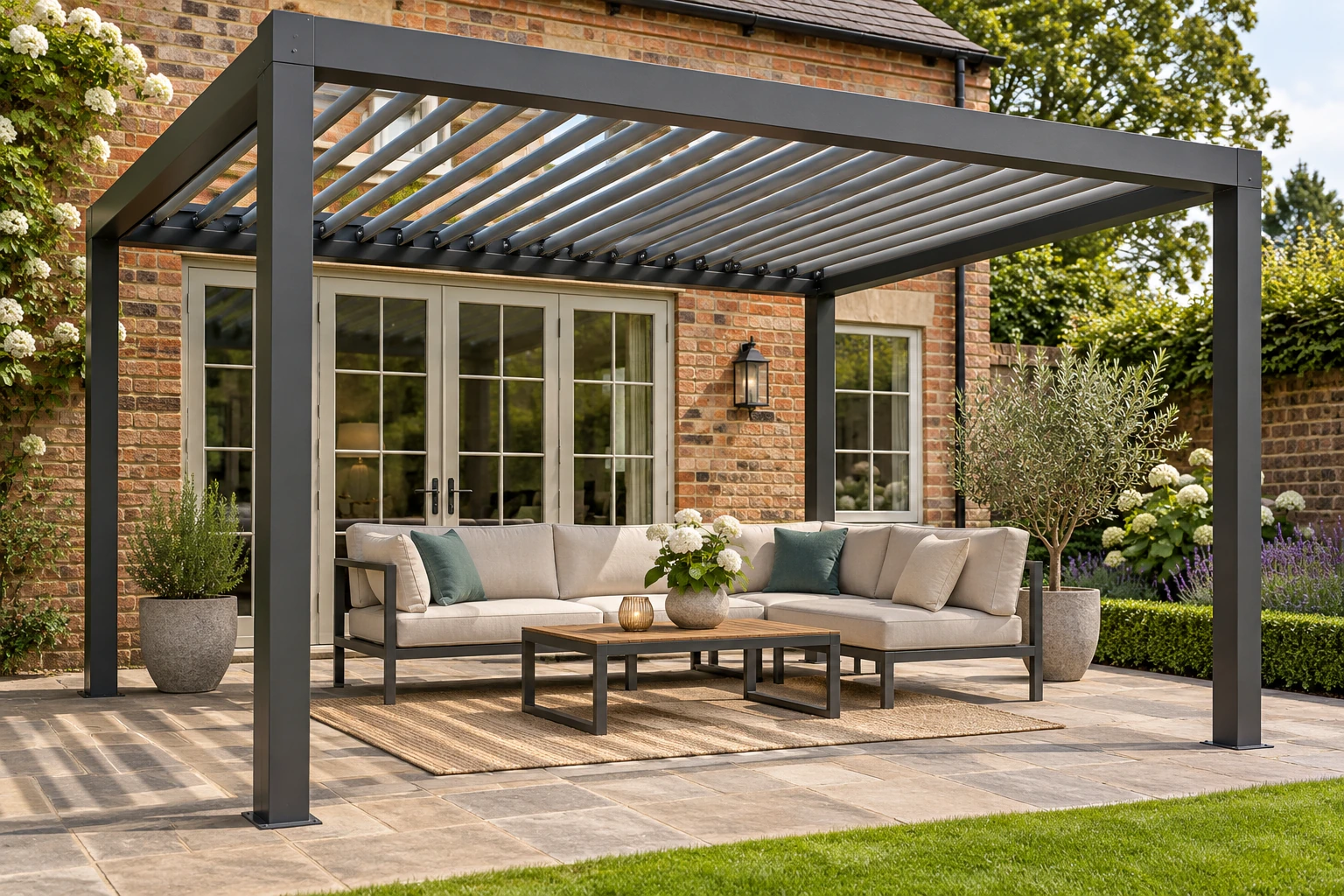
On an existing pergola, compatibility cannot be judged from the opening width alone. The structure, fixing positions and movement paths need assessment. For motorised systems, we agree access to the power supply, cable routing and the controls included in the proposal.
03 / The detail
Specify operation and exposure together
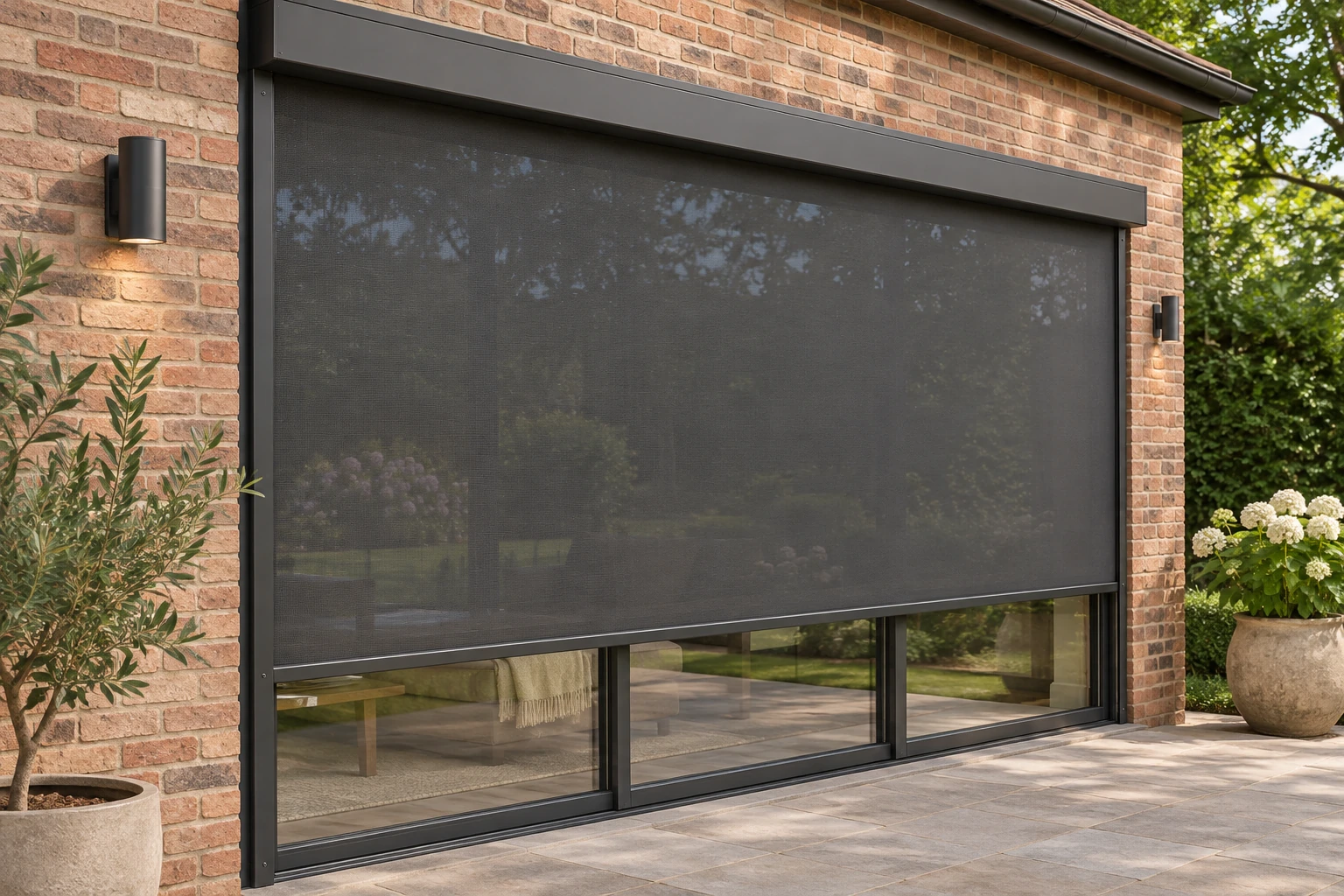
ZIP retention helps control the fabric, but every system still has weather and operating limits. The selected model, size and exposed location matter. We provide the relevant guidance rather than describing all ZIP screens as suitable for every wind condition.
Keep the movement path free of chairs, planters and other objects, and use the screen in line with its instructions. If automation or weather sensors are proposed, we confirm the actual compatible equipment and behaviour. An exterior screen is not a structural safety barrier.