01 / The detail
Measure the useful shade, not just the wall
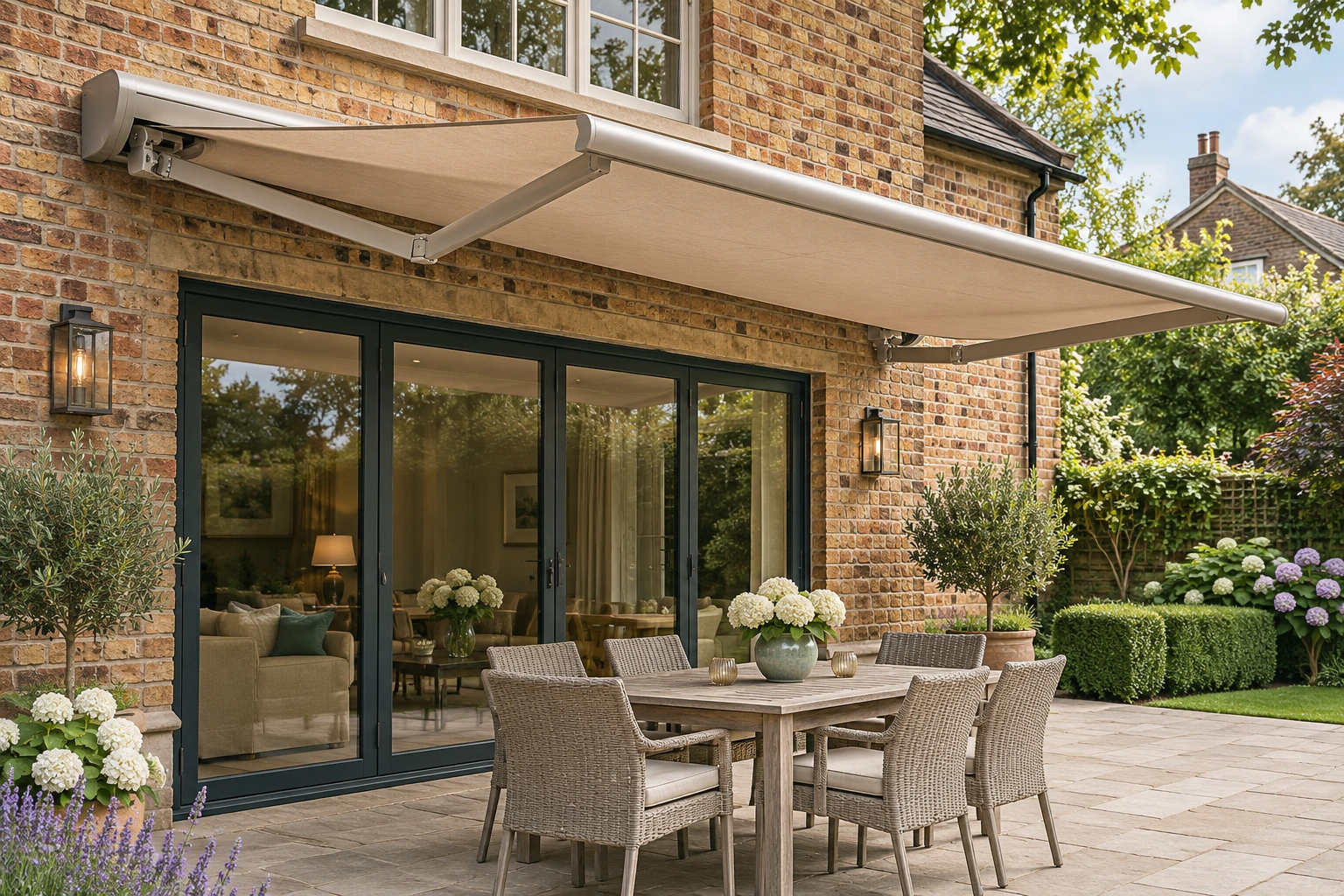
The position of the sun changes the shadow cast by an awning. A wide fabric can still leave part of a seating area exposed when the sun is low or coming from the side. We discuss when you use the patio and which part needs protection most.
Projection, pitch and mounting height affect the usable space beneath. Opening doors, outdoor lights and the desired headroom must be considered together. A photograph of the full elevation and the patio layout is a useful starting point for an initial assessment.
02 / The detail
Establish a suitable fixing arrangement
The mounting surface must be assessed for the loads from the chosen awning. Brickwork, an extension, a low roofline and a rendered wall each need a considered approach. Cladding or a decorative finish should not be assumed to provide the structural support required.
Where an alternative bracket arrangement is needed, it is identified in the proposal. We also agree the installation access and, for a motorised awning, the power location and cable route. Any separate electrical work should be clear before the product is ordered.
03 / The detail
Choose controls with the weather in mind
A remote control can make frequent adjustment convenient, and compatible weather sensors may be available. Those features depend on the selected model and control system. Sensors support correct use; they do not remove the need to follow the awning's operating instructions.
A retractable awning is not a permanent all-weather roof. Wind and rain limits are specific to the model, pitch and installation. We explain when it should be retracted, how to care for the fabric and how the cassette stores the covering when it is away.