01 / The detail
Consider the fabric both hanging and gathered
A sample shows colour and texture, but a curtain also needs to hang well at the intended drop. Fabric weight and flexibility affect the folds and the size of the stack. Pattern scale matters too, particularly where a design repeats across several widths of cloth.
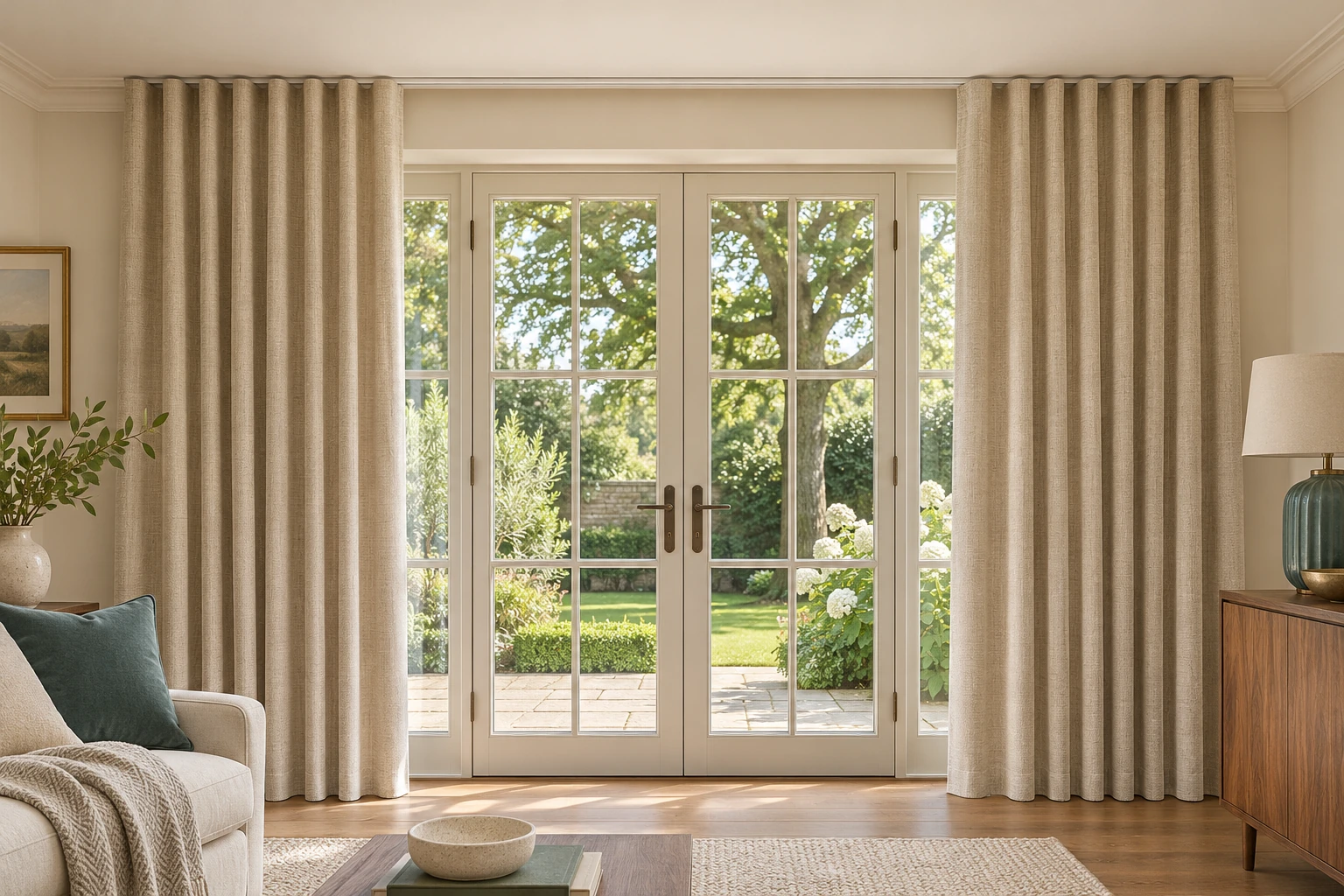
We discuss the appearance you prefer and how much room the curtain has when open. A full, substantial treatment may be right for one space and too bulky for another. The agreed heading and fabric quantity should suit the window rather than follow a single rule for every room.
02 / The detail
Make the lining serve the room
Lining changes the way fabric hangs and how light passes through it. A bedroom may call for a suitable blackout lining, while a living room may favour a lighter result. Where a commercial project has a specified fire-performance requirement, the chosen fabrics and assembly need checking individually.
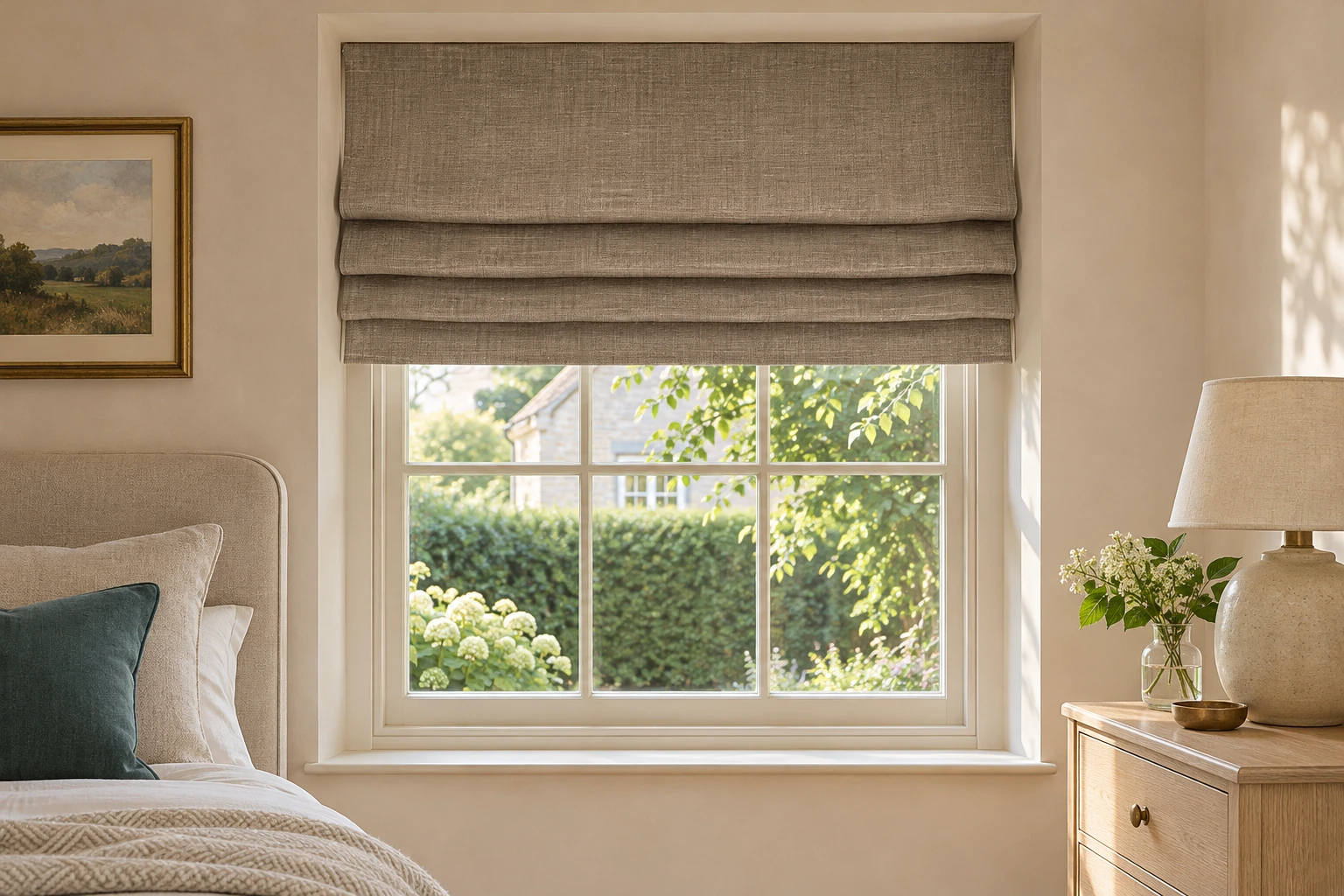
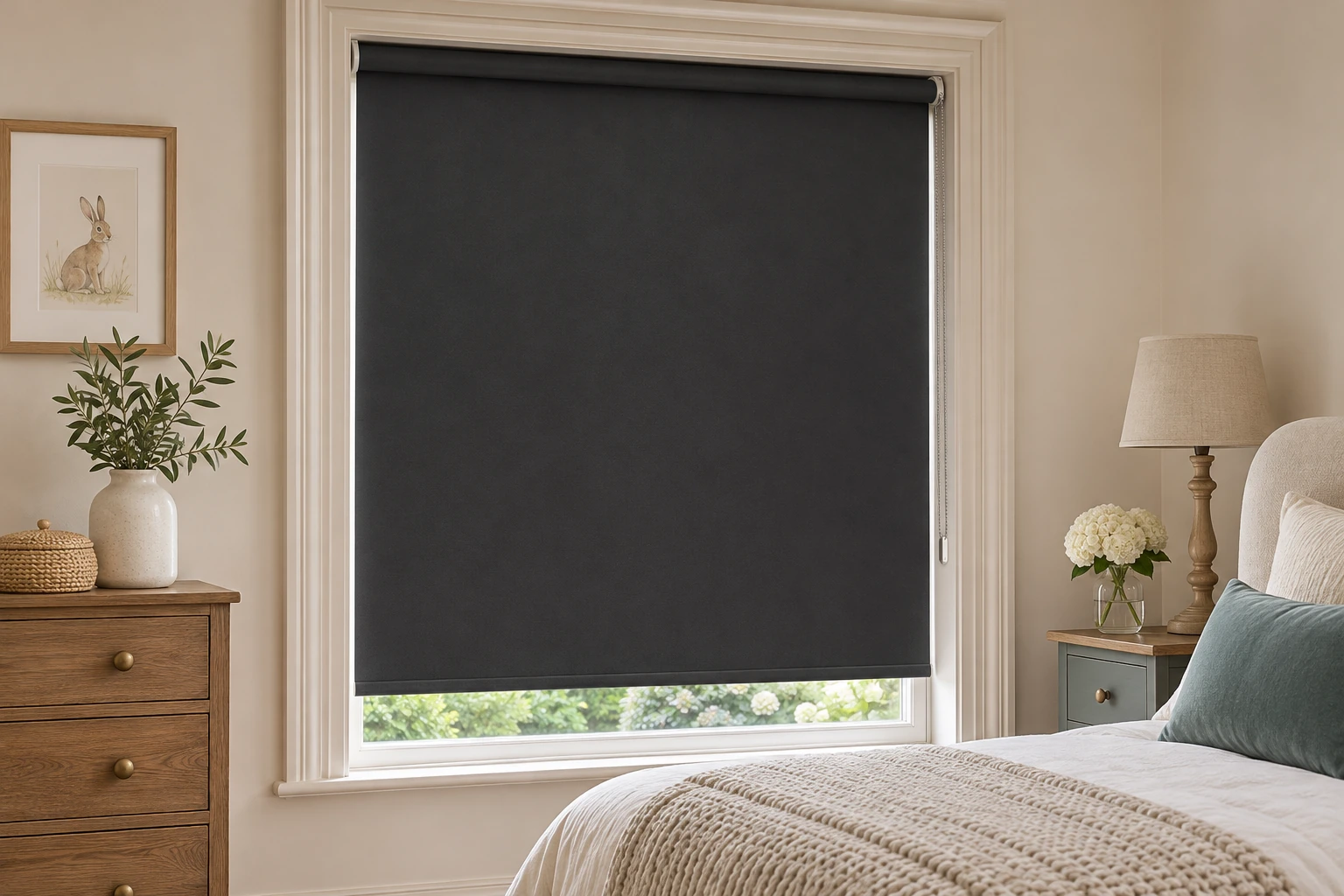
Even an opaque curtain can admit light around the top, sides or centre opening. Track position, overlap and the distance from the wall all influence coverage. We discuss those details if darkness is the priority, and can assess a separate blind behind the curtains where useful.
03 / The detail
Set the finished position before measuring
A ceiling-mounted track, a wall-mounted track and an existing pole place the heading differently. The finished floor level, skirting, radiator and furniture also affect the right drop. Tell us about planned flooring or decorating so the measurements are based on the intended completed room.
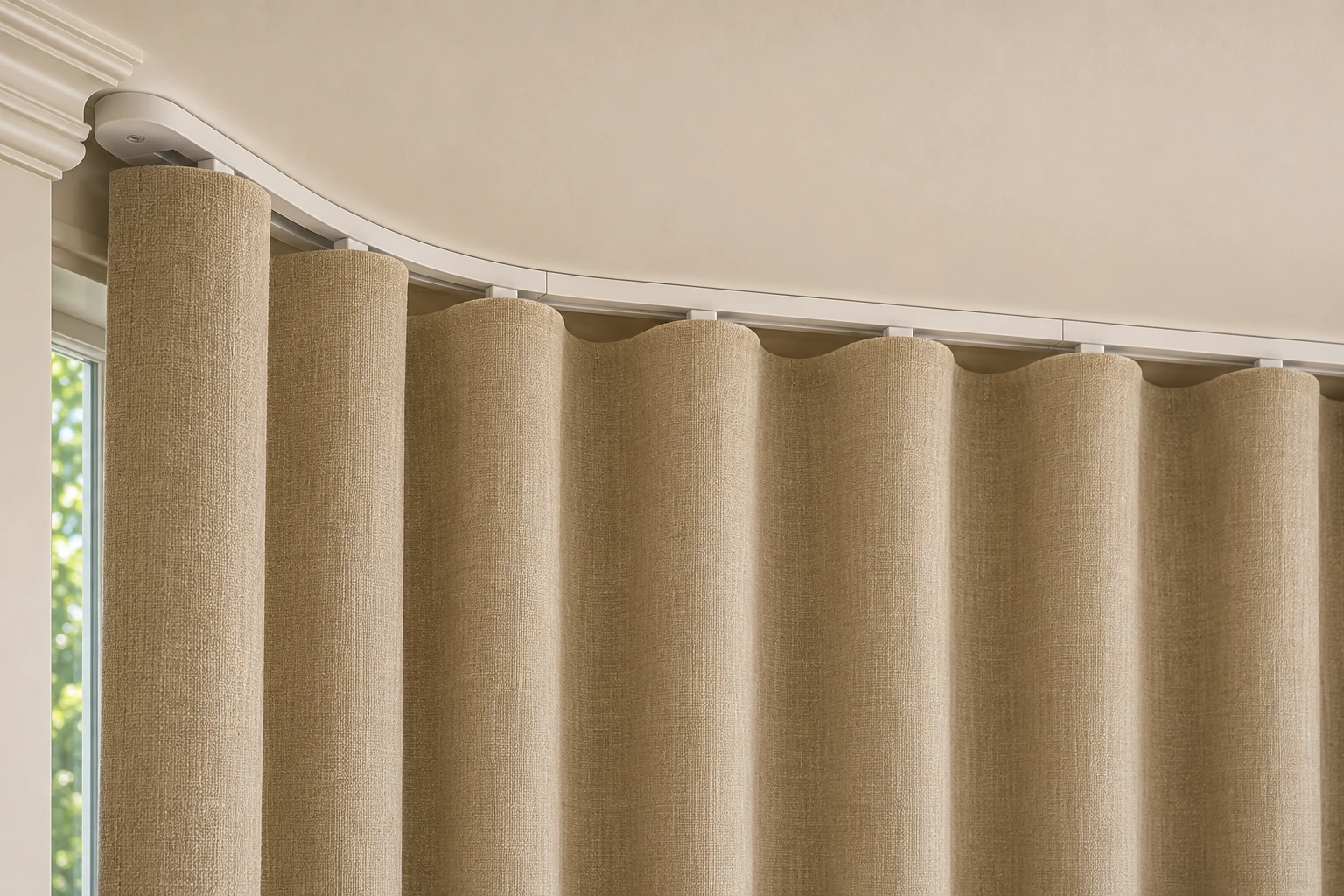
The hardware must suit the heading and curtain weight. For a regular wave-style arrangement, the runners and fabric construction work as a system. We agree drawing direction and any suitable motorised operation, then check the hang and movement when the curtains are installed.