01 / The detail
Start with the curtain specification
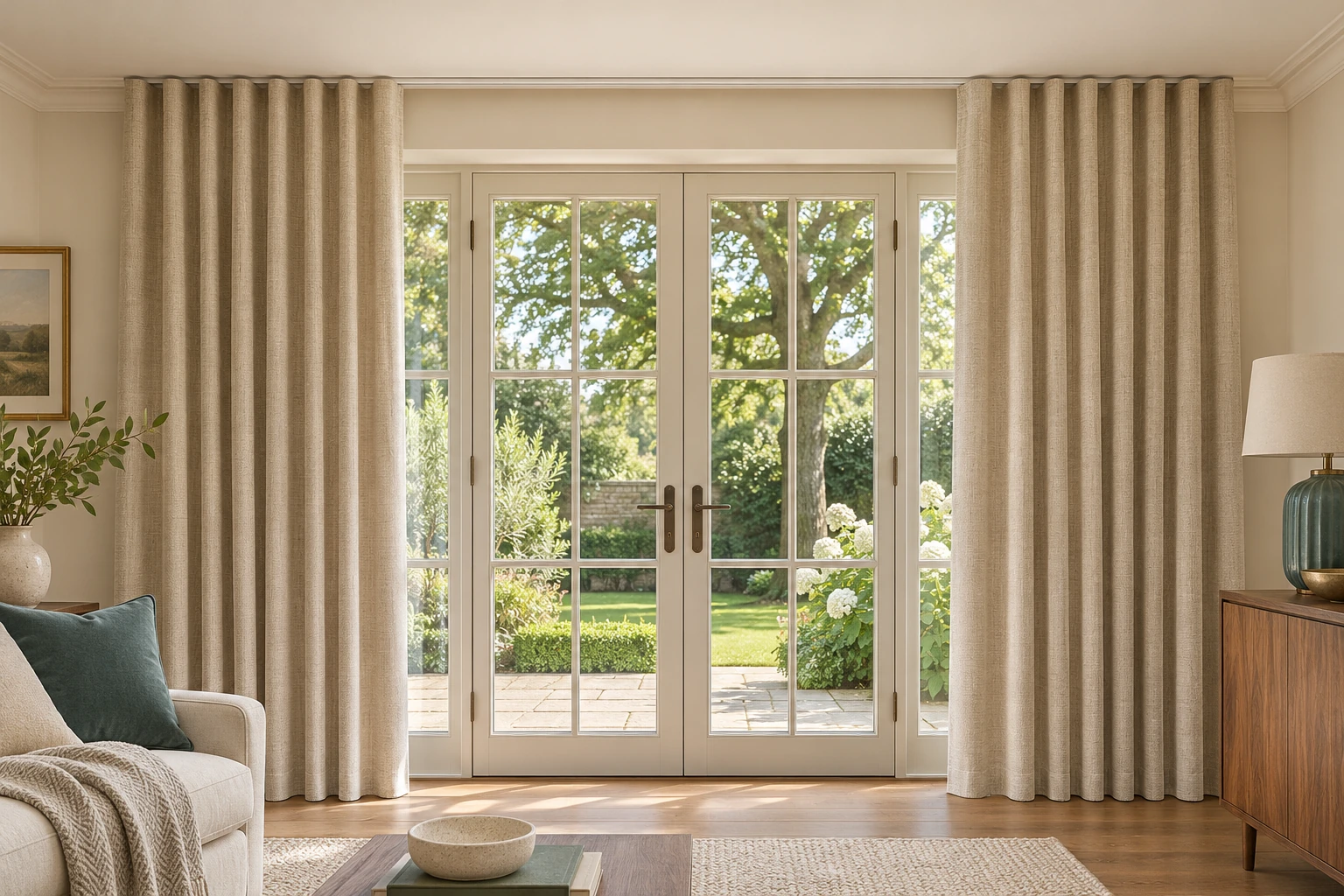
Length alone does not establish the load. The number of fabric widths, drop, lining and heading all contribute to the weight and movement. If the curtains already exist, send their dimensions, heading photographs and any fabric or weight information available.
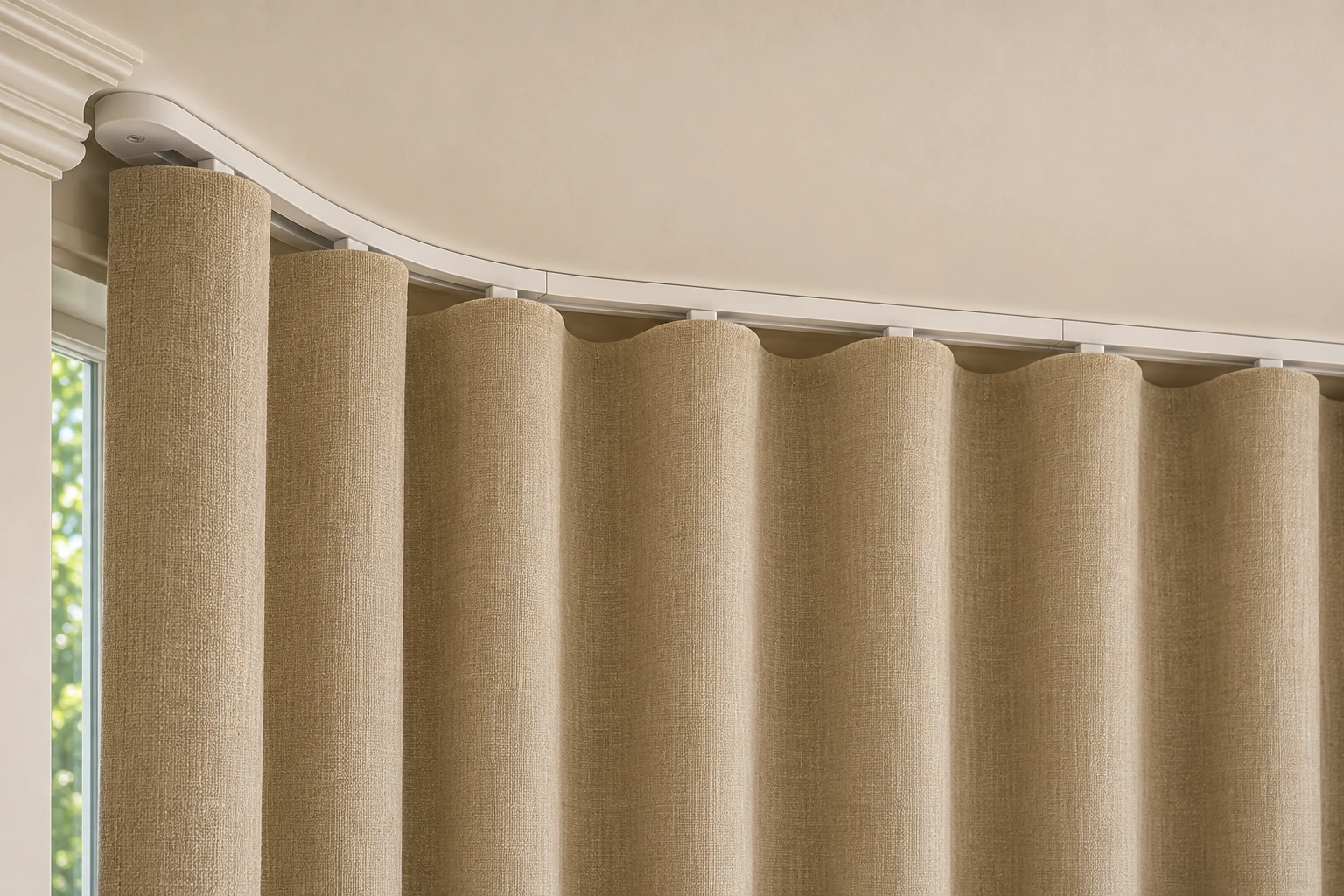
The runners also need to match the intended heading. A regular wave arrangement uses a coordinated runner spacing and curtain construction; ordinary gliders are not automatically interchangeable. Where curtains and tracks are being ordered together, we resolve those details in the same specification.
02 / The detail
Agree the position and the supporting surface
Ceiling mounting can produce a clean line, but the surface behind the finish still needs suitable support. Wall mounting depends on bracket depth and clearance from handles, radiators or blinds. We assess what the fixings will attach to rather than choosing brackets from appearance alone.
For a bay or a corner, bend positions and the route of the curtain affect how easily it draws. Some systems can be formed to suitable shapes; others cannot. We check the proposed geometry, the available system and where the open curtains will collect.
03 / The detail
Select controls for the people using them
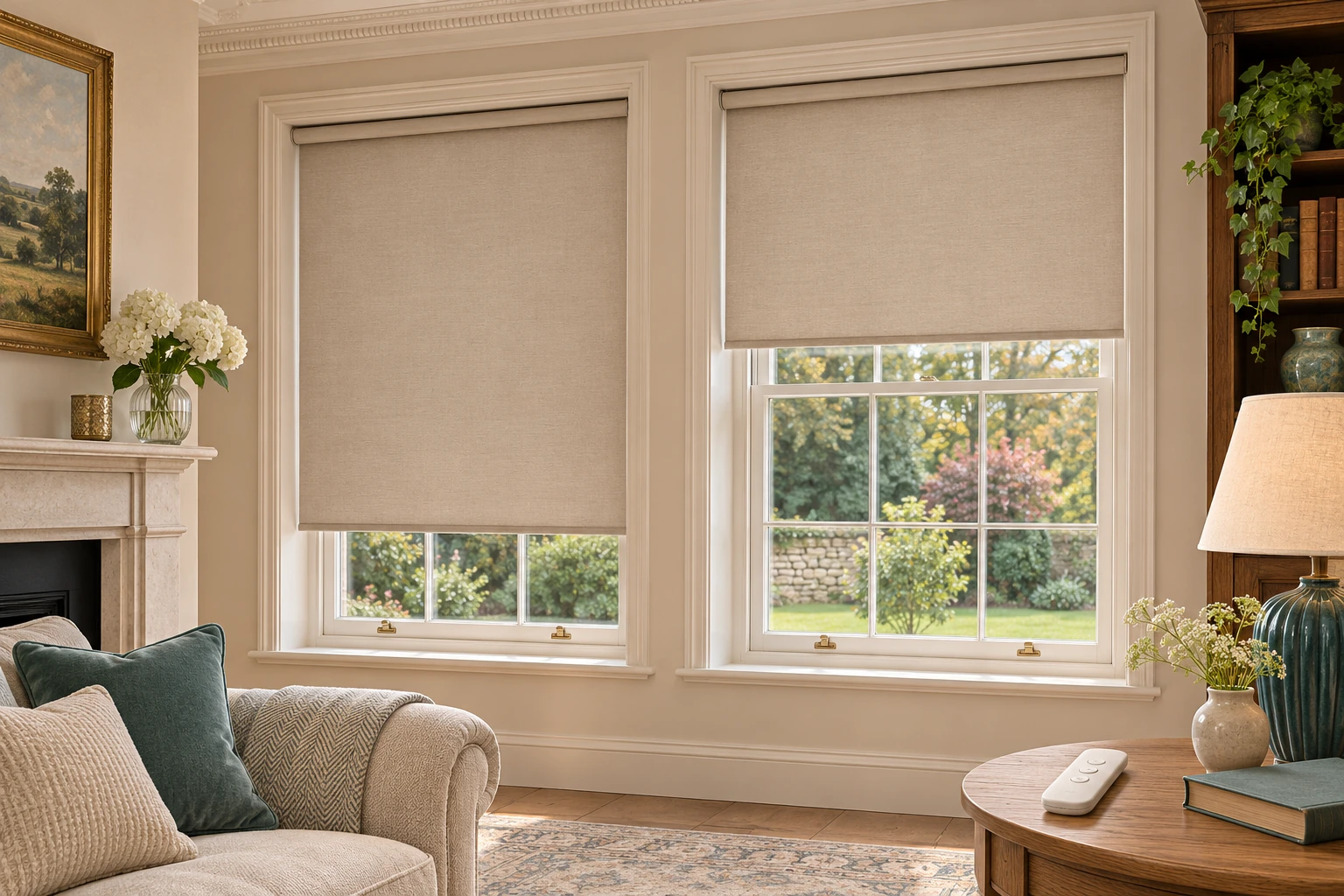
Hand-drawn curtains suit many reachable windows. A draw rod or a suitable controlled system may help where handling the fabric is inconvenient. Motorisation can be considered for larger installations or access needs, but the track, motor and curtain specification must be compatible.
Tell us if you want a wall switch, remote or integration with an existing home-control system. We confirm the actual equipment and power arrangement rather than assuming app compatibility. Installation includes checking travel and demonstrating the controls supplied with the agreed track.