01 / Planning your project
Work backwards from the doorway you use.
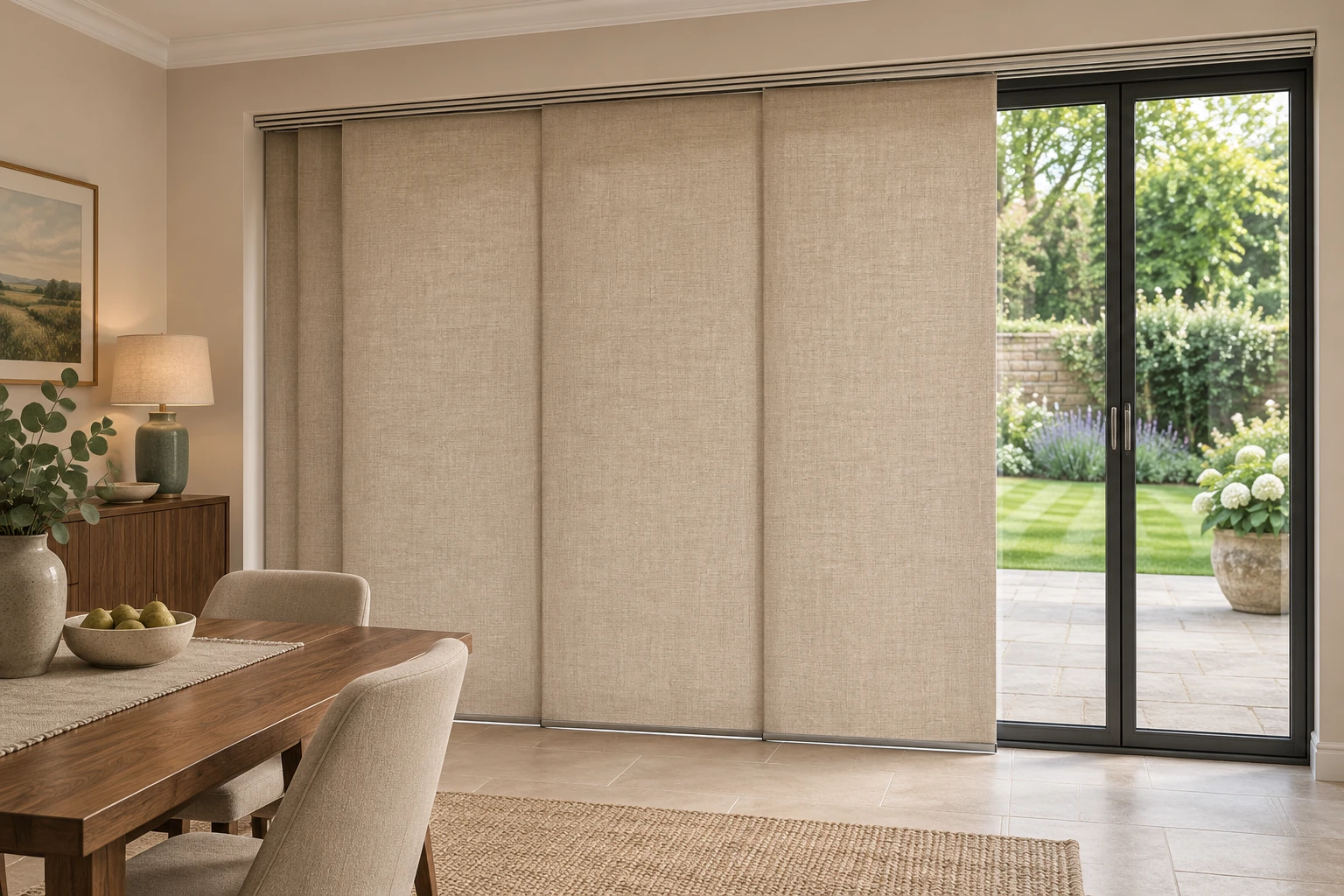
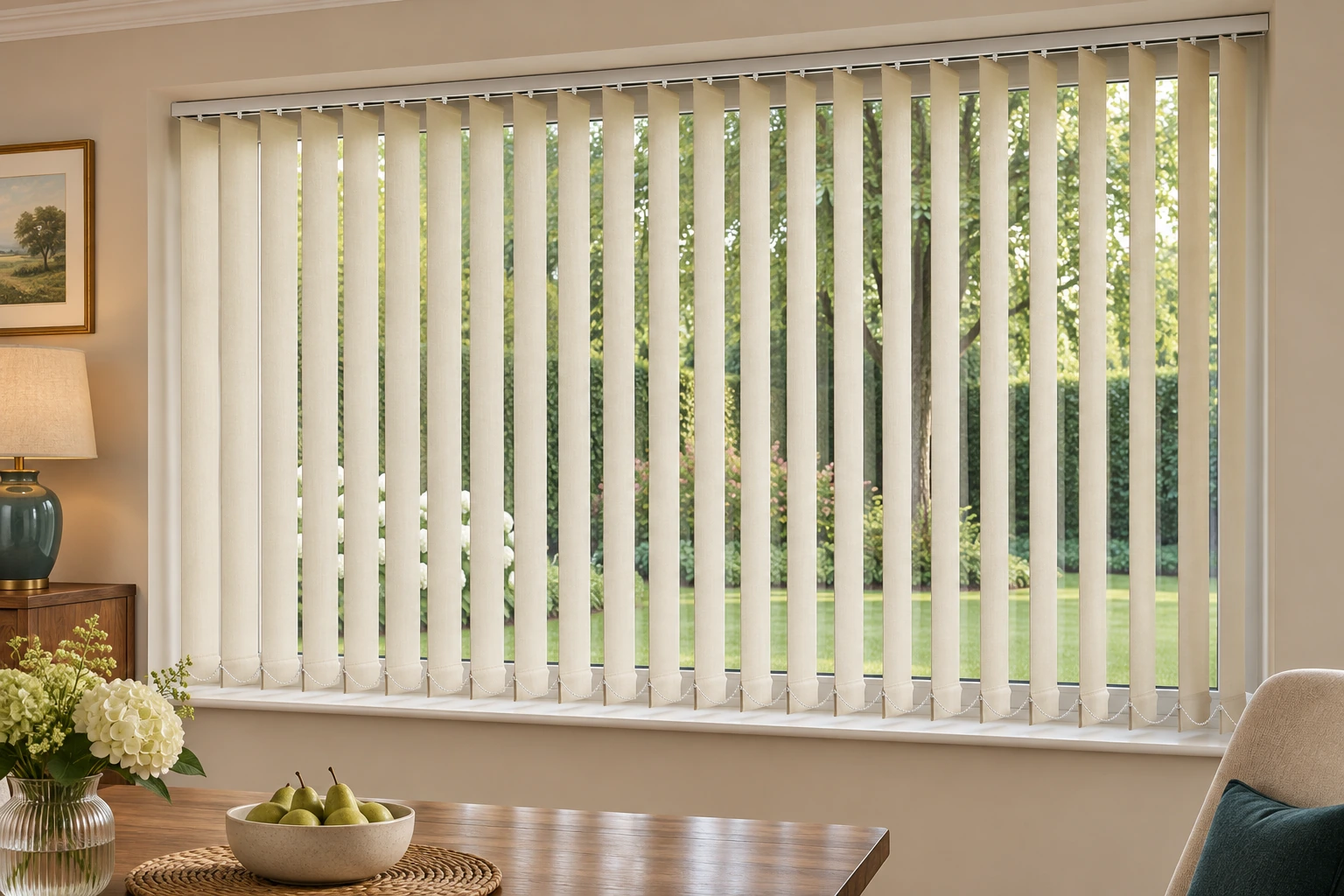
For vertical, panel or Allusion blinds, decide where the material will gather when open. A stack across the main walking route can be inconvenient even when the product fits the width perfectly.
A ceiling or face-fixed track also needs a suitable supporting surface. We consider lintels, handles, furniture and any curtain track already sharing the space before agreeing a position.
02 / Planning your project
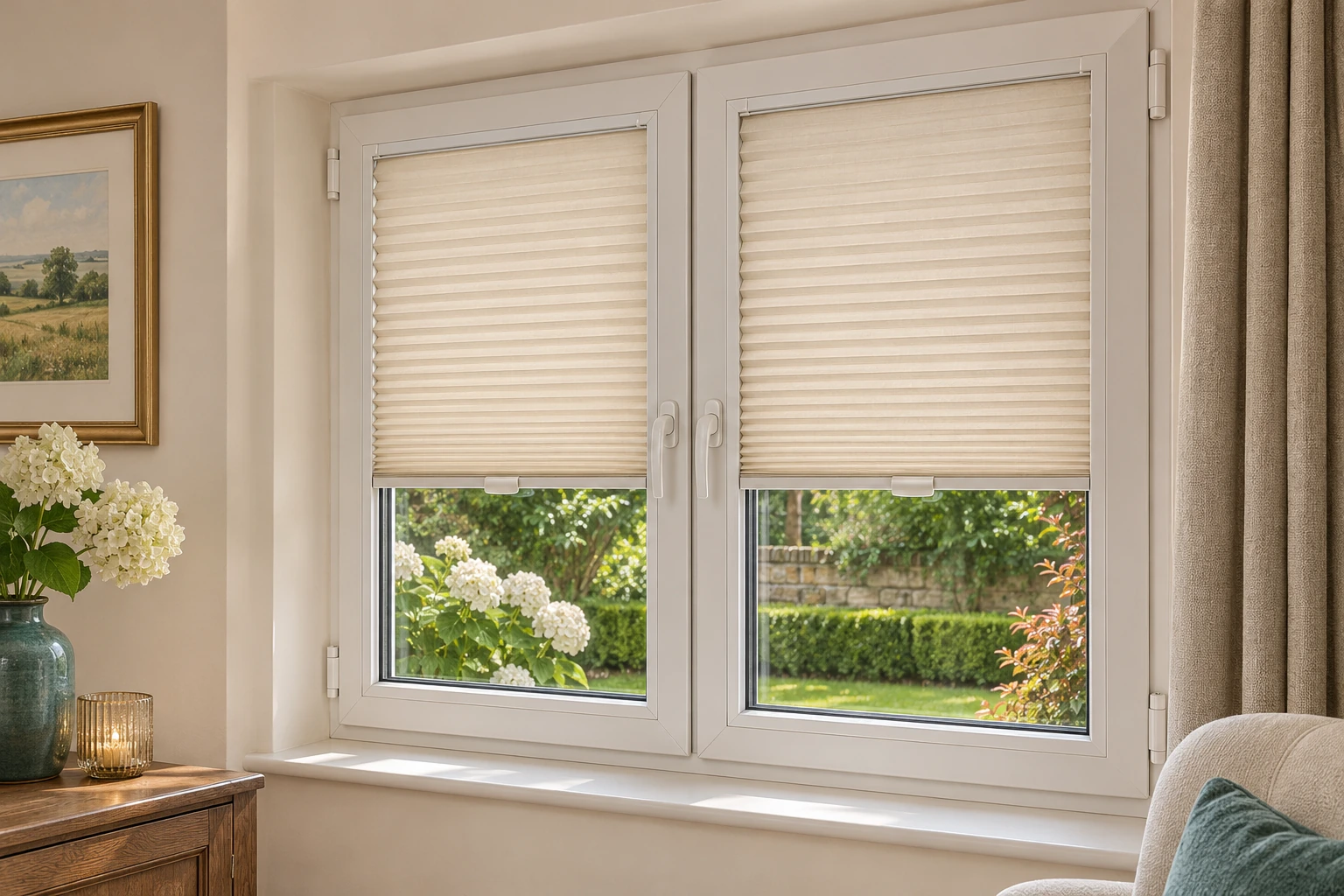
Check individual-pane systems against the door profile.
A close-fitting framed blind can move with a compatible door, but “bifold” does not automatically mean “Perfect Fit compatible”. Glazing beads, seals and the gap between folded leaves can rule out a particular frame.
Send a straight-on photograph of the door, a close-up of the glazing bead and an image showing the doors open. We can identify the next checks without promising a system from a room photograph alone.
03 / Planning your project
Think about privacy when the lights are on.
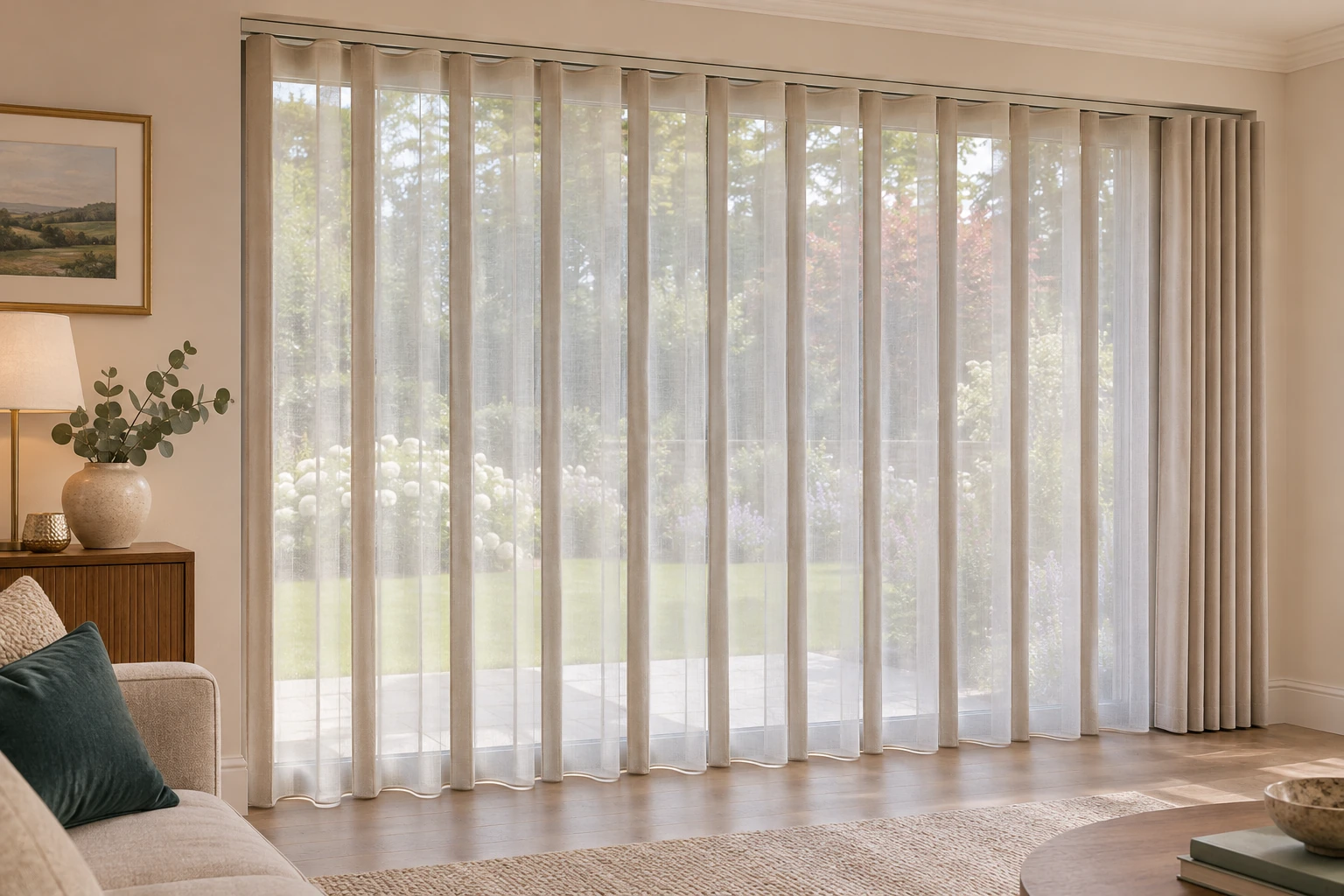
Large panes can reveal much more of the room after dark. Sheer fabrics and sunscreen materials offer a different level of privacy from opaque fabrics, and their behaviour changes with the light on either side.
If you want to preserve a daytime view and close the room off in the evening, we can discuss an adjustable system or coordinated layers. We also check how the bottom of the treatment relates to the floor and door threshold.