
AdamsBlinds / Wood blinds
Choosing slat widths & profiles
Slat width changes the rhythm of the blind and the space it needs.
A narrow slat creates more horizontal lines; a wider slat creates a broader surface and a different view between the open slats. Profile and material matter alongside width.
Discuss your requirements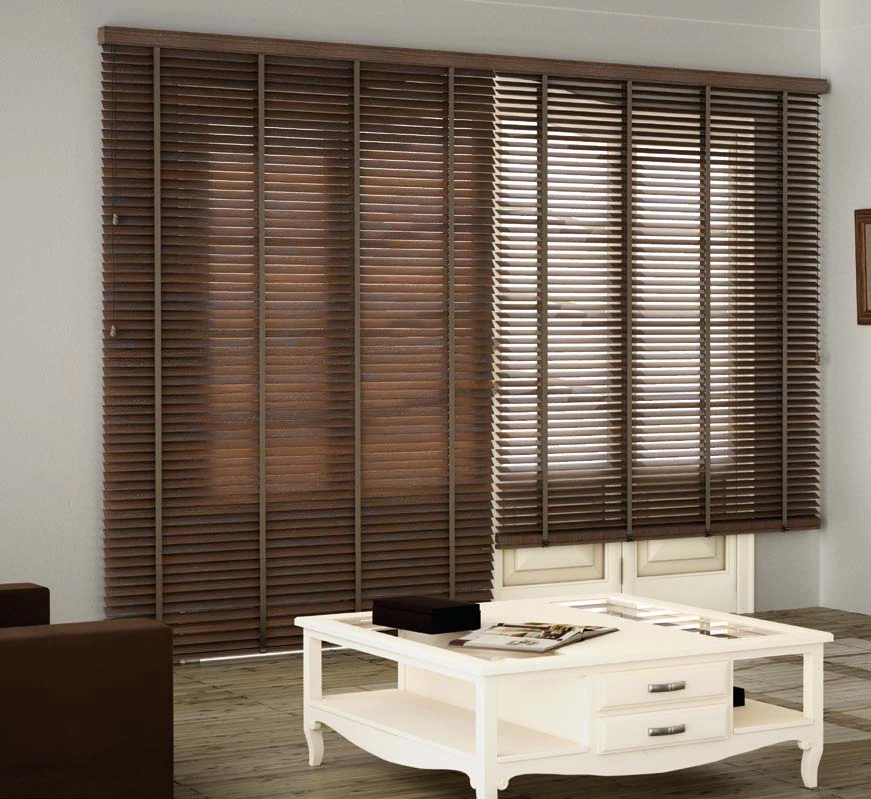
Check the depth and nearby fittings
Slats need room to rotate without hitting handles, vents or glazing bars. Check the complete headrail and bracket dimensions, not just the nominal slat width. Shaped and curved slats can require different clearance from flat profiles.
Think about the raised stack
The space occupied by a raised blind depends on its drop, slat thickness, material and mechanism. A tall wooden blind can have a substantial stack. Discuss the available headroom and the amount of exposed glass you need.
Match operation to the actual blind
Larger or heavier products may require a different control or motor system. Some wide-slat ranges have specific operating limitations. We confirm a workable combination of width, drop, construction and operation.
Use a sample for the appearance
Seeing the selected profile close up helps with the edge shape, finish and grain. A sample does not confirm the finished blind dimensions or operating limits; those are agreed separately in the specification.
Let’s work through the details
Get a quote.
Plan your project.
Tell us which products interest you, save a finish shortlist or show us the space. We’ll help you agree the design, measuring, made-to-measure supply and professional installation you need.
- Free initial estimates by email or WhatsApp
- UK-wide supply and installation enquiries
- Made-to-measure supply-only enquiries welcome
Monday–Friday, 9am–5pm
Online enquiries at any time.
We aim to reply within 24 hours. Appointment dates and any specialist installation requirements are confirmed by our team.